
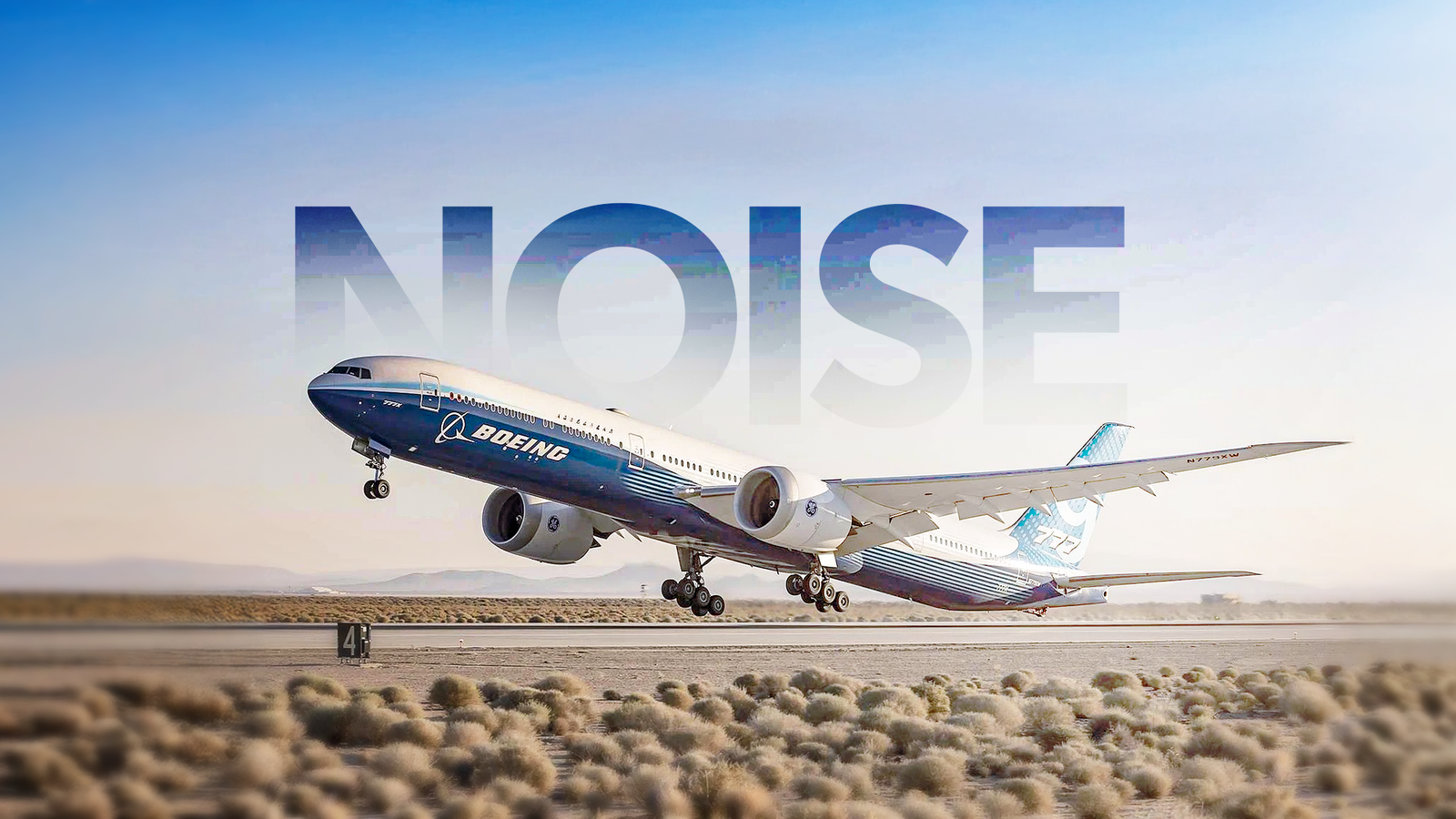
Published Nov 13, 2026, 12:01 PM EST Luke Diaz is a freelance military writer with experience with active duty experience in the US Navy as well as defense and industrial engineering. He is a former Naval Flight Officer who performed tactical air control on the carrier-based E-2 Hawkeye. When Boeing debuted early ideas for its next-gen 777X widebody, the giant GE9X engines bore sawtooth edges at the back of their nacelles, the same chevrons as the 787 Dreamliner. Chevrons were more than decoration, because Boeing used them on the 787, the 747-8, and the 737 MAX. The idea came from NASA research, and it worked, but it also cost a little thrust and added a little drag. NASA research is where the idea took shape. The serrated edge of the engine housing and the inner exhaust nozzle mix streams of air that blend to help mute the exhaust rumble of a turbofan. For long-haul widebodies over a multi-decade lifespan, however, the extra drag adds up to millions in fuel expenses. Thus, when the prototype rolled out of the factory, the serrated edges had vanished, replaced by a smooth cowling cover. Chevrons were never free, though. Teeth that stir the air also add a little drag, and the stirring steals some thrust from the engine. Boeing accepted that price on the 787. Inside Flyer reports that Boeing found the combined penalty hard to justify on the larger 777X. Ultimately, according to Terry Beezhold, the chief project engineer for the 777X, the final design meets stricter noise limits without the cruise drag and fuel-burn penalty that sawtooth imposes. Aerodynamic Penalties Versus Noise Compliance Credit: Kevin Piechota | Shutterstock The transition to the chevron-free GE9X engine heavily influences the design of the 777X family. The primary reason chevrons were invented was to mitigate 'jet mixing noise.' That's the harsh sound from exhaust turbulence created when high-velocity engine core thrust collides with slower ambient air. By moving an unprecedented mass of air at significantly lower overall velocities, the GE9X already mitigates much of the clashing airflow of the exhaust stream. Chevrons are beneficial during takeoff, but because these jagged edges cannot be retracted, overall cruising performance suffers. During a 16-hour high-altitude cruise, they continuously bleed kinetic energy from the exhaust stream, creating a 0.5% aerodynamic drag and thrust penalty. The same parasitic drag would have also negated the benefits of the weight-saving carbon fiber fan blades and heat-resistant Ceramic Matrix Composites in the GE9X, which makes it 10% more fuel-efficient than its predecessor, the GE90. Dropping the chevrons did not mean sacrificing regulatory compliance; GE and Boeing moved the noise suppression inside the engine cowling. Safran-built titanium exhaust nozzles lined with advanced, micro-perforated honeycomb acoustic liners absorb and cancel out sound internally. That achieves eight decibels below current standards, so the 777X does not need to bring back chevrons to remain compliant if laws become stricter in the future. The Thermodynamic Solution Within The GE9X Credit: Wirestock Creators | Shutterstock The GE9X engine removes the need for serrated cowlings by shifting how it generates thrust, balancing air velocity (speed) against air mass (volume). To push a massive airplane, an engine needs to create a specific amount of force. In aerospace design, an engine's noise is directly tied to the speed of its exhaust. Specifically, noise increases exponentially as exhaust speed increases. When jet thrust blasts out of an engine core and immediately collides with the still air outside the plane, the two different speeds create a violent turbulence zone called a shear layer. This friction creates chaotic air turbulence, which is what we hear as a loud jet roar. To minimize the amount of sound created by this unavoidable side effect of the natural exhaust flow of a turbofan engine, the GE9X pushes out an extremely high volume of air. Instead of relying on very high-speed exhaust, the next-gen GE engine uses a very high volume of air movement to produce higher levels of thrust than the GE90 that came before it. Pushing out a massive column of air at a slower speed produces the same amount of total force as a higher-velocity exhaust, but the airflow is smoother and quieter. The GE9X achieves this high-volume method through its 10:1 bypass ratio. The engine features an 11-foot-wide front fan that pulls in a massive volume of air. For every ten parts of air the fan pulls in, 90% of that air passes completely around the hot engine core, or bypasses it, while only 10% goes inside to be burned as fuel. Operational Lessons From Chevron Equipped Fleets Credit: viper-zero | Shutterstock Chevrons have been found to solve a regulatory problem that exists only during the first 3 minutes of takeoff and initial climb. Boeing accumulated data from the operational fleet of 787 Dreamliners and 747-8 jumbo jets to scientifically determine that sawtooth engine chevrons were an external 'band-aid.' Lessons learned from experience with the current-generation widebody jets showed that the cumulative fuel penalty, high-frequency noise, and maintenance overhead outweighed their benefits once larger engines and advanced materials matured. In addition to the efficiency and maintenance penalties, in-flight acoustic tests on the 787 and 747-8 revealed that while chevrons cut low-frequency jet rumble, the streams formed right at the tips of each sawtooth actually generated secondary high-frequency noise. Now that the ex can push such a large column of air through the combined exhaust of the engine bypass and core, the benefits of the sawtooth no longer outweigh the costs. Then there is also the fact that the scalloped trailing edges of the widebodies were reportedly carriers of unexpected line maintenance difficulties. The chevron roots delaminated and cracked under the strain of constant exhaust pressure as well as the 1,112°F (600°C) temperatures. Dropping the Chevrons not only saves operating costs but also reduces long-term maintenance at the same time. The GE9X engine is the largest commercial jet engine in the world, yet it successfully offset its massive size by eliminating hundreds of pounds of unnecessary dead weight. Keeping the metallic or carbon fiber chevrons on the GE9X nacelles would have added up to 120 pounds (54 kg). As a bonus, choosing to solve the noise problem with a high 10:1 bypass ratio completely eliminated the primary concern that made the serrated cowling necessary. Benchmarking Against Competitive Widebody Airframes Credit: kamilpetran | Shutterstock The comparison between the chevron-free GE9X and the Rolls-Royce Trent XWB powering the Airbus A350-900 and A350-1000 is a rare moment of engineering consensus between the two rival aerospace giants. Across its widebody lines, including the A330neo, A350-900 and A350-1000, Airbus has never installed nacelle chevrons. Instead, Rolls-Royce utilized its signature three-spool powerplant design to maximize efficiency and manage exhaust noise from the first days of the A350's inception. Airbus and Rolls-Royce went a step further than the GE9X's honeycomb liners with a Zero-Splice Nacelle liner. That drops the need for split seams where the intake pieces bolt together, which leak sound on legacy engine cowlings. The A350 features a continuous acoustic ring lined with damping material. The sound barrier helped the A350 earn its reputation as one of the quietest cabins in the sky, without any aerodynamic penalties. Airbus and Rolls reportedly looked at chevrons during the early 2010s but decided the 0.5% fuel penalty during cruise was completely unacceptable for a clean-sheet design like the A350. Then, they optimized the Trent XWB's internal configuration and housing shell to beat noise laws cleanly. Going a step further, the next-generation engines used by both of these aerospace juggernauts also differ drastically in engineering and construction. How The Engines Of The Largest Twin Jets In History Stack Up Credit: AV8 Photos | Shutterstock The Boeing 777-9, the largest of the 777X family, has a composite wing 235 feet (71.8 meters) long and a maximum takeoff weight of 775,000 pounds (351,534 kg). Its direct competitor, the Airbus A350-1000, uses an airframe made of 53% carbon fiber composites and has an operating empty weight of roughly 341,700 pounds (155,000 kg). Although each of these planes is the largest in production by its respective maker, there is a massive disparity between the two in scale. The GE9x makes extensive use of composite materials to make the massive turbofan engine light enough to hang from the pylon of a twinjet. Notably, it achieves an unparalleled bypass ratio. It has a relatively low number of fan blades, with just 16 carbon-fiber blades in the first stage. In comparison, the smaller Trent XWB has 22 titanium blades. If it were not for the lighter composite fan, the 134 inches (3.4 meters) of the GE9X may not have been possible. Engine Model Rated Takeoff Thrust (lbf / kN) Fan Diameter (inches) Bypass Ratio Overall Pressure Ratio (OPR) Fan Blade Count Spool Architecture Dry Weight (lbs/kg) GEnx-1B 76,100 (338.5) 111 9.6:1 53:1 18 2-Spool (Dual Shaft) 13,552 (6,147) GE90-115B 115,300 (512.9) 128 7.2:1 42:1 22 2-Spool (Dual Shaft) 19,316 (8,762) GE9X 110,000 (489.3) 134 10:1 60:1 16 2-Spool (Dual Shaft) 23,000 (10,433) Trent XWB-97 97,000 (431.5) 118 9.6:1 50:1 22 3-Spool (Triple Shaft) 16,500 (7,484) Looking at the operational forecast for the 777X and the current routes flown by the A350-1000, the fuel savings of eliminating the serrated cowling add up to staggering numbers. Eliminating the 0.50% cruise fuel penalty saves between 1,200 pounds (544 kg) and 1,800 pounds (816 kg) of jet fuel each flight on extremely long-haul routes like Dubai to Los Angeles.
Why Boeing Retired Its Signature Noise-Reduction Engine Design For The 777X
Full Article
Original Source
Read the full article at Simpleflying →KhanList aggregates and links to publicly available news content. We do not host full articles from third-party sources. Always verify important information with original sources.