
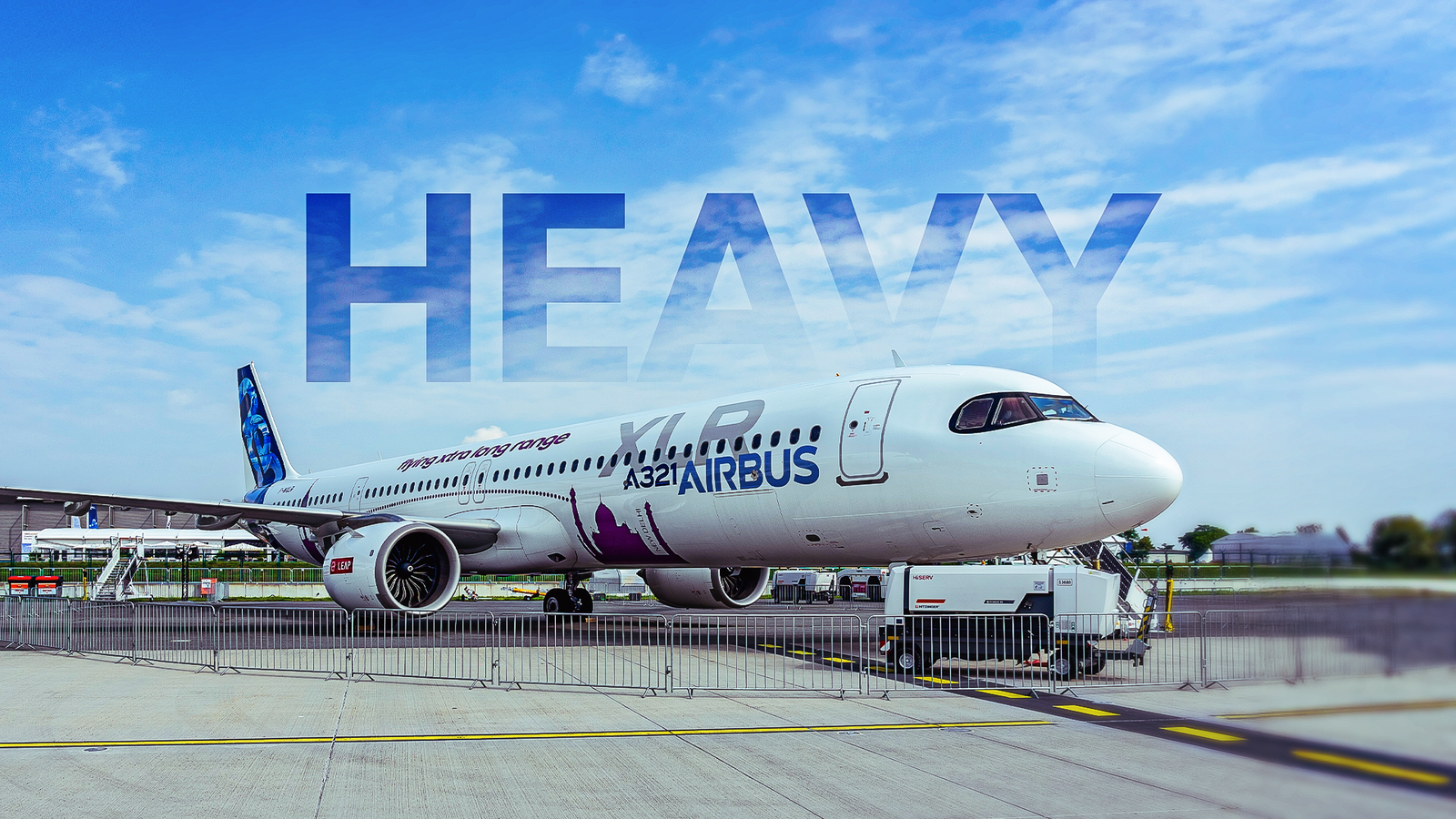
Credit: Sergey Kohl | Shutterstock, Simple Flying Published Nov 21, 2026, 9:00 PM EST Based in the UK, Josh is a keen writer with a degree in Military History. Having worked previously as a financial journalist, he has covered the aviation industry extensively, reporting on airlines' results and monthly passenger statistics in the aftermath of the pandemic, alongside the likes of regulation around sustainable fuels, and the prospects for hydrogen-powered commercial flight. He joins Simple Flying with a lifelong love of all things aviation. Sign in to your Simple Flying account The Airbus A321XLR has helped open a new chapter in long-and-thin aviation. As the latest variant to appear in the Airbus A320 family, the XLR — or Extra Long Range — has taken the crown as the longest-range commercial narrowbody. Simply put, it has provided operators with arguably the best means yet of efficiently serving long-haul routes that would otherwise be unsuited to larger, widebody aircraft. Despite its impressive capabilities, airlines have been known to put the XLR to work on connections that span a fraction of the distance the aircraft can actually fly. In some extreme cases, these do not even stretch to an hour of flight time. But modifications were needed for the XLR to earn its title, and these added weight. So for those opting to schedule their XLRs on such short routes, the reality is accepting the penalties of operating a heavier plane than might normally do the job. Nonetheless, carriers continue to do so anyway, which raises the question: Why? The Airbus A321XLR: Modified For Range Credit: Airbus On the surface, the A321XLR and standard Airbus A321neo appear almost identical. They share a score of common features, from their engines to their capacities to their basic dimensions, including wingspans and the same fuselage length, width, and height. A bystander could not be blamed for mistaking one for the other as a result. Airbus deliberately developed the duo this way too, with these retained features making it operationally viable for airlines to operate both variants in their fleets. Unchanged dimensions mean the same gate spacing and ground equipment can be used at airports, for instance. It also simplifies crew training, as pilots can fly either variant without having to train for an entirely separate type rating. Select A321XLR and A321neo specifications, from Airbus: Aircraft/Specification Airbus A321XLR Airbus A321neo Max passenger capacity 244 seats 244 seats Typical capacity (two-class) 180 to 220 seats 180 to 220 seats Range 4,700 nautical miles (8,700 km) 4,000 nautical miles (7,400 km) Max take-off weight 222,667 pounds (101.50 tonnes) 213,848 pounds (97.00 tonnes) Overall length 146 feet, 0 inches (44.51 meters) 146 feet, 0 inches (44.51 meters) Wingspan 117 feet, 5 inches (35.80 meters) 117 feet, 5 inches (35.80 meters) Height 38 feet, 8 inches (11.76 meters) 38 feet, 8 inches (11.76 meters) Engines CFM LEAP-1A / Pratt & Whitney PW1100G CFM LEAP-1A / Pratt & Whitney PW1100G There are key differences between the two, which is why the XLR has a stronger range and higher maximum takeoff weight. The range is largely enabled by the addition of a permanent 3,407.82-US gallon (12,900-3liter) rear center tank on the XLR, which also explains the increased weight; Airbus has also developed an updated fuel system and outfitted the variant with necessary structural reinforcements. Ultimately, this has pushed the XLR’s maximum range to 4,700 nautical miles (8,700 km) — which is a notable step up on the NEO’s. But Several Airlines Schedule A321XLRs On Short Routes Credit: Air Canada Because of this, any instance where an airline chooses to use the A321XLR on a short-haul hop may seem counterintuitive. Indeed, the XLR was specifically designed to increase the A320 family's top range. Even so, many airlines do use the variant for this purpose in practice. Air Canada uses its XLRs in part to connect Ottawa Macdonald-Cartier International Airport (YOW) and Toronto Pearson International Airport (YYZ), as well as Montréal-Trudeau International Airport (YUL) and Toronto, for instance. Each of these journeys lasts roughly 39 and 53 minutes, respectively, spanning between 197 nautical miles (364 km) and 274 nautical miles (507 km). Concurrently, the carrier also services its almost nine-hour Toronto to Tenerife South Airport (TFS) route using XLRs. Across the Atlantic, Ireland’s Aer Lingus XLRs flew more than 300 flights exceeding 3,100 miles (2,694 nautical miles or 4,989 km), alongside over 200 flights of 1,250 miles (1,086 nautical miles or 2,012 km) or fewer, in July this year, according to aviation data platform Avi-Go. These included Dublin Airport (DUB) to Nashville International Airport (BNA), scheduled at nine hours and 20 minutes, but also Dublin to London Heathrow Airport (LHR) and Dublin to Josep Tarradellas Barcelona–El Prat Airport (BCN), lasting just 48 minutes and one hour and 50 minutes, respectively. Needless to say, the XLR is by no means solely used for its range in either case. A321XLR Deliveries Still In Their Early Stages Credit: Aer Lingus Air Canada and Aer Lingus are not alone, though. It is common practice among A321XLR operators to run the models on diverse routes with wide-ranging flight times and distances. At least, this is the case as it stands. Based on data from aviation analyst Cirium covering last July, American Airlines, Saudia, and Wizz Air were among the handful of XLR operators that were doing just that. The former flew its XLRs on journeys spanning the 540- to 1,079-nautical mile (1,000- to 1,999-km) and 2,700 to 3,239-nautical mile (5,000- to 5,999-km) brackets, as well as everything in between. Interestingly, these figures showed Iberia — the XLR’s launch customer back in October 2024 — was the only carrier to exclusively use the variant for connections in the highest 2,700- to 3,239-nautical mile (5,000- to 5,999-km) and 3,240- to 3,779-nautical mile (6,000- to 6,999-km) brackets over the course of the month. Airbus A321XLR operators as of mid-November: Airline Number of A321XLRs Initial delivery Iberia 8 October 2024 Aer Lingus 6 December 2024 Wizz Air 10 May 2025 Qantas 7 June 2025 American Airlines 11 October 2025 Qanot Sharq 1 December 2025 IndiGo 4 January 2026 Air Canada 6 April 2026 Saudia 5 May 2026 United Airlines 2 June 2026 Middle East Airlines 1 November 2026 Total 61 - In other words, the carrier that has had the most time to incorporate the aircraft into its fleet appeared to be the one getting the most out of the XLR’s range most frequently. That is not surprising, though, given Airbus has only begun delivering the model in the past few years. By our count, just 61 models had been delivered to 11 carriers as of the time of writing in November, out of more than 500 orders placed. Airlines Still Toying With A321XLR Schedules As A Result? Credit: Iberia As such, those tasked with fitting the A321XLR into wider schedules have only recently benefited from the jets actually being on hand. Although orders placed years in advance will have given time to prepare, there is little replacement for real-world experience — especially since the XLR is, in many ways, unmatched by anything that has come before it. In Iberia’s case, the XLR has appeared more capable than anticipated. “[It’s] even better than originally planned in terms of stage length,” chief executive Marco Antonio Trujillo said previously. “In fact, we are operating currently to the Caribbean, San Juan and Santo Domingo, where initially we were not thinking that the range could get over there.” On the flip side, Air Canada had planned to introduce XLRs between Toronto and London Heathrow this year. However, the Canadian flag carrier pulled the type before it could even debut on the service, instead opting to stick with narrowbodies for the time being. All of this goes to say, planning in advance is one thing, but meeting operational requirements in real time can be another story altogether. Widebodies Are Also Not Always Confined To Long-Haul Flights This can also explain why widebodies are sometimes used for surprisingly short journeys. Where the A321XLR’s capacity makes it an ideal, like-for-like replacement for other narrowbodies and the A321neo in particular, sometimes that is not even enough. Several short-haul services this year were scheduled to be flown by widebodies, as flagged by industry publication Aerospace Global News, which are traditionally associated with long-haul routes. Not least, the Airbus A350 — itself known for carrying out the longest flights on offer today — was deployed on several intra-European flights, as shown below. Similarly, the double-decker Airbus A380 saw use within Asia on a sub-six-hour connection that would technically fail to qualify as long-haul by definition. Select widebody-operated short-haul routes scheduled for this year, from Aerospace Global News: Airline Route Aircraft Great-circle distance Approx. flight time Air Transat Montreal (YUL) — Quebec City (YQB) Airbus A330 126 nautical miles (233 km) 50 minutes Air France Malabo (SSG) — Douala (DLA) Airbus A330 62 nautical miles (116 km) 30 minutes Brussels Airlines Lomé (LFW) — Accra (ACC) Airbus A330 91 nautical miles (169 km) 35 minutes Air Europa Madrid (MAD) — Barcelona (BCN) Boeing 787 261 nautical miles (484 km) 1 hour, 15 minutes Aer Lingus Dublin (DUB) — Madrid (MAD) Airbus A330 784 nautical miles (1,452 km) 2 hours British Airways London (LHR) — Madrid (MAD) Boeing 777 671 nautical miles (1,243 km) 2 hours, 15 minutes Iberia Madrid (MAD) — London Airbus A350 671 nautical miles (1,243 km) 2 hours, 20 minutes Finnair Helsinki (HEL) — London Heathrow (LHR) Airbus A350 1,001 nautical miles (1,853 km) 3 hours Singapore Airlines Singapore (SIN) — Shanghai (PVG) Airbus A380 2,049 nautical miles (3,794 km) 5 hours, 15 minutes As to why such huge aircraft are selected for flights that do not quite match up to their capabilities, there are several reasons. Demand, for example, may call for more seats and make a bigger jet the more viable option. Airport slot constraints may similarly play a part, leaving airlines having to move greater numbers of passengers at once. The same factors apply to the XLR, which is designed to offer carriers a lower-risk alternative when demand isn't there to support running a widebody. No doubt, that also stretches to opening up new so-called long and thin routes, although discovering these will take time, as we are seeing today. Utilizing Aircraft Vital Either Way Credit: Airbus At the core of all the decision-making as to which aircraft to use on which route, when and how often, and so on, is the simple fact that a plane sitting out of action on the ground is a plane not generating revenue. Whether it's a narrowbody or a widebody, using it is better than leaving it idle while waiting for the perfect deployment. Add in factors such as demand, and the reasons an aircraft type may not appear to match the route distance pile up. In the case of the A321XLR, Airbus has created a model as impressive for its flexibility as it is for its range. Yes, it can match several widebodies in distance, replacing them if needed due to lackluster demand. It can also fill in or complement fellow narrowbodies when required, thanks to its commonality with the A321neo. The caveat is the weight penalty, which is most noticeable on shorter routes. Nonetheless, airlines have clearly deemed it an acceptable trade-off to keep both their routes and jets active, and thus generating revenue in turn.
Why Airlines Accept The Airbus A321XLR's Heavier 101.5-Tonne Maximum Takeoff Weight On Flights Shorter Than An Hour
Full Article
Original Source
Read the full article at Simpleflying →KhanList aggregates and links to publicly available news content. We do not host full articles from third-party sources. Always verify important information with original sources.