
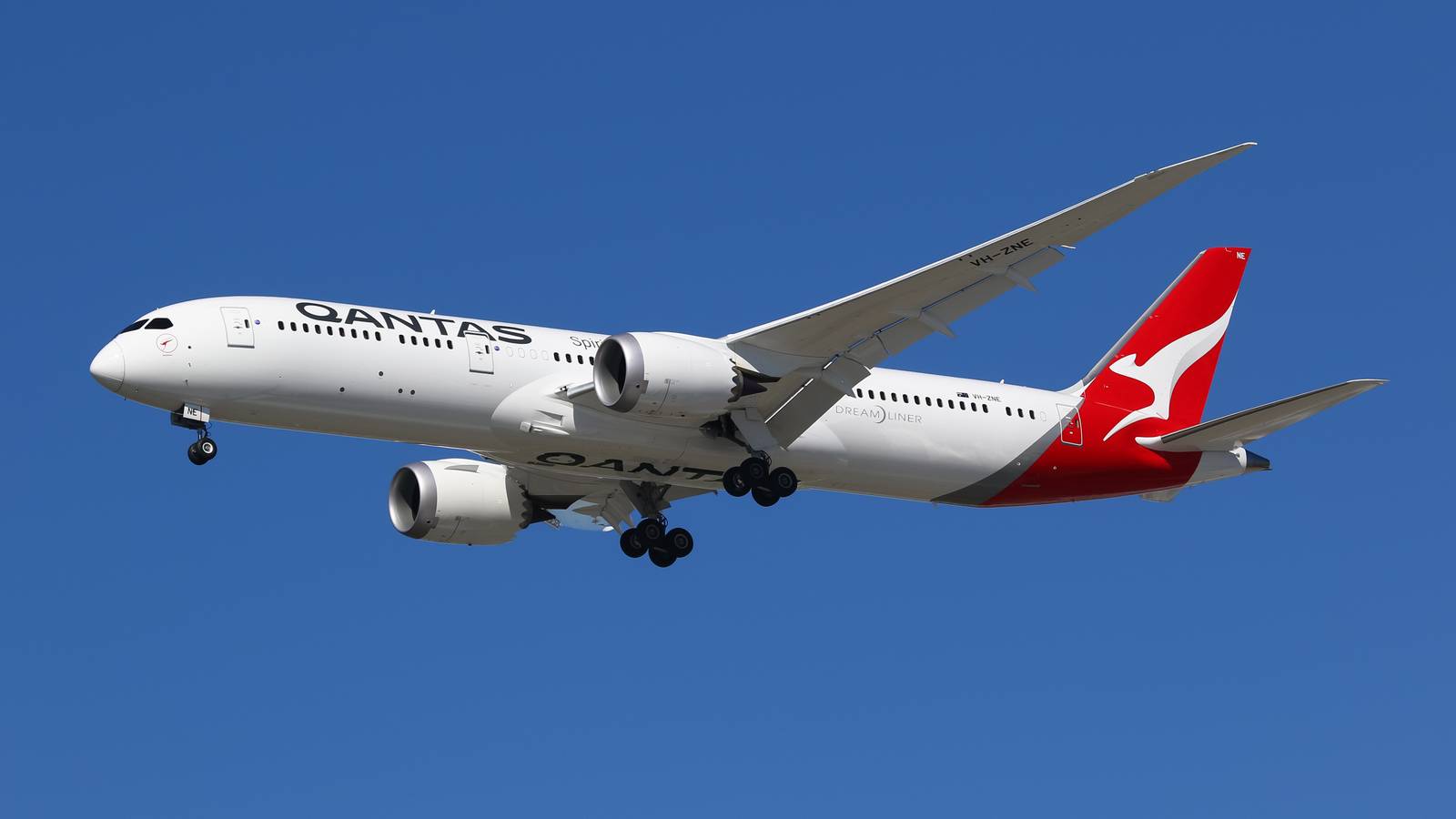
Published Nov 21, 2026, 8:00 PM EST Aaron is an aviation enthusiast and world traveler with a deep interest in aerospace history and technology. He has traveled around the world numerous times, often incorporating visits to aviation museums and historic aircraft collections into his journeys. A native of New Zealand, he is an expert in aviation and maintains a broad interest in a variety of other subjects. The Airbus A330-900 (A330neo) and the Boeing 787-9 Dreamliner are very close competitors. On the face of it, the 787-9 has a much larger order book (1,493 vs 511), has a noticeably higher market value, and is a cleansheet aircraft. This could be interpreted as suggesting the 787-9 has a cost advantage over the A330-900. However, the truth is more complicated, and it allows the A330-900 to remain competitive. As Simple Flying has previously highlighted, headline list figures are an unreliable method to determine the true costs and value of aircraft and aero engines. To faithfully answer the headline of this article, list prices need to be set aside in favor of market prices and lease rates. The aviation industry runs on very thin margins. Consequently, averaging the costs of these two aircraft without considering the contingent variables of the airline in question will likely provide highly misleading numbers. Why List Prices Are Misleading Credit: Karolis Kavolelis l Shutterstock To understand why list prices are not particularly useful, it is necessary to understand what they are. An aircraft manufacturer’s list price is the published, baseline 'sticker price' for a new aircraft before negotiated discounts, rebates, or custom configuration changes. These are typically inflated prices where the manufacturer is essentially saying, "this is what we value our product at," even though it realistically never sells them at that price and airlines and lessors would never pay it. For an analogy, think of an airline offering the chance to win a holiday package "valued at $10,000." That figure may include estimates for tours, accommodation, flights, transfers, etc., all priced at the highest retail price. In practice, the airline would likely be utilizing spare capacity, receiving bulk discounts, and having special pricing arrangements, so it's only paying a fraction of the headline figure. Likewise, holidaymakers may be able to book their own analogous trip at a fraction of the cost. List prices are similar, although they may provide a starting point in complex aircraft negotiations. As discussed below, sometimes the airplane manufacturer (Airbus, Boeing) has significant bargaining power in negotiations, while at other times the balance can swing to the customer (e.g., Emirates vis-à-vis the 777-9). The Value Of Widebodies Has Risen Credit: Sr. R l Shutterstock Currently, the market values for Boeing 787-9s and A330neos are unusually high due to production bottlenecks at Airbus and Boeing. IBA writes, "This has pushed the expected delivery dates for many recent orders as far back as early 2030. With hampered production rates, it comes as no surprise that this has, in turn, allowed for Market Values and MLRs to rally over the years." The value of widebody aircraft has grown especially fast over the last year. In a November 2026 update, IBA reported, "Constrained supply is supporting trading values, with 2026 market values up 7% for the 787-9, 5% for the A350-900, 24% for the 777-300ER and 20% for the A330-300, alongside rising lease rates." This shows a significant increase in market value for the older A330-300 cousin to the A330neo, but fails to include the A330neo price increase. Cost comparison (per IBA, My Air Trade, Green Airlines) Airbus A330-900 (A330neo) Boeing 787-9 Dreamliner List price $296.4 million in 2018 $292.5 million in 2019 Market value (new) $119 million $151–160 million Market value (oldest airframes) $73.1 million (2018 builds) $70.6 million (2014 builds) Monthly lease rate per month $900,000-$990,000 $1.05-$1.16 million Average seating (actual) 281 264 Average route flown 2,800–3,300 nautical miles 3,500–4,100 nautical miles While it's unclear how much the A330-900's market value has increased recently, its market lease rates are up by as much as 13%. The monthly market lease rate for a new Boeing 787-9 Dreamliner is around $1.05-$1.16 million, and around $900,000-$990,000 for the A330neo. At mid-age, the 787-9's rate is around $695,000-$792,000, while the A330neo is around $600,000-$756,000 per month. Market Values Of New & Used A330-900s & 787-9s Credit: MH.Chuang l Shutterstock In Q1 2026, for a newly delivered Airbus A330-900, IBA ascribed a market value of $118.5 million. Meanwhile, a new Boeing 787-9 is expected to trade in the region of $160 million. Overall, the new-delivery market value of a Boeing 787-9 is estimated to be in the $151–$160 million range by different industry analysts. The new-delivery market value range of an A330-900 (A330neo) is around $118.5–$119 million. For comparison, the market value for larger 787-10 new-builds is around $168 million, or about $8 million more than the standard 787-9. The new value of the short 787-8 is around $116 million, or almost the same as a new A330-900. My Air Trade shows that the oldest 787-9 is estimated at around $70.6 million, while the oldest A330-900 is valued at around $73 million. The oldest second-hand examples are estimated to be $47 million for the 787-8 and $95 million for the 787-10. No market values are given for the unpopular A330-800 variant, perhaps due to the limited deliveries and lack of market trading for the aircraft. Separately, the market values for the A380 are very low. The oldest A380s are estimated to be worth $12 million, and the most valuable are around $45 million. Put another way, a new A330-900 is worth around 3x-10x that of the world's remaining A380s. A330-900 & 787-9 As Competitor Aircraft Credit: Parkdolly l Shutterstock The A330-900 and Boeing 787-9 compete on the market for a similar (but not the same) market segment. These aircraft are similar in length and have comparable typical 3-class seating capacities: 260-300 for the A330-900 and 250-290 for the 787-9. The maximum seating is around 460 and 420, respectively. In practice, the 787-9s are typically assigned more to flagship routes than the A330neo and are configured with an average of 264 seats, compared with the A330-900's denser 281-seat average. They have almost identical maximum take-off weights (251 tonnes vs 254 tonnes) and are both very competitive in terms of cargo capacity. The Boeing 787-9 is deemed to have a modest advantage in range, although that only matters in edge cases, as most missions are well within the A330neo's maximum range. When it comes to fuel burn, it depends heavily on payload, configuration, and range. As a rule, the 787-9's fuel advantage grows with longer ranges. One of the biggest differences is that the 787-9 is a fundamentally cleansheet composite aircraft, while the A330neo is a comprehensive update on the 1980s-designed A330. The A330neo has new engines, new wings, new avionics, and other updates, but it still has an older architecture and a mostly aluminum fuselage. Costs Are Highly Contingent Credit: Joao Fachetti l Shutterstock It is impossible to put a precise figure on how much the A330-900 and 787-9 cost to operate relative to each other. Too much is contingent. Even setting aside that these aircraft are better optimized for different routes and missions, many airline-specific factors matter. One important factor is the composition of the airline's overall fleet. If an airline (e.g., Delta) also operates older A330s and new A350s, it can significantly increase fleet commonality and significantly reduce maintenance and training expenses. Airbus claims up to 95% commonality in A330ceo/A330neo spare parts, including substantial tooling commonality and the same pilot type rating between the generations. Airbus also claims, "Today, the A321neo and the A330neo have proven to deliver up to 30% lower operating costs when operated together." By contrast, the benefits of commonality are more limited with airlines operating the Boeing 777 and Boeing 787, with no common type rating and the 787 requiring dedicated tooling. Commonality with the predecessor Boeing 767 is even more limited. However, there is a very high benefit to operating parallel fleets of 787-8s and 787-10s. The value of commonality can drive major airlines (e.g., Southwest, Ryanair) to only operate one family of aircraft. Bulk Orders & Large Fleets Credit: OleksSH l Shutterstock As shown by the market prices, the A330-900 is around $30–40 million cheaper in new aircraft value and has a lower lease rate per month. This suggests the A330-900 benefits from lower capital, financing, and leasing costs. But this hides a major distortion. This is the secondary-market value, not the cost at which they were purchased. The largest order (cumulative) for the A330-900 is by Cathay Pacific for 41, while the largest cumulative order for the 787-9 is 132 by United (and 221 for all Boeing 787 variants). As a general rule, an airline purchasing aircraft in the single digits may be in a negotiating position to get around 25% off the list price (with massive variation). An airline ordering 50–100 aircraft could be able to negotiate a 45–55% discount off the list price. These purchase price differences disappear once they hit the secondary market. In practice, airlines can bundle orders, as when Qatar Airways ordered 130 Dreamliners and 30 Boeing 777-9s with options for 50 Boeing 787/777X airliners. All this is to say that the cost of operating an A330-900 may be higher or lower than that of the 787-9, depending on the circumstances. Using some back-of-the-envelope math, both airliners will likely cost around $13,000 per flight hour to operate, plus or minus a few thousand dollars. The winner will be highly contingent.
The True Cost Airbus Charges For An A330neo Compared With Boeing's 787-9 Dreamliner
Full Article
Original Source
Read the full article at Simpleflying →KhanList aggregates and links to publicly available news content. We do not host full articles from third-party sources. Always verify important information with original sources.