
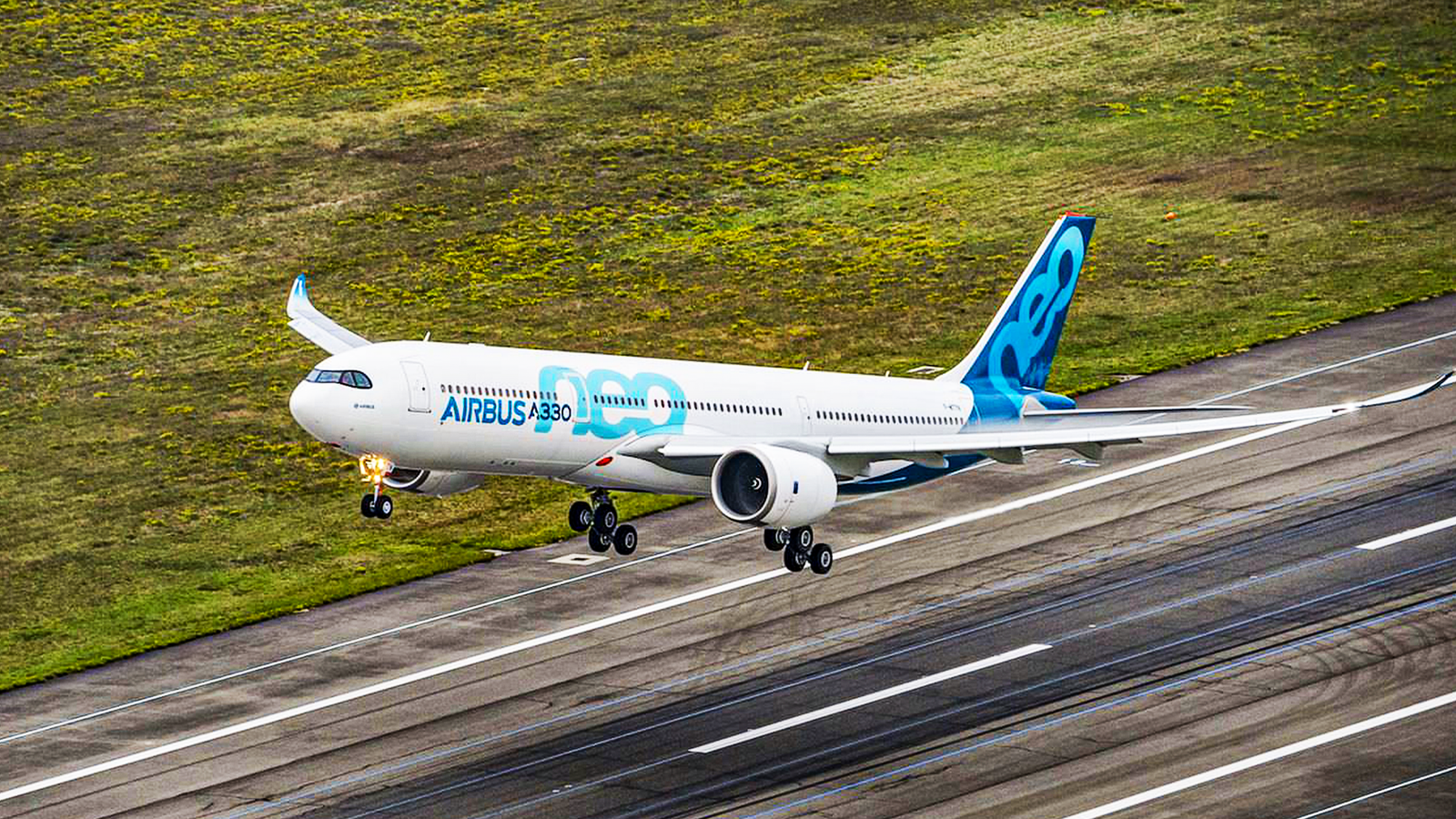
The commercial widebody market is currently displaying one of the most counterintuitive situations in modern aerospace engineering. According to Forecast International, Airbus holds a massive backlog of 1,204 twin-aisle aircraft, but the distribution reveals a glaring divide between its two widebody programs. While international flagships continue to stack orders for the clean-sheet Airbus A350, the A330neo recorded zero deliveries across consecutive summer months, creating the appearance of an isolated program that Toulouse refuses to abandon. The central tension stems from a steady stream of high-profile customer defections that seem to undermine the aircraft's future. Early marquee backers like AirAsia X, Emirates, and Hawaiian Airlines have either formally canceled orders or quietly shifted their long-term fleet strategies toward alternative airframes. According to Forecast International tracking, Airbus handed over six A350 family aircraft in July 2026 while A330 handovers completely stalled. Why does Airbus continue pouring assembly resources into a jet whose launch customers keep stepping aside? A Failed Project? Credit: MC MEDIA STUDIO | Shutterstock The departure of early high-profile customers created a misleading narrative that the A330neo was failing in the marketplace. According to Airliner Insider, AirAsia X formally canceled 15 remaining A330-900 commitments after restructuring to focus on long-haul narrowbodies, while Hawaiian Airlines canceled its order for six A330-800 variants in favor of the Boeing 787-9. Meanwhile, Emirates opted not to finalize a preliminary commitment for 40 A330-900s, choosing instead to consolidate its future widebody fleet around larger twin-aisle models. This customer churn has left Airbus with a lopsided widebody order book. According to Forecast International data, the A350 family commands an 870-to-334 commitment advantage over the A330 line, a 2.6-to-1 ratio that heavily favors the newer carbon-composite airframe. In an official press release from Airbus, Lufthansa reinforced this imbalance by adding 10 A350-900s to its fleet plan, while Morningstar reporting confirmed a new commitment from Riyadh Air for six A350-1000s. These high-profile sales wins give the A350 manufacturing coverage deep into the 2030s, leaving the A330-900 looking increasingly isolated in order summaries. Behind these headline cancellations is a financial framework that makes the A330neo exceptionally resilient on paper; it just may not seem that way when you look at the program broadly. CapEx Versus OpEx According to an industry analysis by Simple Flying, Airbus brought the A330neo to market for roughly $2 billion by re-engining and tweaking the existing A330 airframe, compared to the estimated $15 billion required to develop the carbon-composite A350. The underlying manufacturing tooling was already fully amortized, so Airbus does not need overwhelming sales volume to turn a profit on the assembly line, allowing the program to remain cash-positive at modest production rates of just three to four frames per month. This development cost advantage translates directly into a favorable capital expenditure (CapEx) calculation on airline balance sheets. On medium-haul regional corridors lasting six to 10 hours, spanning 3,000 nautical miles to 5,000 nautical miles (5,556 km to 9,260 km), the lower capital costs easily outweigh the minor trip-fuel burn advantage offered by lighter carbon-composite airframes. These capital economics make a compelling case for budget-conscious carriers and lessors, though actually reaping those savings means airlines need to minimize secondary operational expenses. Lower lease rates quickly lose their appeal if introducing a widebody requires building bespoke maintenance infrastructure or hiring specialized flight crews. Excellent For Cost Cutting? Airbus cockpit architecture and flight deck commonality are highly valuable for airlines trying to cut down on retraining costs. According to Airbus operational specifications, the A330-900neo shares a Same Type Rating with the legacy A330ceo, allowing flight crews to transition between the two generations through short computer-based differences course rather than a full-type rating syllabus. Furthermore, the airframe retains 95% part commonality with previous-generation A330s and requires zero structural or safety retraining for cabin crew, making it easy for legacy operators to insert the new variant into existing flight schedules overnight without expanding their pilot rosters. The aircraft derives its operational versatility from dedicated propulsion and airframe upgrades. According to Rolls-Royce engine specifications, the exclusive Trent 7000 powerplant features a 10:1 bypass ratio and delivers 72,000 lbf (320 kN) of thrust, yielding a 14% fuel burn reduction per seat over earlier A330 models. According to Airbus, the certified 276.7 US ton (251 tonne) Maximum Takeoff Weight upgrade increases nonstop range to 7,200 nautical miles (13,334 km), enabling the A330-900neo to fly transatlantic and long-haul Asian routes that heavier, more expensive widebodies were onceseen as the best fit for. Technical enhancements like these make the airframe an efficient plug-and-play solution for legacy operators, and they also reframe how airline dispatchers view mid-haul capacity. Pairing lower trip costs with extended range, Airbus created a versatile platform capable of serving both high-density regional routes and long-haul secondary corridors. However, having a technologically capable airframe means little if primary flagship customers step away, which has turned Airbus' attention to a different class of operator to sustain production momentum. Where Are The Current Orders? The orders filling Airbus assembly slots now come from tier-one Asian network carriers, Middle Eastern low-cost operators, and global aircraft lessors. When early Western flagships moved toward long-range composite jets, carriers operating high-density regional trunk corridors recognized that the A330-900 offered superior economics for medium-haul missions. These airlines do not need 15-hour non-stop capability; they need maximum seat capacity and low trip costs across six-to-eight-hour regional routes linking major metropolitan hubs. In a June 2026 stock exchange filing, China Eastern Airlines added 25 A330-900s to re-equip its long-haul network out of Shanghai Pudong International Airport(PVG), with deliveries scheduled from 2029 through 2033. According to Airbus order summaries from July 2026, Saudi low-cost carrier flynas ordered five additional A330-900s, raising its total commitment to 20 aircraft to expand regional connections. These commitments complement landmark widebody renewals from Cathay Pacific for 30 firm A330-900s and Vietjet for 20 frames, showing how secondary-market demand is backfilling the backlog vacated by early-launch customers. Relying on low-rate assembly lines creates operational fragility, which could easily occur within the A330neo program. When a program operates at three to four frames per month, minor component problems or quality-inspection delays can freeze monthly handovers, forcing Airbus to balance delivery commitments between high-margin A350 flagships and lower-rate A330 lines. Not Enough Being Made? At its deepest level, keeping the A330neo assembly line open at a modest rate of three to four frames per month is a plan designed to protect Airbus' broader widebody portfolio. Offering a lower-cost derivative in the 250-to-300-seat category, Airbus prevents Boeing from claiming an uncontested monopoly with the 787-8 and 787-9. Crucially, maintaining this secondary line protects high-margin A350 assembly slots in Toulouse, reserving that premium capacity for flagship carriers operating ultra-long-haul routes and offering budget-conscious operators an immediate, lower-risk alternative. However, managing a low-rate widebody program leaves manufacturing operations unusually vulnerable to industrial hiccups. According to reports from Reuters and AeroTime, Airbus recorded zero A330neo deliveries across June and July 2026, followed by just a single handover in August. The delivery suspension stemmed from a pre-delivery inspection that identified an isolated horizontal tailplane quality issue at Airbus' Getafe, Spain, facility. Although the manufacturer identified the root cause and restarted customer handovers in late August, the multi-month slowdown highlighted the narrow operational margin that defines low-rate twin-aisle assembly. The dual-track approach gives Airbus unprecedented commercial flexibility, allowing the ability to adjust widebody output based on global market cycles without abandoning entire market segments. Retaining the A330neo gives airlines seeking near-term widebody capacity a viable option, preventing them from defecting to American competitors when A350 slots are sold out years in advance. In The Shadow Of The A350 It would be unfair to compare the A330neo to the A350's flagship sales figures, though its ability to preserve Airbus’s market share in the middle-of-the-market widebody sector is a huge success in itself. By maintaining a lower-risk, lower-cost derivative alongside its composite flagship, Airbus has built a buffer against shifting airline fleet strategies and macroeconomic downturns. According to Reuters, through August 2026, Airbus manufacturer delivered just 11 A330 family aircraft in the first eight months of the year, a 31% drop from the same period in 2025. With a full-year company target of approximately 870 total commercial aircraft across all product lines, whether A330neo output can consistently return to its target rate of four frames per month will determine whether lessors and airlines maintain confidence in delivery-slot reliability. As early operators manage their fleets toward the late 2020s, the liquidity of these airframes among secondary operators will decide whether the A330-900neo remains a pragmatic long-term workhorse or eventually yields its slots entirely to next-generation composite platforms.
Why Airbus Keeps Building The A330neo Even As Its Biggest Customers Quietly Walk Away
Full Article
Original Source
Read the full article at Simpleflying →KhanList aggregates and links to publicly available news content. We do not host full articles from third-party sources. Always verify important information with original sources.