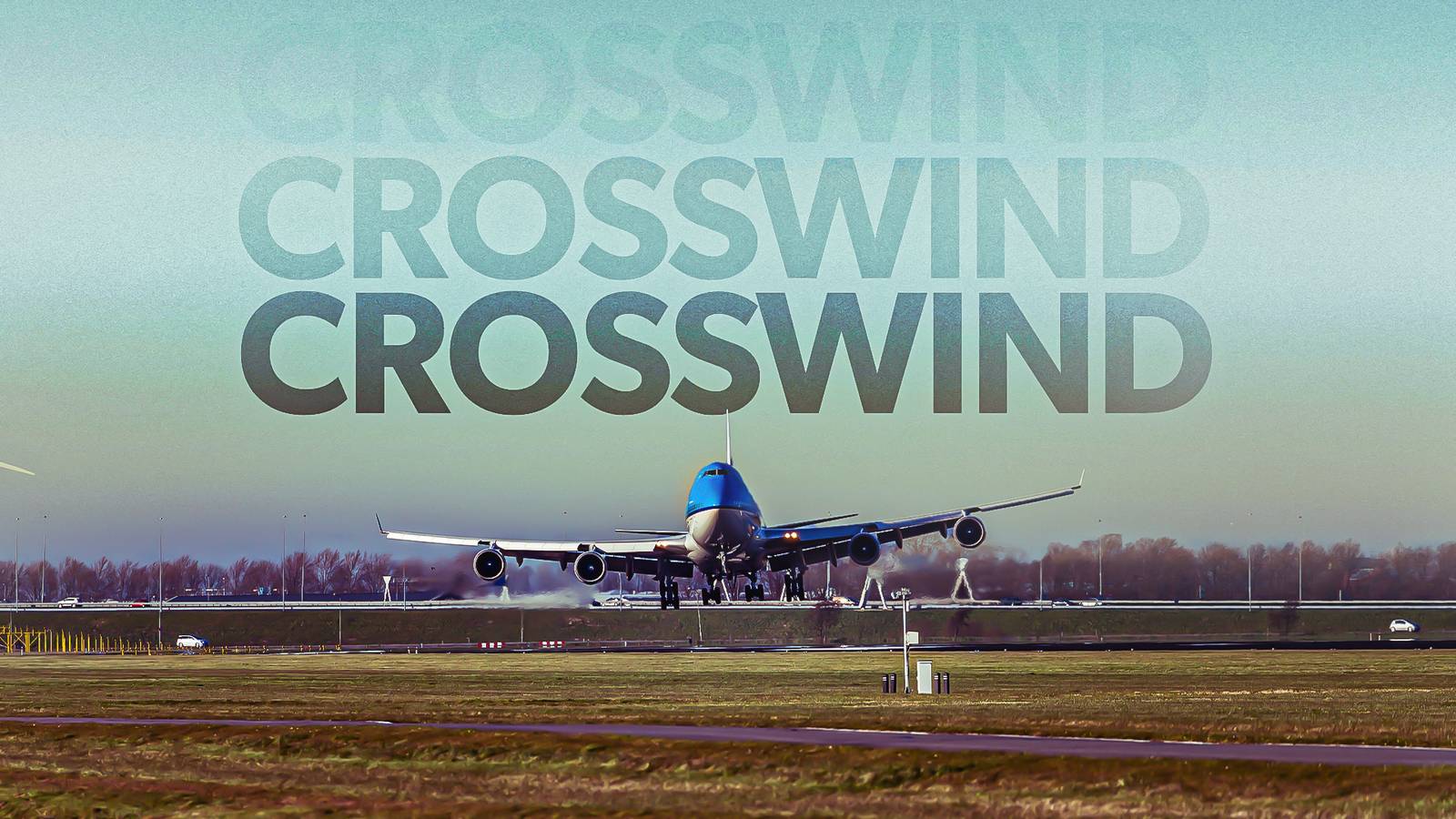
Published Aug 8, 2026, 10:00 AM EDT Brandon's passion for aviation started at a young age. Growing up, he was involved in the flight simulator and VATSIM communities, and he went on to earn his private pilot license while in college. Brandon holds a BSE in computer science and currently works as a software engineer. Outside of work, he continues to build flight hours and explore new airports around the country. The Boeing 747 and Airbus A380 are both large, heavy, four-engine aircraft that operate into the same airports and land on the same runways. However, in a crosswind, the techniques their captains use to get them on the ground safely are not the same. The 747 captain has three crosswind landing methods available and the flexibility to choose between them based on conditions. The A380 captain works within a narrower set of options defined by a wingspan that is 50 feet (15 meters) wider and a flight control system that limits bank angle to 5 degrees during landing. The differences come down to aircraft geometry: wingspan, landing gear configuration, pilot eye height, and the physical distance between where the captain sits and where the main gear touches the runway. Here is how each aircraft handles crosswinds, why the techniques differ, and what limits each captain operates within. The Three Crosswind Landing Techniques & When Each Is Used Credit: Shutterstock A crosswind exists when the wind is blowing at an angle to the runway rather than straight down it. During the approach, the wind pushes the aircraft sideways, and the pilot must compensate to keep the aircraft tracking toward the runway centerline. There are three established techniques for doing this, and the choice between them depends on the aircraft type, the crosswind component, and the manufacturer's guidance. The crab technique involves pointing the nose of the aircraft into the wind during the approach so that the aircraft's heading is angled relative to the runway, but its ground track remains aligned with the centerline. The aircraft approaches the runway looking like it is flying sideways relative to the pavement. Just before touchdown, the pilot applies rudder to swing the nose back in line with the runway, a maneuver called the de-crab. The timing and speed of the de-crab are critical. Too early and the wind pushes the aircraft off centerline before the wheels touch. Too late and the aircraft touches down with the landing gear at an angle to the direction of travel, loading the tires and gear sideways. The sideslip or wing-low technique involves banking the aircraft into the wind with one wing lowered and applying the opposite rudder to keep the nose aligned with the runway throughout the approach. The aircraft flies in a cross-controlled state, with the bank angle counteracting the wind's lateral push and the rudder preventing the nose from turning. This technique is common on smaller aircraft but restricted on large swept-wing jets because the bank angle required in a strong crosswind can bring the outboard engine or wingtip close to the runway surface. Most widebody operators use the crab approach with a de-crab near touchdown, or a combination where a partial crab is maintained with a slight wing drop added in the final seconds before landing. Why The 747's Wingspan Gives Its Captain More Options Credit: Shutterstock The Boeing 747's wingspan of 211 feet (64.4 meters) is large by commercial aircraft standards but considerably shorter than the A380's. That difference matters in a crosswind because the wing-low technique requires the aircraft to bank toward the wind, and the degree of bank determines how close the downwind wingtip and outboard engine nacelle come to the runway surface. On the 747, the combination of wingspan, engine ground clearance, and landing gear height gives the captain enough margin to use a moderate wing-low input at crosswind components up to 26 knots without the outboard engine approaching the pavement. Boeing allows 747 crews to use all three crosswind techniques: crab, sideslip, and a combination of both. The sideslip-only method is limited to crosswinds below 26 knots to maintain adequate ground clearance. Above that, Boeing recommends the crab or combination approach. In practice, most 747 captains use a crab on the approach with a de-crab and slight wing drop in the final seconds before touchdown, combining elements of both techniques. The 747 also has body gear steering on its center main landing gear, which provides directional control after a crabbed touchdown. If the aircraft touches down with residual crab angle and the gear contacts the runway at an angle to the direction of travel, the body gear can be steered to align with the aircraft's ground track, reducing the side loading on the tires and helping the aircraft track straight down the runway. The 747's landing gear was designed to withstand touchdown at crab angles of up to 45 degrees, though operational crosswind limits keep actual crab angles well below that figure. The body gear steering and the structural tolerance for angled touchdowns give the 747 captain a wider margin of error during the de-crab than aircraft without steerable body gear. Why The A380 Captain Stays In The Crab Credit: Denver International Airport The A380's wingspan of 261 feet, 10 inches (79.7 meters) is roughly 50 feet (15 meters) wider than the 747's, and that additional span is the primary reason the wing-low technique is not practical on the aircraft. At the bank angles required to counteract a moderate crosswind, the downwind outboard engine on the A380 sits close enough to the runway surface that the risk of a nacelle strike becomes a concern at crosswind components well below what the 747 can handle in a sideslip. Airbus limits bank angle during crosswind landings on the A380 to a maximum of five degrees, which provides only a small amount of lateral drift correction and is not sufficient to fully counteract a strong crosswind through wing-low alone. Airbus recommends the wings-level crab technique as the standard crosswind landing method for the A380. The captain flies the approach with the wings level, and the nose pointed into the wind, maintaining a crab angle that keeps the aircraft tracking toward the runway centerline. The A380's standard operating procedure positions the pilot directly above the runway centerline during the approach, which means the main landing gear is displaced a considerable distance downwind of centerline in a strong crosswind. In that configuration, de-crabbing fully before touchdown is counterintuitive because aligning the nose with the runway while the main gear is already displaced downwind would move the gear even further from centerline. Many A380 crosswind landings are therefore made with residual crab angle at touchdown. The result is that the A380 captain's crosswind technique is more constrained than the 747 captain's. The 747 captain can choose between three methods and adjust the technique to conditions. The A380 captain works within a narrower set of options defined by the aircraft's wingspan, the 5-degree bank limit, and the physical geometry of sitting high above main gear that is displaced downwind. The technique works, and the A380 has an established record of operating safely in crosswind conditions at airports around the world, but the approach requires the captain to accept a crabbed touchdown rather than attempting to fully align the aircraft with the runway before the wheels touch. How Pilot Seat Height & Main Gear Position Change The Picture The pilot's physical position relative to the main landing gear affects how a crosswind landing looks and feels from the cockpit. On the 747, the pilot's eye height above the runway is approximately 28.5 feet (8.7 meters). On the A380, it is approximately 23.6 feet (7.2 meters). The 747 captain actually sits higher than the A380 captain despite the A380 being the larger aircraft, because the 747's cockpit is positioned on top of the upper deck while the A380's cockpit sits between the two passenger decks. Airbus placed the A380 cockpit at a height comparable to other Airbus widebodies so that pilots transitioning to the type would have familiar visual cues during approach and landing. The more significant factor in a crosswind is the lateral distance between the pilot's eye position and the main landing gear. On both aircraft, the main gear sits well behind and below the cockpit. When the pilot positions themselves over the runway centerline during a crabbed approach, the main gear are displaced downwind by an amount that depends on the crab angle and the lateral distance between the pilot's seat and the main gear bogies. On the A380, the main gear track is wider than the 747's, and the gear sits further from the pilot's position. A crab angle that places the 747's main gear 5 feet (1.5 meters) off centerline may place the A380's main gear 8 feet (2.4 meters) or more off centerline under the same conditions. The A380 captain must account for a larger gear displacement than the 747 captain at the same crab angle. The A380 compensates for this with external camera systems that the 747 does not have. Live video from cameras mounted under the nose and on the vertical tail can be displayed on cockpit screens during ground operations, giving the crew a view of the landing gear position relative to the runway that is not available from the cockpit windows alone. A graphical representation of the airport surface, including runways and taxiways, also assists with ground steering. What The Crosswind Limits Are & How They Compare Credit: Shutterstock The maximum demonstrated crosswind component for the Boeing 747 is 30 knots, as published in the aircraft's Flight Crew Operations Manual. The A380 was demonstrated at a crosswind component of 38 knots during certification testing, when test pilot Claude Lelaie landed the aircraft in 56-knot winds at Keflavík, Iceland with a 38-knot crosswind component. The A380's demonstrated figure is higher than the 747's, which reflects the conditions available during each aircraft's certification flight test campaign rather than a definitive statement about which aircraft handles crosswinds better. The distinction between demonstrated and limit is important. During type certification, the FAA requires the manufacturer to demonstrate that the aircraft can be controlled in crosswinds up to 20% of the stalling speed in landing configuration. The test must be performed without requiring exceptional skill or alertness from the pilot. The resulting figure is published as the maximum demonstrated crosswind component, not as a maximum operating limit. Boeing does not mandate a crosswind limit for the 747 beyond the demonstrated value. Airbus does not mandate one for the A380. Airlines set their own operational crosswind limits based on the demonstrated figure, runway conditions, pilot experience, and company policy.
Why A Boeing 747 Captain Thinks About Crosswind Landings Differently Than An Airbus A380 Captain
Full Article
Original Source
Read the full article at Simpleflying →KhanList aggregates and links to publicly available news content. We do not host full articles from third-party sources. Always verify important information with original sources.