
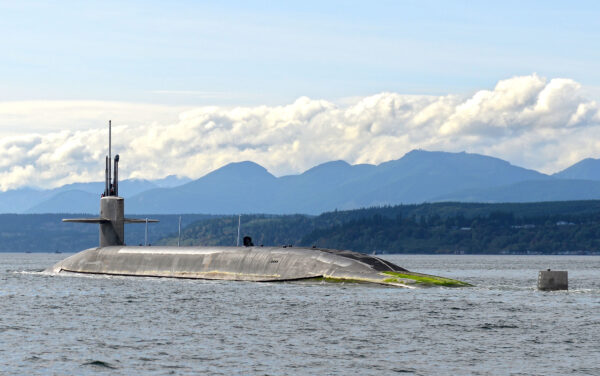
Debate over the three non-nuclear principles has resurfaced in Japan as the government of Prime Minister Takaichi Sanae prepares a new National Security Strategy, due at the end of 2026. Even the status of the principles is contested. Some regard them as the country’s foundational principle (kokuze), while others describe them as a policy guideline, suggesting that the government is free to change it. Prime Minister Sato Eisaku first announced the principles in 1967, and the Diet has reaffirmed them on multiple occasions since then. The principles state that Japan will neither possess nor produce nuclear weapons, nor permit their introduction into its territory. As long as Japan remains a party to the Non-Proliferation Treaty (NPT), the only practical debate concerns the third principle: non-introduction. The commitments not to possess or produce nuclear weapons nevertheless sent an important message to the world when the principles were first articulated, before Japan ratified the NPT. In March 2010, Foreign Minister Okada Katsuya revealed that a secret agreement (mitsuyaku), broadly defined, had existed between Washington and Tokyo over the introduction of nuclear weapons. Under the U.S. interpretation, “introduction” referred only to the permanent deployment of nuclear warheads in storage facilities ashore. The Japanese government, by contrast, regarded transit through Japan’s territorial waters or port calls by nuclear-armed vessels as introduction as well. Successive Japanese leaders maintained that, in the absence of a U.S. request for “prior consultation” under the arrangements associated with the U.S.-Japan Security Treaty of 1960, Tokyo assumed that visiting U.S. vessels were not carrying nuclear weapons. Yet such vessels could not simply leave their nuclear weapons elsewhere before entering Japan. It is now an open secret that, under the Japanese definition, the United States “introduced” nuclear weapons into Japan during the Cold War. Since the revelation in March 2010, Tokyo has maintained that there is no need to be concerned about introduction because the United States does not deploy nuclear weapons on surface vessels and has no nuclear weapon system for the vessels that regularly visit Japan. At the same time, successive Japanese governments have upheld the position Okada first articulated in the Diet that month: in extreme circumstances in which Japan’s survival cannot be secured without allowing the introduction of nuclear weapons, the government of the day “shall make a decision by taking full responsibility.” This effectively leaves open the possibility of permitting introduction in a contingency. Some therefore argue there is no need to revise the three non-nuclear principles, since they have already become “two and a half” principles. Okada’s formula, however, does not resolve all the problems surrounding the principles. First, it only addresses contingencies, leaving unanswered how Tokyo could handle the issue in peacetime. Second, the United States is developing a nuclear-armed sea-launched cruise missile (SLCM-N), with the aim of making it operational in the mid-2030s. While not officially confirmed yet, the missile is expected to be carried by attack submarines of the kind that regularly visit Japan. Third, Okada’s formula addresses introduction in the Japanese sense – transit and visiting – without addressing introduction in the U.S. sense: storage ashore. Once U.S. attack submarines begin carrying SLCM-N – or, more precisely, once they become capable of carrying it – Tokyo will find it difficult to avoid allegations that the United States is introducing nuclear weapons into Japan, regardless of whether a particular visiting submarine actually carries them. Under its longstanding “neither confirm nor deny” (NCND) policy, Washington will not disclose whether visiting submarines carry nuclear weapons. Moreover, under the U.S. definition, neither transit nor port visits constitute introduction. This will therefore be primarily a problem for Japan. Some, particularly critics of the U.S.-Japan alliance, will argue that Tokyo should ban visits by submarines that might be carrying nuclear weapons. Doing so, however, could undermine the alliance’s deterrence and damage relations with Washington. If Tokyo rules out denying access to U.S. submarines, it has three options. First, it could drop or amend the non-introduction principle. Second, in the most far-reaching version of such a revision, it could explicitly permit the introduction of nuclear weapons, including storage ashore as well as transit and port visits, opening the way to possible future nuclear-sharing arrangements. Third, it could adopt a narrower, more technical change: revise its definition of introduction so that transit and port visits no longer fall within it, bringing Japan’s interpretation into line with that of the United States. Whichever option Tokyo chooses, it will be highly contentious in political terms at home. Only strong political leadership could address this problem. Many politicians appear unprepared to tackle this issue now, believing that they still have time. But it is not too early to begin laying the groundwork for a decision.
Whither Japan’s Three Non-Nuclear Principles?
Full Article
Original Source
Read the full article at Thediplomat →KhanList aggregates and links to publicly available news content. We do not host full articles from third-party sources. Always verify important information with original sources.