
You have likely heard of the Pax Romana, the era of peace forced upon the ancient world by Roman power. You might even know of the Pax Americana that shaped the post-war global order. But perhaps you have not yet heard of “Pax Silica.” By the time you finish reading this, you will understand why it is the most critical national security initiative missing from your favorite news source — except, of course, the Washington Examiner.This strategic economic coalition, initiated by State Department Undersecretary Jacob Helberg, serves as Washington’s primary defense against Chinese economic coercion. The alliance now includes 24 signatories, expanding rapidly following the State Department Pax Silica Summit. At the heart of its strategy sits a 4,000-acre industrial hub in New Clark City, located within the Luzon Economic Corridor of the Philippines. This project is not a routine corporate investment; it is a vital piece of national security statecraft designed to establish a secure, allied supply chain for the hardware driving modern artificial intelligence.The necessity of this project becomes clear when analyzing the severe concentration of America’s critical technology supply chains in East Asia. If China moves against Taiwan, the global semiconductor supply chain will halt instantly. Over 90% of the world’s most advanced microchips are produced in Taiwan, exposing the global economy to a massive single point of failure. While the CHIPS Act is a necessary step toward rebuilding foundries on American soil, domestic manufacturing alone cannot cure this structural dependency. Advanced foundries require raw materials, critical mineral processing, and downstream packaging — sectors that Beijing dominates. To achieve true self-reliance, Washington must think globally and leverage alliances to shift critical manufacturing infrastructure entirely out of Beijing’s shadow. The choice of the Philippines as a primary partner is highly strategic and deeply rooted in shared history. The United States has long enjoyed a warm, enduring relationship with both the Philippine government and its people. This monumental initiative does not merely build factories; it enhances the historic goodwill and deep camaraderie that have united our two nations for generations. By choosing Luzon, Washington is placing its trust in a long-standing ally whose commitment to democratic values and mutual defense makes it a reliable environment for highly sensitive technology transfers.Rather than serving as a basic assembly line, the New Clark City hub functions as an integrated tech ecosystem that elevates the Philippines to a premier technological powerhouse by leveraging local mineral wealth. This mega-project unifies critical mineral processing, chip packaging, and advanced AI data infrastructure. Advanced AI data centers require an uninterrupted supply chain secure from the mine to the cloud. Raw materials from partners such as Australia can be safely processed in Luzon, flowing directly into secure facilities free from hostile foreign interference. This is how America wins the race for advanced computing power.However, an industrial project of this scale inevitably faces local pushback. Combined experiences in local governance — including serving as an elected president of a county commission and a judge — demonstrate that transparency and grassroots engagement are paramount to long-term success. Washington and Manila must address local friction directly to keep this project viable.The first major hurdle was a dispute over legal jurisdiction, triggered when early drafts leaked that Washington sought special legal immunities and the use of U.S. common law within the zone. As reported by the South China Morning Post, this caused a major political uproar in Manila over national sovereignty. The Philippine Department of Trade and Industry resolved the issue: the upcoming framework agreement mandates that all companies in the hub must comply with Philippine law. Washington wisely dropped the demand for extraterritoriality, realizing that respecting local sovereignty ensures a more stable, long-term alliance.The second challenge involves the sheer resource infrastructure required by advanced computing. A fully operational tech hub will require roughly 3,000 megawatts of electricity — representing nearly 19% of the entire Luzon power grid. Plugging this massive demand directly into the public grid would trigger severe local blackouts and widespread public anger. As evaluated by regional outlets such as Rappler, plugging this demand directly into the grid would trigger severe strain. To prevent this, the coalition is mandating that developers build independent renewable energy microgrids and dedicated water catchment systems. This ensures the hub remains self-sustaining and does not drain local public resources.Beyond logistics, there is a clear human cost that must be managed transparently. International outlets such as France 24 and the Straits Times (as compiled locally by the Philippine Daily Inquirer) noted that the Bases Conversion and Development Authority notified 1,000 members of the indigenous Aeta Hungey tribe that the zone overlaps with their ancestral lands. Local farming collectives have protested, pointing out that local residents lack the advanced technical skills needed for the 190,000 high-tech jobs being created. The path forward requires transparency and local investment. Proponents must establish state-funded technical training programs for local communities, paired with fair and transparent relocation packages. True security cannot be built on local displacement.AN AI GLITCH ALMOST JUST STARTED A WAR. NEXT TIME, WE WON’T BE SO LUCKYPax Silica ultimately represents a bold departure from traditional trade policy by recognizing the stark reality that economic security is national security. Proponents are moving quickly, with trade officials confirming that both nations remain highly optimistic about officially signing the landmark master framework agreement in November.Mainstream media in the U.S. have largely ignored this story, though regional outlets such as Radio Free Asia have tracked its geopolitical significance closely. While American outlets remain distracted by domestic political cycles, the vital work of securing our high-tech future is being done right now in the plains of Luzon. By directly confronting local logistical and social hurdles, the U.S.-Philippine alliance is building a resilient foundation for technological independence. If Washington wants to guarantee that the future of artificial intelligence is built on a foundation of freedom, the road runs straight through New Clark City.Cheryl-Ann Lee-Llacer Wargotz is an economic researcher, former network manager, and a first-generation Filipino American. With a background in economics and private asset administration, her interests focus on the intersection of global trade networks and the growth of the high-tech workforce within the Philippines and the Filipino diaspora. Eric Wargotz, M.D., is a geopolitical analyst and policy commentator who has held leadership roles across government and medicine. A clinical professor emeritus at George Washington University and Maryland judge, he is a former U.S. Senate nominee and elected county commission president.
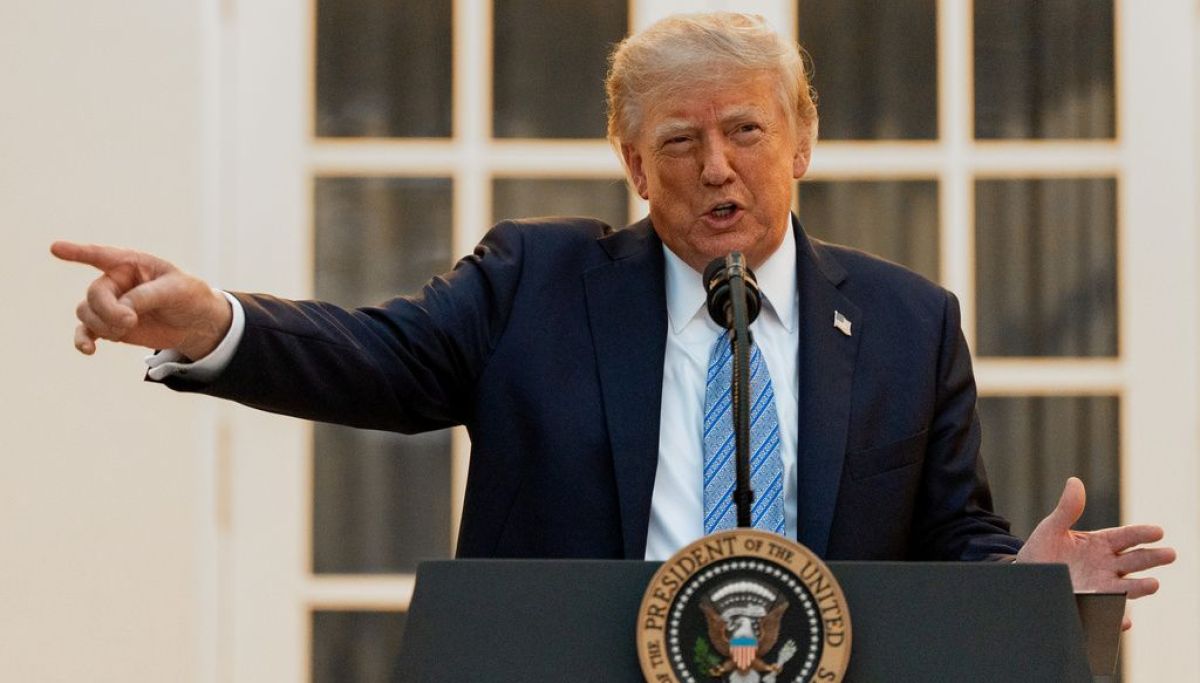
While the media obsesses over political drama, Trump is quietly building ‘Pax Silica’ to beat China
Full Article
Original Source
Read the full article at Washingtonexaminer →KhanList aggregates and links to publicly available news content. We do not host full articles from third-party sources. Always verify important information with original sources.