
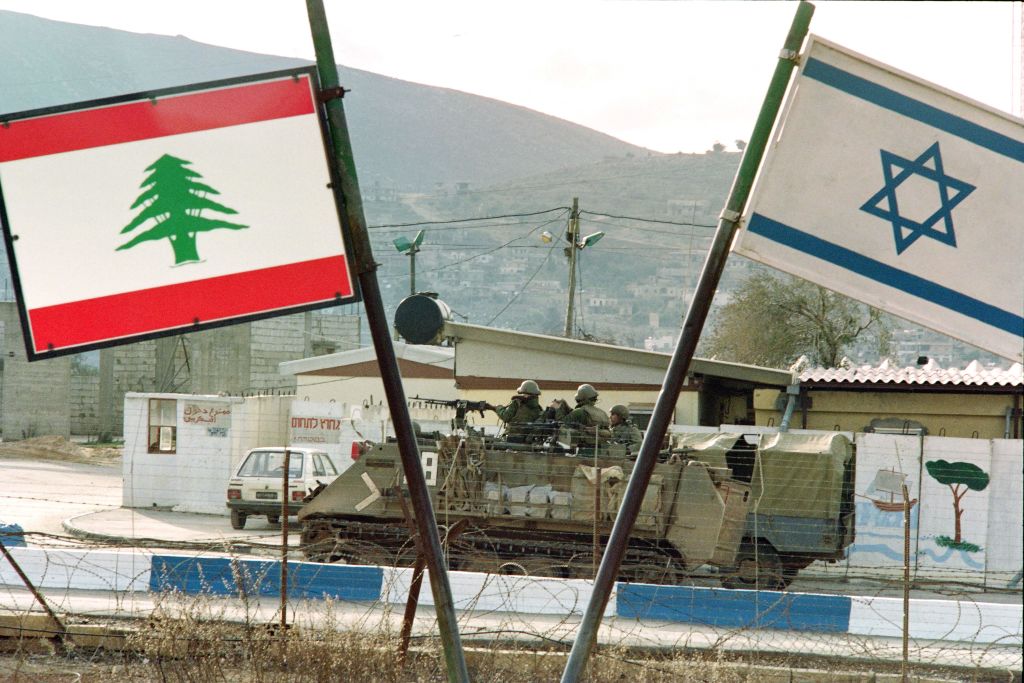
By signing the Trilateral Framework agreement while failing to disarm Hezbollah, Lebanon has adopted the late Palestinian leader Yasser Arafat’s “pretend peace” playbook. In this Oslo Model, a defeated regime seeks Washington’s favor by signing a preliminary peace pact. Under this strategy, Lebanon’s leadership claims it is merely calling Israel’s bluff, arguing that Jerusalem is too malicious to ever want true coexistence. Beirut then fails to fulfill its core obligation to dismantle rogue militias. When Israel responds in self-defense, Beirut blames Jerusalem for the failure and demands international pressure against its neighbor. The cycle repeats until Lebanon’s credibility on the world stage is entirely exhausted, much like the boy who cried wolf. This strategy of theatrical diplomacy and strategic paralysis is a direct inheritance from Arafat, who decades ago mastered the art of using peace processes not as vehicles for reconciliation, but as shields against accountability. By engaging in high-profile summits and speaking the language of Western diplomacy, Arafat secured international legitimacy and financial aid while maintaining tactical flexibility. For him, a signed document was never a binding destination but a temporary pause to regroup, leaving violent factions unhindered under the guise of avoiding civil war. Today, Beirut applies the same calculus to the Trilateral Framework agreement, transforming a potential breakthrough for peace into an exercise in diplomatic evasion. When Washington demands that Lebanon uphold its promise to disarm Hezbollah, a prerequisite for Israeli withdrawal under the agreement, Lebanese officials offer a well-rehearsed plea: the Lebanese Armed Forces (LAF) lack the capability to enforce disarmament and require foreign military aid. Yet, when support arrives, Beirut claims that disarming Hezbollah through force would trigger a catastrophic civil war. If forcible disarmament was always a nonstarter, why has Lebanon spent years blaming the international community for its army’s weakness? What is the point of strengthening the LAF if internal dialogue is the only tool Beirut intends to use to restore state sovereignty? This glaring contradiction exposes a fundamental lack of political will. After initially celebrating Beirut’s peaceful rhetoric, Washington routinely crashes back to reality as Lebanon drags its feet and shifts blame to Israel. Historically, this frustration has led American policymakers to give up on Lebanon entirely, outsourcing the management of this ungovernable nation to regional capitals, whether by contracting Hafez al-Assad as a mandatory power in 1991, or by allowing Iran to inherit Syrian influence after 2008. Now, there is a golden opportunity to break this cycle. After Israel eliminated Hezbollah chief Hassan Nasrallah in 2024, the Lebanese people were handed a historic chance to wrest their sovereignty back from Iran and its proxy militia. Washington enthusiastically jumped on board to help Beirut reach the finish line. But as the saying goes, you can lead a horse to water, but you cannot make it drink. The U.S. offered Lebanon a once-in-a-generation window to forcibly disarm a weakened Hezbollah and restore the state’s monopoly on power. Instead, the Lebanese state opted to stick to issuing empty statements, behaving more like a passive political pundit than a sovereign government. The consequence of Lebanon’s deliberate inaction is continued Israeli policing of Hezbollah and a depopulated security zone that prevents half a million Lebanese from returning to their villages. By permitting Hezbollah to retain its military infrastructure, Lebanon ensures that the peace agreement remains dead on arrival. When Hezbollah attacks Israel, Jerusalem must respond forcefully to protect its citizens. At this precise moment, the second phase of the Arafat playbook is triggered. Beirut immediately pivots from a passive observer to an aggrieved victim, flooding international forums with condemnations of so-called Israeli aggression. The narrative is flipped: the original provocation is erased, and Israel’s self-defense is framed as unprovoked belligerence designed to sabotage regional stability, on the premise that Israel is inherently evil. This inversion serves a dual purpose. Domestically, it unites disparate political factions against an external adversary while temporarily distracting the public from systemic state failure and economic ruin. Internationally, it attempts to shift the diplomatic burden back onto Jerusalem. Alarmed by the prospect of an escalating regional conflict, Washington inevitably steps in to urge restraint, not from the Lebanese state that failed to police its territory, but from Israel as it defends itself. To end the cycle of “pretend peace” Washington must strictly condition international recognition and economic assistance for Lebanon on measurable, verifiable steps to assert state sovereignty. Washington must also design an escalating ladder of sanctions targeting Hezbollah, its allies, and, ultimately, the Lebanese state itself. Beirut, weak or not, should ultimately be held accountable for Hezbollah’s rogue actions. Until the cost of reneging on its promises outweighs the benefits of playing the victim, Lebanon will continue to repeat this cycle, ensuring renewed war and continued misery. Hussain Abdul-Hussain is a research fellow at the Foundation for the Defense of Democracies and a columnist focusing on Lebanon and broader Arab affairs.
Lebanon’s Pretend Peace with Israel Revives Arafat’s Playbook
Full Article
Original Source
Read the full article at Fdd →KhanList aggregates and links to publicly available news content. We do not host full articles from third-party sources. Always verify important information with original sources.