
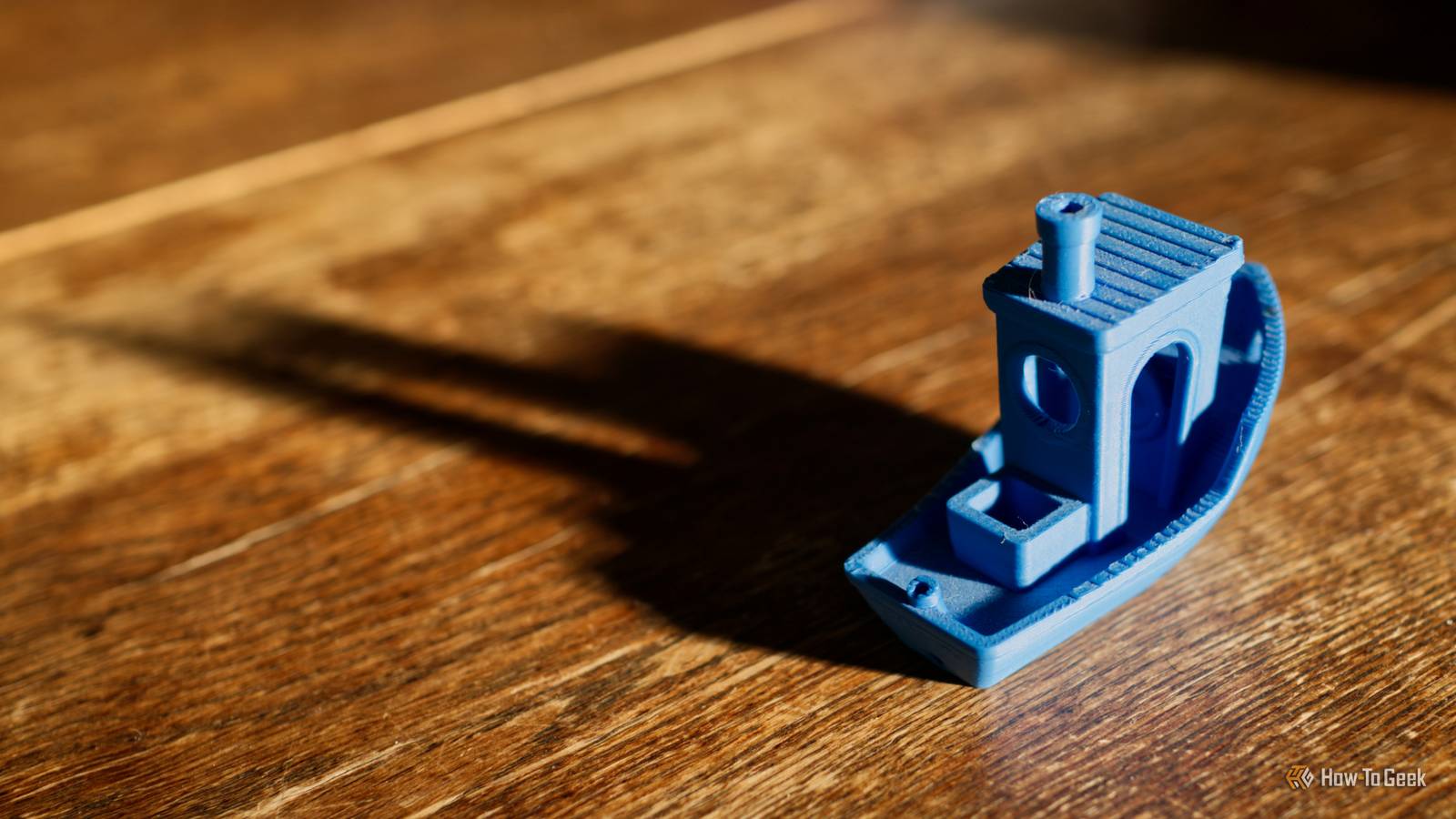
Published Aug 6, 2026, 7:00 AM EDT Tim has been covering technology for almost 20 years, in that time spanning a broad range of topics from security to product reviews. He is especially focused on the Apple ecosystem, productivity, and consumer advice. Over the years Tim has written thousands of articles, reviews, and round-ups in addition to producing video content and original photography. A graduate of journalism, he found his footing as a freelancer with a laptop and loves how he is able to work from practically anywhere. Now a Senior Editor for iPhone, Mac, and Smart Home at How-To Geek, Tim still loves to write. He can also be found crafting round-ups and productivity posts for the Zapier blog. Earlier in his career Tim spent nearly a decade as a writer and eventually Apple section editor for MakeUseOf. Tim currently lives in Brisbane, Australia. Outside of work he loves to hike and work out, play video games, and spend quality time with his wonderful partner and two cats Inka and Roger. Within the world of 3D printing, one model has emerged as something of a mascot for the hobby. The toy boat known as Benchy originated as a torture test but has since become an icon of the 3D printing world, establishing a reputation for being the first thing any new 3D printer owner should print. Here’s what you need to know about this plucky little boat. A short history of Benchy Or 3DBenchy as it is officially known Credit: Tim Brookes / How-To Geek Though the model is best known as Benchy, its real name is 3DBenchy. It was designed by Daniel Norée and Paulo Kiefe, when they were working for a Swedish company called Creative Tools. The company sold hardware and software relating to 3D printing at the time, and first released 3DBenchy on Thingiverse under the CreativeTools account. Over a decade later, the original file is still there, available for anyone to download. The boat also has its very own website at 3DBenchy.com. Over time, Benchy has been downloaded tens of millions of times across countless model repositories. The print requires only around 12g of filament and takes about 30 minutes to print. Many printers now come with a Benchy model pre-loaded and ready to go, as is the case with Bambu Lab printers. Much of the appeal lies in the model’s charm. Designed initially as a test of your printer’s ability, Benchy has far more personality than a boring calibration cube. Once you’ve completed the print, you’ve got a cute little boat that you can sit on your printer or hide on a shelf somewhere in your home. It doesn’t require as much time or filament as more involved calibration tools like the torture toaster. In 2024, NTI Group acquired Creative Tools and decided to make Benchy open source. On February 14, 2025, Benchy finally entered the public domain. As part of the release, the 3DBenchy.com website was entrusted to the model’s original authors, Daniel and Paulo. In April of 2025, Benchy had its 10th birthday. In celebration, a flurry of Benchy-related contests on model repositories like MakerWorld and Printables were held. Designed to put your printer through its paces Despite its cutesy appearance, Benchy actually packs in a large number of calibration tests for any printer. Once you’ve downloaded, sliced, and printed the model, you can test how yours stacks up by following the official measure and calibrate guide. As the documentation puts it, “the shape and size of this 3D model is designed to challenge 3D printers.” For example, the hull is a large and smooth overhanging surface, to be printed without the use of supports. The model is perfectly symmetrical, which can help reveal any warping that occurs during printing. There are several perfectly horizontal faces, including the top of the chimney, the box at the back of the boat, and the main deck. These shouldn’t display any “stepping.” By contrast, the roof of the boat, as well as the top of the hull, use low-slope surfaces designed to accentuate layer steps. Overhangs are another challenging feature. The inside of the bridge features a flat surface that isn’t supported while being printed. At the same time, there are large and small horizontal and arched holes like the door to the bridge and the porthole. There are also several cylinders, including the slanted fishing rod holder at the back of the boat. Lastly, the model also features several fine details, including text on the back of the boat (it reads “#3DBenchy”) and the “CY3D.xyz” URL on the bottom of the hull. Oh, and did I mention it’s a cute little boat? The state of Benchy in 2026 Benchy has taken on a life of its own The humble Benchy served its purpose well when it was introduced in 2015, but the 3D printer space has shifted to the point where few printers require benchmarking out of the box. Brands like Bambu Lab have introduced the “plug and print” concept, and automatic bed-leveling is (thankfully) the norm. There’s nothing stopping you from 3D printing a Benchy, but there might be better calibration tools out there. You might be better spending the filament on printing a fuzz skin guide tool to help you understand the concept, or trying out different ironing settings to get your horizontal layers looking good. That said, Benchy lives on as 3D printing’s unofficial mascot. It was the first thing I 3D printed when I picked up a Bambu Lab P2S last year, and the model has lived on a shelf in the bathroom ever since my partner set eyes on it. I’m not one of those people who prints a new Benchy for every roll of filament they buy, but at a material cost of only 12g, there are worse ways to spend your money. Perhaps my favorite way that Benchy is now being celebrated is the 3D printing speed run. At the time of writing, the Benchy world record sits at 54 seconds by Matt The Printing Nerd. Have you made way too many toy boats? Here are some fun uses for all those Benchy models you printed.
What’s the deal with Benchy, the unofficial mascot of 3D printing?
Full Article
Original Source
Read the full article at Howtogeek →KhanList aggregates and links to publicly available news content. We do not host full articles from third-party sources. Always verify important information with original sources.