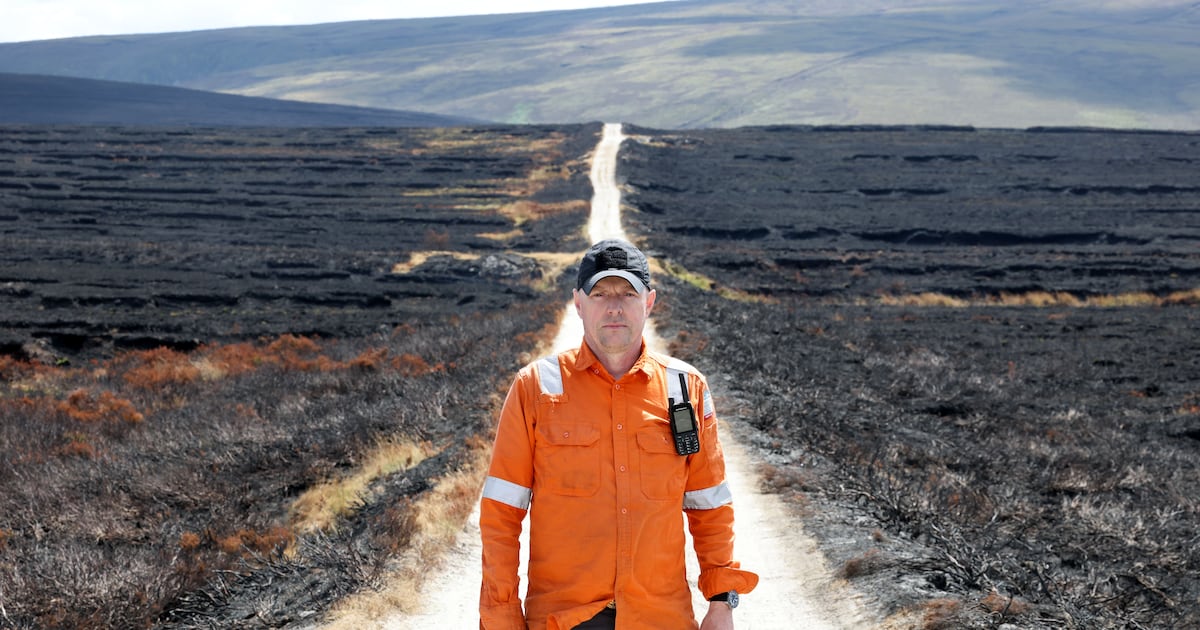
Ireland’s wildfires might not have threatened human life to anything close to the extent of those in France and Spain, but they have had a devastating impact on wildlife and habitats.Firefighters have spent the past week battling not only a big blaze at Slievenamon in Co Tipperary, but large gorse fires near Glencree, Co Wicklow, and at the Comeragh Mountains in Co Waterford.“We aren’t quite sure of the size of it – we’ve measured it so many times – but it is well over 300 hectares now,” says Damian Clarke, manager of Wicklow Mountains National Park.“I have never seen a smokier fire. People in Bray and Greystones could smell it, people in Blessington too. So the air quality has taken a serious knock.”READ MOREClarke and his colleagues are constantly monitoring the scene of the large blaze on the edge of the Wicklow-Dublin county boundary, and he says it will not be “out, out” until there is sustained heavy rainfall. “It is still smouldering. It is like a large turf fire – peat briquettes,” he says.“If we ever get our rain – this is all going to wash into the water. If this does end up in treatment plants, it will significantly increase the price of treating water – it’s just all sediment."The damage to wildlife and habitat has been substantial. Clarke reports seeing a badger set being burnt over. “You’d wonder how they’d survive in there,” he says. He has also spotted hares and deer wandering through the smouldering peat, their homes ruined.“All the vegetation is destroyed, the moss and heather,” he says. “You are standing on what was a beautiful habitat; now it is just black soot. Anything living in there that is non-mobile or can’t fly away will have been killed.”The damage caused affects various species.Oisin O'Neill says critically endangered curlews and snipes, which nest along the ground, are losing their lose nests, while larger mammals lose shelter and food. Photograph: Jim Campbell “The immediate impact really hammers mammals, small reptiles and amphibians,” says Oisín Ó Néill of the Irish Wildlife Trust.“Invertebrates too, which are a really important food source for birds; they simply can’t move fast enough.”He says critically endangered curlews and snipes, which nest along the ground, are losing their nests, while larger mammals lose shelter and food.“Hen harriers are in very serious trouble. We’d be most concerned about them,” says Oonagh Duggan of Birdwatch Ireland.“In some cases, the young might be still close to the nests they were born in. And that is an amber-listed species of concern. It is in dire straits.”Duggan cites figures showing that the hen harrier population has been in significant decline over the past two decades, with warnings that the species could become extinct here within the next 25 years. This is despite the introduction of six “special protected areas” in upland areas under the EU birds directive.She says conservationists are more accustomed to fires during the spring months of March and April when farmers would have traditionally lit upland fires to create edible grazing for livestock.“A lot of birds would have ‘fledged’ so they can fly away,” she says.‘Monoculture’ for fire conditions“Fires would have a big impact in the spring when the birds have eggs or chicks and can’t move. “But it is the habitat destruction that will have long-term impacts.”Like Ó Néill, Duggan says other “slow-moving” species such as frogs and insects will have been caught in the paths of these fires. She shares pictures of the bodies of charred frogs and destroyed bird nests.“It’s desperate to see,” she says.Conservationists are united in their view that Ireland’s landscape is particularly vulnerable to these types of events.Ó Néill says a “monoculture” has emerged that creates the conditions for fires.“Our ecological history is one in which we cut down our trees,” he says. “We drained our peat lands, the uplands are heavily grazed by deer and sheep.” Oonagh Duggan says other 'slow-moving' species such as frogs and insects will have been caught in the paths of these fires. Photograph courtesy Cllr Michael Brennan He says this “simplified” sort of landscape has been compounded by the replacement of native woodland with conifer plantations.“They are especially vulnerable to fires,” he says. “There is no ground vegetation around them. Instead, you have even-aged tree stands. They have a lot of needles that dry very fast and provide the fuel for fires.“A lot of the firefighting work goes into preventing fires from spreading to these plantations. They are essentially tinder boxes.”Duggan worries about the long-term consequences of the fires. “The destruction could last several years,” she says. “Some plants, the opportunistic ones, will come back but the habitat will only recover slowly – especially peat soil, where you can see the scars from burning.”More work is needed, she says, to restore habitats in the uplands for nesting birds. She notes that more birds are thought to be nesting outside the designated special protection areas than inside them. This is down to their poor condition, she believes.Helicopters were attempting to douse wildfires on Slievenamon, Co Tipperary, on Sunday. Photograph: Seán Ryan Ó Néill says work needs to go into “restoring and rewilding” the uplands, saying this would reduce the likelihood of wildfires in the future by creating cooler, wetter conditions.Damian Clarke reports that the Wicklow fire came very close to the boundary of its special conservation area, where peat and woodland restoration has been taking place.“We managed to hold the line,” he says.“But it could have set back a project we have been at for two years – it would have been back to square one."As for who is to blame, Clarke is adamant that the most recent blaze was not the work of farmers.“This isn’t agricultural,” he says. “You have two periods of fire during the year – you’ll know them. [Agricultural fires] are lit late at night. There are people up there [Wicklow National Park] all the time at the moment and they saw it. Two Wednesdays ago – it was at one o’clock in the afternoon just at the side of the road. That’s not agricultural; that’s carelessness or maliciousness."The impact on the Wicklow National Park is on Clarke’s mind at present.“A national park is meant to be the pinnacle of natural heritage in the State, and this is one of the most beautiful areas – the viewscapes are spectacular,” he says.“Now it is just smouldering. It’s not how we want it.”
‘What was a beautiful habitat now is black soot’: Ireland’s wildfires devastate wildlife
Full Article
Original Source
Read the full article at Irishtimes →KhanList aggregates and links to publicly available news content. We do not host full articles from third-party sources. Always verify important information with original sources.