
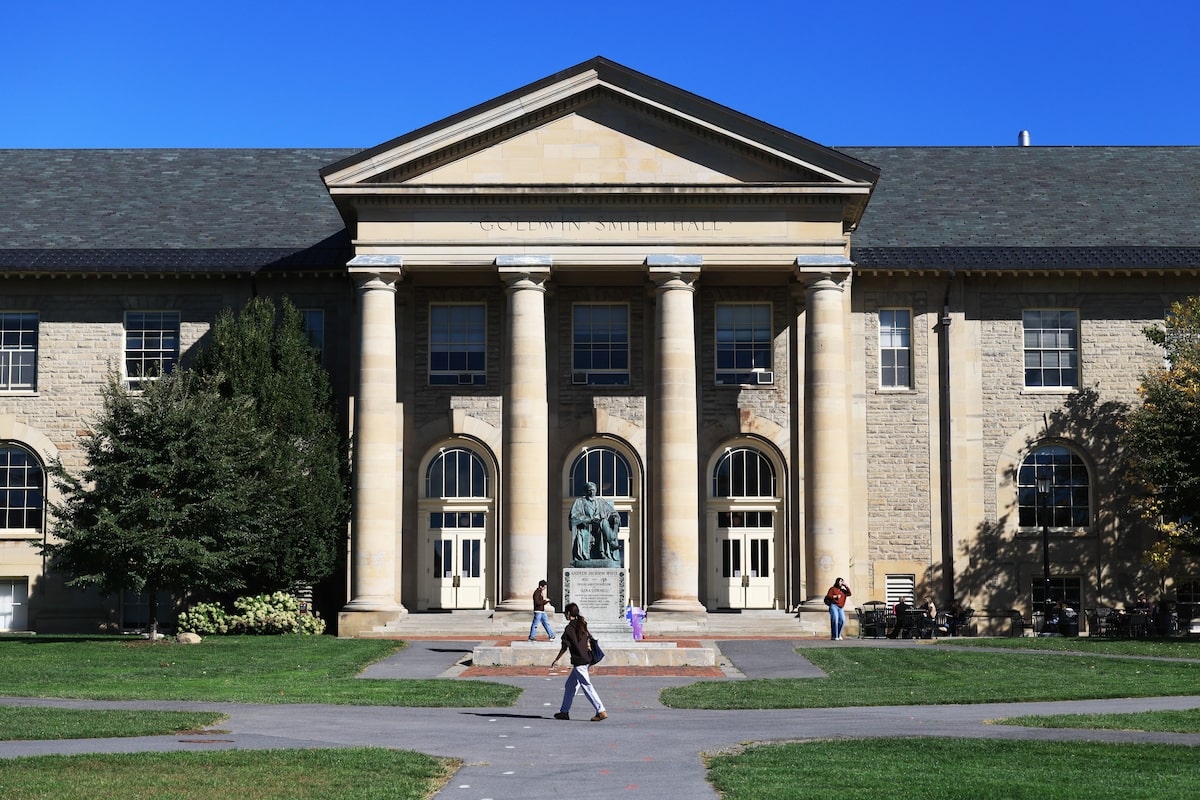
Open this photo in gallery:Students walk on Cornell's campus before a protest and rally against the university’s actions after an alleged sexual assault at a campus fraternity house.Spencer Platt/Getty ImagesNew York State prosecutors have reopened an investigation into the alleged 2024 sexual assault of a Cornell University student, after the woman filed a civil lawsuit last month saying several members of a campus fraternity drugged and assaulted her.The case has prompted public outcry and raised questions about how law enforcement and the university initially responded after the woman, then 20, reported the incident to police a few weeks after it occurred.Here’s what is known about Jane Doe, the lawsuit and the investigations that followed.What does Jane Doe say in the lawsuit?The alleged victim, who uses the pseudonym Jane Doe in court papers, filed a lawsuit in New York in mid-September that named as defendants seven fraternity members, the Chi Phi fraternity, Cornell, a local bar and her own sorority.According to the lawsuit, she went to meet a friend at the Chi Phi fraternity house on Oct. 19, 2024, after drinking alcohol earlier in the evening. The friend, a member of the fraternity, and other members plied her with alcohol, marijuana and ketamine, an anesthetic that can cause hallucinogenic effects, and sexually assaulted her after she became incapacitated, the lawsuit alleges.The complaint includes a screenshot of a group text chain among several fraternity members in which one man crudely encouraged others to join in the sexual activity.Jane Doe reported the alleged assault to campus police about three weeks after it occurred, giving investigators a detailed account over two days. She also spoke with Cornell’s disciplinary investigators.What is known about the initial investigation? Open this photo in gallery:The Chi Phi fraternity house is seen at Cornell University in Ithaca, N.Y., on Monday.Adrian Kraus/The Associated PressIn recent days, several new reports have revealed more about what law enforcement knew in 2024.CBS New York obtained a copy of the transcript of Jane Doe’s interview with campus police, which included far more detail than the sworn statement police eventually provided to prosecutors.“I can say with 100 per cent confidence I was raped,” she told police in mid-November, several weeks after the incident.That assertion was not included in the shorter written statement that Tompkins County District Attorney Matthew Van Houten’s office relied upon in deciding whether to pursue charges.The New York Times obtained more than 1,000 pages of material from Cornell’s internal investigation into the incident. The documents show that the woman’s understanding of the event shifted over time, the newspaper reported. She told police it took some time for her to fully realize that she had been assaulted.Robyn Urback: In the Cornell and Hockey Canada cases, institutional failure is a common threadText exchanges show Cornell accuser realized night at fraternity was ‘not consensual,’ report saysWhat have prosecutors said? Mr. Van Houten has defended his office’s decision not to pursue criminal charges in 2024. The woman’s sworn statement, he said, “described her participation in drug use and sexual conduct as voluntary, conscious, and consensual.”The decision was driven at least in part by New York’s narrowly tailored sexual-assault law, which can make it harder to bring charges in cases in which the victim willingly consumed alcohol or drugs. Several New York lawmakers this week renewed a years-long push to rewrite state statutes to eliminate that distinction, arguing that it creates a potential loophole for rapists to avoid prosecution. New York is one of 19 states with such laws.Jane Doe’s lawyer, Thomas Giuffra, has criticized prosecutors for not investigating further at the time, including speaking with his client directly.Mr. Van Houten, acknowledging the growing public outcry, said on Sept. 28 that his office had reopened the case and would present evidence, including testimony from the woman, to a grand jury for possible indictment.What has the New York governor done?New York Governor Kathy Hochul appointed state Attorney-General Letitia James as special prosecutor in the case of the alleged 2024 sexual assault of a Cornell University student.ReutersLast week, New York Governor Kathy Hochul appointed Attorney-General Letitia James as a special prosecutor to lead a renewed criminal investigation, saying she had lost faith in Mr. Van Houten.At a press conference explaining the move, Ms. Hochul said she was “deeply disturbed” by how Cornell police and the local district attorney handled the case.“At every turn, she was failed by people and institutions with an obligation to protect her,” she said of the alleged victim.In a statement, Mr. Van Houten blamed the university for failing to provide him “the full picture” and said he supported Ms. James’s appointment.In a Sept. 28 social-media post, Ms. James wrote, “What this young woman has been forced to endure is horrific and unacceptable,” and said, “We stand with you.”What has Cornell University said?Open this photo in gallery:The entrance to Cornell University's administrative building Edmund Ezra Day Hall is closed after its window was smashed by a protester.Angelina Katsanis/ReutersCornell has defended its handling of the matter, saying that it launched a comprehensive investigation and in 2024, barred the Chi Phi chapter from campus. It remains closed. The school imposed a range of discipline measures on the fraternity members, including expulsions and sanctions, but the university has declined to provide specifics, citing student privacy rules.Jane Doe’s lawsuit, however, claimed Cornell failed to adequately punish the alleged perpetrators and offered some a chance to mitigate their penalties by writing essays.In a video message Saturday, Cornell president Michael Kotlikoff pledged greater transparency amid the mounting outrage about how the school handled the case. He called the sexual-assault allegations “deeply disturbing” and said the case would weigh on the university for years to come.He also reaffirmed his commitment to supporting an independent investigation of the case called for by Ms. Hochul and said Cornell’s Board of Trustees would announce details later this week. What has the Chi Phi fraternity said?The interim executive director of the national Chi Phi fraternity, Trey Robb, said in a statement last week that the Cornell chapter expelled members understood to have been involved in the incident, as did the national fraternity.“These actions went beyond anything the law or Cornell University required of us,” Mr. Robb said of the expulsions.What’s the reaction from Cornell students and the campus?Open this photo in gallery:Demonstrators attend a protest on Monday against Cornell University's handling of the sexual-assault allegations.Adrian Kraus/The Associated PressSome students on campus have expressed anger and concern over the school’s handling of the episode.Student groups held a protest on Monday over the university’s handling of the alleged 2024 fraternity-house sexual assault. Students, faculty members and others wore purple ribbons and held signs with such messages as “support survivors, expel rapists” and “Justice 4 every Jane Doe.” Others watched from pathways, windows and a nearby hill.Early Monday, holes were knocked into one of the administration hall’s glass doors, and the walls beside them were marked with red-painted messages condemning patriarchy and the Ivy League school’s handling of sexual assaults, news media photos showed.Cornell spokesperson Kyle Kimball said in a statement Monday that the university was investigating the vandalism and that “damaging property is not the answer” to Cornellians’ “frustration and strong emotions.” Meanwhile, a roster of student organizations planned a late-afternoon “Justice for Survivors” demonstration to push for changes in the university’s process for handling sexual assault complaints and for more punishments connected to the one that followed a party at the Chi Phi fraternity in October, 2024. Jane Doe’s case was reported on extensively by student newspaper the Cornell Daily Sun since the allegations were first made in 2024. Last week, the paper published an editorial that began by naming the seven men accused in the civil lawsuit. Open this photo in gallery:A person walks next to offices of The Cornell Daily Sun, the student newspaper that published details of the sexual-assault allegations involving seven members of the Chi Phi fraternity.Angelina Katsanis/ReutersWhat have the accused members said?The New York Times, citing the internal Cornell documents, said the men all denied any wrongdoing, with some saying the sex was consensual and others denying participation. But in some comments, the men did express unease or concern about the interaction, the Times reported.What has happened since the lawsuit was filed? Open this photo in gallery:A demonstrator holds a sign reading 'WE ARE JANE DOE' during a protest against Cornell University's handling of the 2024 allegations.Adrian Kraus/The Associated PressJane Doe has been the target of threats, her lawyer told CNN on Sunday.“She’s received multiple threats,” Mr. Giuffra said on CNN’s State of the Union. Mr. Giuffra said he had also been threatened.“I’m not afraid of these people,” he said. “But the threats, the abuse to protect what’s going on, the status quo – these guys are disgusting. They should stay in their mother’s basement and stay out of the world.”Meanwhile, posts supporting Jane Doe have been flooding social media in video, photo and text. Some said they were doing so to offer the woman some protection in the digital age, in response to those wanting to identify her real name online. They hope the flood of “I am Jane Doe” posts will confuse online algorithms.With reports from Reuters and the Associated Press.
What to know about the investigation into the Cornell University sexual-assault allegations
Full Article
Original Source
Read the full article at Theglobeandmail →KhanList aggregates and links to publicly available news content. We do not host full articles from third-party sources. Always verify important information with original sources.