
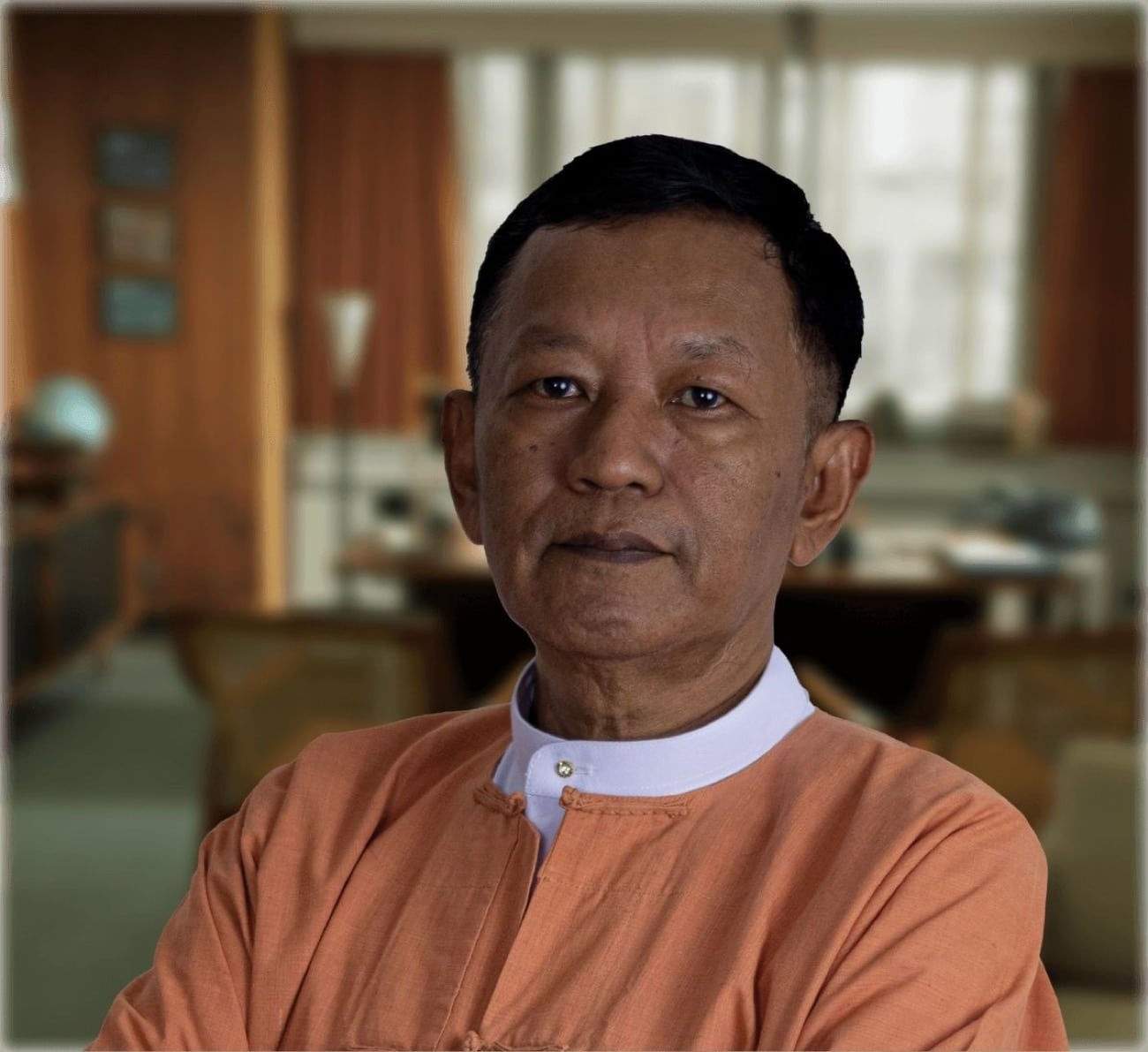
Ramon Magsaysay awardee Bo Kyi —RMAF photo MANILA, Philippines — Human rights activist Bo Kyi learned more about the history and current situation in Myanmar (formerly Burma) while in prison after he was arrested in 1990 for joining prodemocracy demonstrations. “All newspapers and television are censored in the government-owned communication system, so therefore we were growing up with propaganda. But prison teaches us a lot of what is happening in Burma,” he said at a press briefing on Wednesday. In his seven years as a political prisoner, Bo Kyi, now 61, discovered about the torture being inflicted by the military, particularly on ethnic groups. Article continues after this advertisement “Such kind of information from real history really reminded me [that] we need to change [the] political system. We need to build up [the] rule of law. We want [the] military to stay away from politics. Such kind of thing really motivated me for this,” he said. READ: Tommy Koh, Runa Khan, Bo Kyi win 2026 Ramon Magsaysay Award Bo Kyi, one of this year’s Ramon Magsaysay awardees, cofounded the Assistance Association for Political Prisoners (AAPP), a human rights organization advocating for the release of remaining political prisoners in Myanmar. The group also provides support to political prisoners who have been released through rehabilitation and mental health assistance programs. “Before I was released from prison, my colleagues who still remained in prison requested me to do something for them: Let them know, the people, let them know […] about the prison situation,” Bo Kyi said. “Such kind of words reminded me, even though I was released, I felt guilty.” Article continues after this advertisement The Ramon Magsaysay Awards, now on its 68th year, is regarded as the “Nobel Prize of Asia” and considered the region’s premier prize and highest honor. In nearly seven decades, it has bestowed the recognition on 331 individuals and 28 organizations from 24 countries and territories in Asia whose selfless service has offered their societies, Asia, and the world successful solutions to some of the most intractable problems of human development. Article continues after this advertisement According to the Ramon Magsaysay Award Foundation, Bo Kyi is being recognized for “his life’s work as a steadfast pursuit of truth, accountability, and justice.” “His enduring commitment reflects extraordinary moral courage, personal sacrifice, and an unwavering belief that democracy and human dignity are always worth defending—and that even in the face of oppression, the truth must be told, justice must be pursued, and the freedom to believe must be upheld and defended at all costs,” it stated. 1988 revolution Prior to his arrest, Bo Kyi joined prodemocracy demonstrations as a literature student at the Rangoon Arts and Sciences University. “Some of the students were killed in front of me at that time, during the demonstration. Some of the students were killed on the spot,” he recalled. “We called for demonstrations, then students followed us, and people also joined us. Some of them were shot down on the spot, and I could not forget their faces … They die, they sacrifice their bodies, because they want democracy,” he added. The demonstrations culminated in a nationwide uprising on Aug. 8, 1988, widely known as the 8888 Democratic Revolution, which forced three successive presidents to step down. However, the military once again took power following a coup in September 1988. Amid these developments, Bo Kyi said he continued joining demonstrations, leading to his arrest. To cope with loneliness in prison, Bo Kyi said he studied English with a professor who was detained in the cell next to his. He said that whenever the prison guard was away, he would ask the professor to speak one or two sentences of English. After his release, Bo Kyi said he began holding “unofficial” meetings with representatives of the International Committee of the Red Cross to provide information on the situation of political prisoners in his country. He added that he would also “secretly” meet with journalists and send information to the United Nations special rapporteur. Recruited as informant Bo Kyi said the military had been monitoring his actions, and later tried to recruit him as an informant. But he refused after the military rejected his demand for the release of all political prisoners and a dialogue with imprisoned state counselor Aung San Suu Kyi. Because of this, he was imprisoned again, but was eventually released in 1998. Unable to stay in Myanmar, he then fled to Mae Sot, Thailand, where he eventually founded AAPP with other former political prisoners. Currently, Bo Kyi said, there were still over 20,000 political prisoners detained in Myanmar. Data from the AAPP website show that 14,775 political prisoners were verified to still be detained, while 7,872 were unverified. A total of 9,219, meanwhile, have been released. “In Burma, there are 49 prisons and detention centers. Burma is a small country but full of prisons, so therefore we could not reach all [political prisoners],” Bo Kyi said. “But in the [meantime], we could reach 33 prisons and detention centers. We could reach around 5,000 political prisoners and their family members,” he added. According to Bo Kyi, AAPP has also been providing counseling programs since 2010, as well as training programs on human rights that inform the public about their rights and responsibilities. While he is based outside of Myanmar, Bo Kyi said his group continues to implement their programs through their “networks” inside and outside the country. “For the political prisoners around the world, they are arrested wrongfully by their political enemies, or maybe so-called ruling, [but they] always turn for truth and justice, wherever they are,” he said. Your subscription could not be saved. Please try again. Your subscription has been successful. “Wherever they are is not important. The most important thing is to stand by your belief. To stand by your cause, and also always have that thinking to distribute something good to society. Please keep on. Please fight on,” Bo Kyi added. /cb
What Magsaysay awardee Bo Kyi learned in Myanmar prison
Full Article
Original Source
Read the full article at Newsinfo →KhanList aggregates and links to publicly available news content. We do not host full articles from third-party sources. Always verify important information with original sources.