
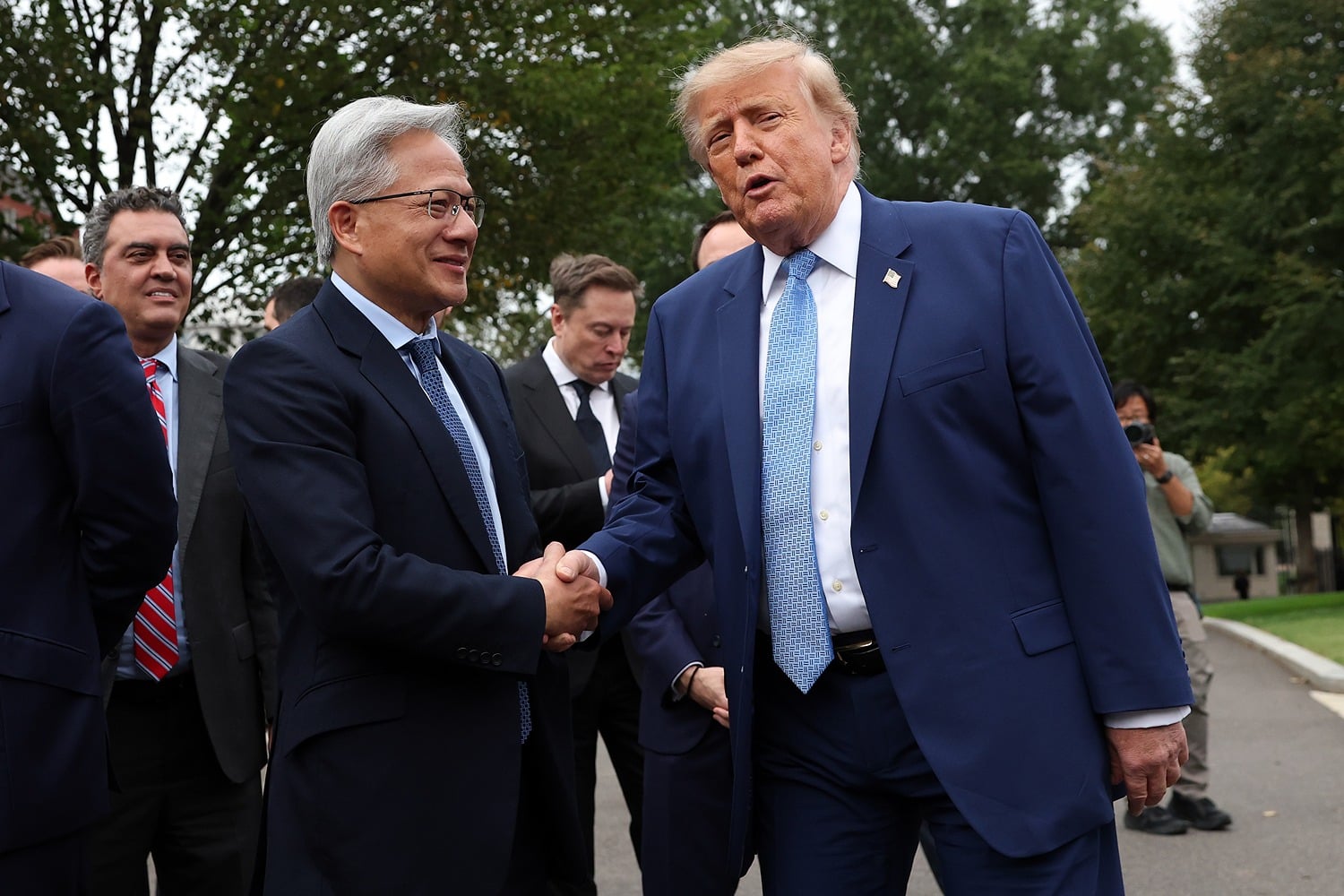
Welcome to Foreign Policy’s China Brief. Today’s special edition comes in the wake of Jensen Huang’s resignation as CEO of Nvidia over multiple reported affairs, including one with an alleged Chinese spy. Huang Resigns From Nvidia In another world, recently resigned Nvidia CEO Jensen Huang’s infidelities would be a private embarrassment. In this one, however, a powerful man’s poor judgment could steer the U.S.-China technology relationship onto the rocks. Huang admitted to marital infidelity; he reportedly engaged in affairs with at least three women, including two Nvidia employees. His relationship with Alice Huang, a businesswoman and alleged Chinese asset, has drawn the most scrutiny. But why is the relationship, and his resignation on Thursday, so potentially explosive? Broadly speaking, U.S. policy toward China has long been divided into two camps. The caution camp, exemplified by national security hawks, worries about China’s record of intellectual property theft, its control of critical supply chains, its economic might, and its potential to leapfrog the United States in key technologies such as artificial intelligence. The opportunity camp focuses instead on what the relationship with China could offer: selling technology, tapping vast Chinese markets, and finding ways for cooperation and mutual investment. The tension between the two can produce good policy, especially when each side argues smartly against the other. But this healthy debate depends on good faith, on both sides believing that they share a basic set of U.S. national interests. It depends on caution not curdling into racist paranoia and on opportunity not turning into personal greed. The Nvidia debate is particularly intense because there is no hotter resource in the U.S.-China relationship right now than compute: raw processing power, which depends on advanced chips. Unlike most other domains of U.S.-China competition, such as supply chains or critical minerals, this is the rare case where the United States holds the upper hand: roughly 75 percent of global compute, compared with China’s 15 percent. That edge rests on the U.S. alliance with Taiwan, home to chipmaker TSMC, as well as on companies, such as Nvidia, that design and sell these chips. For years, the argument over how to manage China’s access to advanced chips swayed between caution and opportunity. The opportunists argued that Chinese dependence was a good thing. If China could buy everything but the most advanced chips, it would remain reliant on U.S. firms; if China were cut off, it would build its own industry. But the cautious approach—that Beijing should be kept from buying the most advanced chips, thereby locking in the U.S. advantage—generally prevailed. The deal that Nvidia struck with U.S. President Donald Trump last year blew a hole in all of those arguments and in the assumption of good faith. Nvidia was allowed to sell the extremely advanced H200 chip to China not because it won a reasoned debate but because the White House was offered a cut: 25 percent of the sales revenue, with no apparent oversight of the money. Huang via Nvidia also donated $26 million to pro-Trump causes, including construction of the White House ballroom. The deal was rotten from the start, but national security hawks, fearing retaliation from Trump, were quieter than they might have been otherwise. Now the situation is reversed. An incoming Democratic Congress, backed by those Republicans who still care about national security, is poised to scrutinize these deals relentlessly. The spy allegations against Alice Huang have supercharged that scrutiny, as has the White House’s apparent disregard of earlier warnings about her. If it emerges that Trump profited by shorting Nvidia stock after a second warning, the case becomes far worse. Even if Alice Huang never influenced Jensen Huang’s decisions, it will be easy to portray him as swayed by Beijing. Huang’s downfall lets opponents of chip sales depict companies such as Nvidia as tools of the Chinese state and the White House as their willing accomplice. Trump’s doubling down on support for Huang only hands them more ammunition. With Republicans reeling from the U.S. midterm elections, companies can no longer afford to bet solely on Trump’s protection. In the long run, the scandal might expose a wider circle of corruption and sanctions evasion surrounding the $4 trillion company. Nvidia’s most advanced family of chips, Blackwell, is still banned from export to China, yet signs of its usage are all over Chinese AI, and Chinese firms are working hard to acquire it. Some U.S. national security officials appear to have been waiting for the right moment to leak incriminating documents. Alice Huang’s firm, Megaspeed, somehow jumped from $33 million in assets in 2023 to $3 billion in 2024, which suggests possible Chinese state investment and use as a vehicle for sanctions evasion. (Megaspeed denies any wrongdoing and has promised full cooperation with U.S. criminal investigations.) The United States had already started prosecuting companies believed to be evading sanctions, but a full federal investigation into both Jensen Huang’s and Alice Huang’s activities could turn over many more stones. China, as usual, denies any involvement in espionage and urges the United States not to impose new tech restrictions. But those restrictions, and much tighter scrutiny of deals involving chips or China, now look inevitable. Hopefully, Beijing will accept that as part of the game and not retaliate by tightening its own already extensive anti-sanctions regulations or cutting off U.S. supplies of critical minerals. On the U.S. side, there is also a risk of overindexing on a single case—a recurrent habit of intelligence services. The recruitment of one young American by the Chinese intelligence services in the early 2000s, for instance, made the security clearance process far harder for every U.S. citizen who had worked or studied in China. At worst, that overindexing could mean racial bias against anyone of Chinese descent working in sensitive technology in the United States. At the very least, it should make any U.S. businessperson more cautious about dealing with their Chinese counterparts, let alone sleeping with them—and perhaps that is for the better.
What Jensen Huang’s Fall Means for U.S.-China Relations
Full Article
Original Source
Read the full article at Foreignpolicy →KhanList aggregates and links to publicly available news content. We do not host full articles from third-party sources. Always verify important information with original sources.