
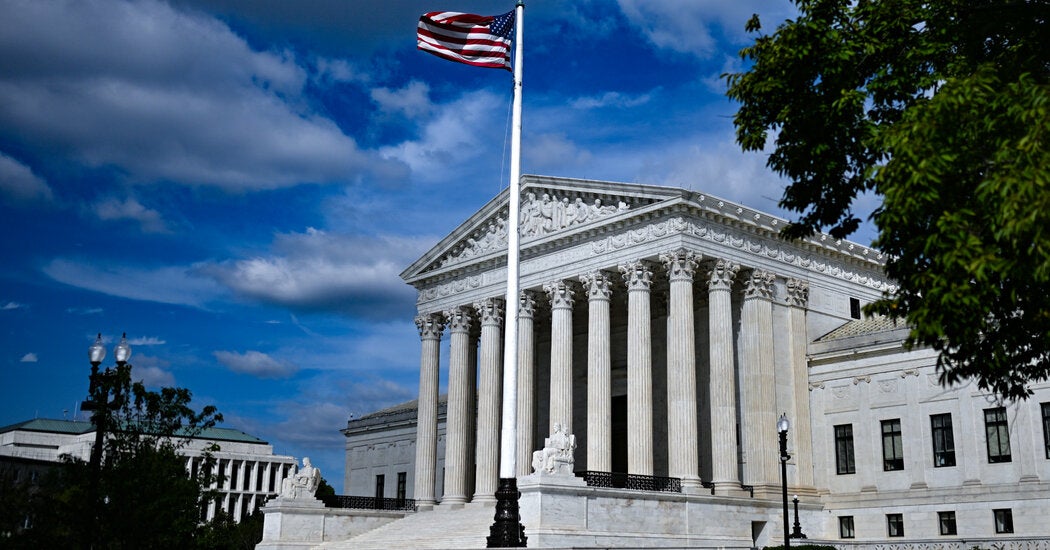
AdvertisementSKIP ADVERTISEMENTLower courts have ruled against the policy, which has effectively shut down avenues for people seeking asylum protections and to remain in the United States.The administration appealed to the Supreme Court after lower courts rejected the restrictions on asylum.Credit...Kenny Holston/The New York TimesNov. 13, 2026Updated 3:37 p.m. ETThe Supreme Court announced on Friday that it will review the legality of the Trump administration’s policy of categorically denying asylum claims from people crossing the southern border, taking up another major test of the president’s immigration agenda.On President Trump’s first day back in office, he effectively shut down the ability of people fearing torture and persecution to apply for asylum protections at the border and then remain in the United States, declaring there was an “invasion” along the southern border. In a proclamation, he invoked what he called “the inherent right and duty of the executive branch to defend our national sovereignty.”Immigration rights group quickly challenged the proclamation, and lower courts have found it to be illegal. But it has still largely been in force under a temporary court order. The Supreme Court case is expected to be the culmination of years of litigation over the ability of the government to prohibit migrants from claiming asylum at the border.This Supreme Court term, which began in October and will conclude next summer, is shaping up to be dominated by Mr. Trump’s aggressive immigration policies. In December, the court will review the administration’s efforts to deport immigrants to so-called third countries where they have no ties, including nations that have faced allegations of human rights abuses. Next year, the court will consider the administration’s policy of indefinitely detaining immigrants who crossed the border illegally years ago.In the asylum case the justices accepted on Friday, a central question is whether the president can override immigration law set by Congress. During the first Trump administration, officials struggled to come up with restrictive asylum policies at the border that would survive judicial scrutiny.In his second term, the president adopted the prohibition on asylum claims at the border and has been fighting over the policy in court. D. John Sauer, the solicitor general, told the justices in court filings that their intervention was “urgently warranted” in part because the policy was Mr. Trump’s “main tool for stemming an unprecedented crisis of uncontrolled illegal entry.”Mr. Trump’s initial proclamation was followed by guidance from the Department of Homeland Security that blocked people from applying for asylum who had crossed illegally.As a result, the number of people crossing the southern border illegally has dropped to levels not seen in decades. Border Patrol agents made just over 6,000 arrests in June 2025, for instance, according to figures from the Department of Homeland Security. During the height of such crossings during the Biden administration, more than 200,000 people crossed in December 2023.The immigrant rights groups brought the initial legal challenge on behalf of more than a dozen people who had been detained or removed from the United States without their asylum claims being addressed.Many of those people had experienced political persecution in their home countries of Afghanistan, Cuba, Egypt, Peru and Turkey, according to court filings. Their lawyers said some were subjected to “traditional torture” at the hands of those governments.“For nearly two years, the Trump administration’s unlawful asylum shutdown has deprived people seeking safety of their rights, placing vulnerable families, children and adults in harm’s way,” Melissa Crow, the director of litigation at the Center for Gender and Refugee Studies, said in a statement on Friday after the court had accepted the case.She urged the justices to follow the lead of lower courts and find that the president “cannot unilaterally rewrite our immigration laws and defy the will of Congress to get its way.”In July 2025, Judge Randolph D. Moss of Federal District Court for the District of Columbia ruled against the Trump administration’s asylum policy, finding that the Constitution and federal immigration law did not give Mr. Trump the expansive authority he claimed.A divided appeals court panel in April largely upheld Judge Moss’s decision and rejected the administration’s view that it could “unilaterally and heedlessly return individuals even to countries where they will most certainly face persecution.”The 2-to-1 decision from the U.S. Court of Appeals for the District of Columbia said Mr. Trump had to follow requirements outlined in the Immigration and Nationality Act and could not categorically deny asylum claims from people crossing from Mexico into the United States.Zach Montague and Matt Schwartz contributed reporting.Ann E. Marimow covers the Supreme Court for The Times from Washington.Hamed Aleaziz covers the Department of Homeland Security and immigration policy for The Times.Related ContentAdvertisementSKIP ADVERTISEMENT
Supreme Court Set to Hear Trump’s Ban on Asylum Claims at Border
Full Article
Original Source
Read the full article at Nytimes →KhanList aggregates and links to publicly available news content. We do not host full articles from third-party sources. Always verify important information with original sources.