
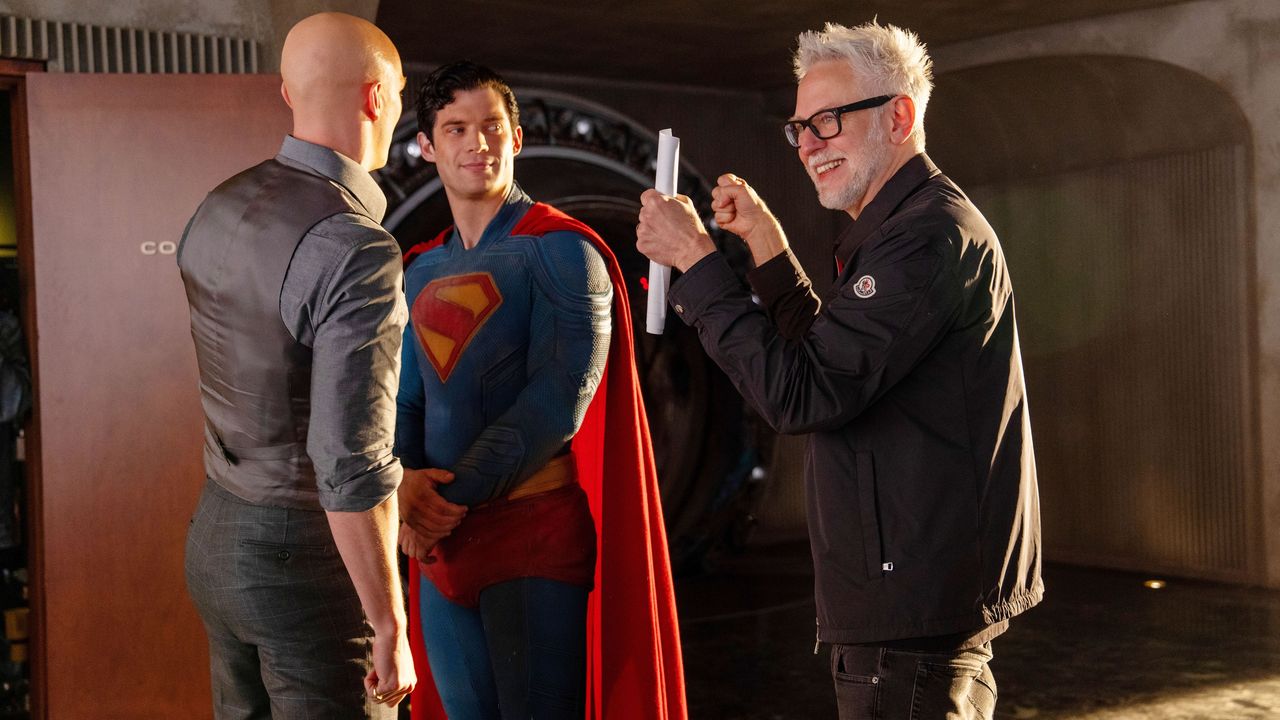
For some reason, I foolishly believed they’d get it right this time. James Gunn’s Superman, which formally launched the DC cinematic universe he’s been masterminding alongside Peter Safran, was a refreshing take on a somewhat impenetrable character. I had some reservations about the rest of Gunn’s proposed slate—like following that movie with a Supergirl adventure, which proved to be every bit the misfire I imagined it would be—but bringing a contemporary Clark Kent to the screen was no small accomplishment. Gunn’s tone and his sensibility, I thought, might finally make way for the silver-screen Justice League adventure we deserved.A silly hope, as proven by Monday’s big news: Gunn and Safran are out, in the wake of the WB-Paramount-Skydance unholy merger. Yet another auteur’s DC regime has been clipped before it could even find its footing. After the shock of the announcement wore off, my mind immediately went to that James Franco meme, the one where he’s about to be hanged. First time?20 years ago, the idea that superhero C-listers like Iron Man and Thor would be at the top of the film adaptation pyramid while the stars of the Justice League toiled in a constant cycle of developmental destroy-and-rebuild would have been laughable. That’s part of what makes Kevin Feige’s MCU so impressive, of course: not just the scale and scope of his interconnected series of films, but doing it with a bunch of guys who were never all that popular in the larger superhero firmament. But as that regime rose, DC’s fortunes seesawed—with the Christopher Nolan Bat-trilogy as a beautiful outlier—and its fans have had to endure one indignity after another.Us DC loyalists are basically like fans of the pre-2026 Knicks, or the pre-2004 Red Sox, or the pre-2016 Cavs—take your pick. I wouldn’t even call myself so hardcore, but those were the guys I grew up on, especially as more of a Saturday morning cartoon-watcher than a comics reader. Bruce Timm’s Batman and Superman animated series, the way those two shows dovetailed to make Justice League while also charting bold new territory with Batman Beyond—that was my jam. It was also the era of incredible Fox shows like Spider-Man and X-Men, but never did I think those two would continue to thrive while auteur after auteur tried and failed to do what Timm accomplished before a legion of appreciative 11-year-olds.It goes back to Wolfgang Peterson’s aborted Batman versus Superman film, a Hollywood sliding doors moment that created the conditions under which a young, hungry Christopher Nolan could prove his blockbuster mettle with Batman Begins and give the greatest hero to ever do it a well-deserved cinematic reset. As Nolan’s stock rose, Bryan Singer’s attempt to restore ‘70s vibes with Superman Returns flopped almost immediately, leaving DC in a Highlander situation yet again. The goodwill Nolan generated with his trilogy gave way to what we came to know as the Snyderverse, starting with Zack Snyder’s Superman reset Man of Steel, a solid film that I could never bring myself to love wholeheartedly.Historians will tell you it was shareholder thirst to compete with Marvel that spelled doom for Snyder—and the pressure to shoehorn Batman, Wonder Woman and the rest of their squad in to fast-track a Justice League movie. His era certainly cultivated a base of devoted, even rabid stans who will attack anyone who besmirches their leader’s genius. But personally, I spent all of those years in a state of disbelief about the way some of the genre’s sturdiest, best and most crowd-pleasing characters were being subjected to all of this Frank Miller-reject vibes: ultra slo-mo, fight scenes of wanton and artless destruction, not to mention the Gal Gadot line-readings and Bruce Wayne mowing bad guys down in between crossfit sessions. The illest superhero team to do it, in the hands of a guy who saw Jared Leto and thought, “There’s a guy who can succeed Heath Ledger as an Oscar-worthy villain.” Snyder’s step-down from Justice League after a family tragedy and seeing his vision superimposed with Joss Whedon’s was very undignified. But The SnyderCut? Still not for me.James Gunn’s residency was the most promising thing to happen to the Justice gang in a while, at least for those of us who don’t chug Mountain Dew and listen to Eminem all day. He was the first director in a long time to really, truly understand Superman’s throwback optimistic essence and successfully repackage that for a contemporary audience. Forget about the larger DC universe—what Gunn built in Metropolis alone felt like the beginning of a beautiful universe. Corenswet’s affable take on the character paired with his chemistry with Rachel Brosnahan had me even hoping Gunn would ease up on the big picture and just luxuriate in more Superman adventures. Still, even his slate could only be so fresh: he started in the shadow of Matt Reeves and Robert Pattinson’s The Batman, a critically acclaimed reboot that didn’t square with his vision. At best, we were going to be subjected to the indelicate circumstance of having two different Batmen in production at once. (And that Gunn thought highly enough of Andy Muschietti’s The Flash to tap him for DCU’s Batman film was concerning, for sure.)But he was building something, and he wasn’t wasting time. Even before he understandably stepped away for a family emergency, Reeves was taking his sweet time to get The Batman II off the ground; Gunn launched his Superman last July and intended to drop a sequel, Man of Tomorrow, next July, one that likely would’ve built up to a Justice League film a little more gracefully than Snyder was allowed to. He may have been indulging side quests a little too freely, green-lighting things like a spin-off series for Skyler Gisondo’s Jimmy Olsen, but his focus on the main play at hand never wavered. The narrative that he was meandering was always in bad faith; look no further than Superman's first act, which breathlessly goes about establishing the status quo of Gunn’s DCU at times to the script’s detriment.We were already seeing those seeds planted: this past summer’s Lanterns series on HBO, for instance, through which Aaron Pierre managed to turn John Stewart into something closer to a household name hero. (Pierre and Adria Arjona, who is most likely playing Wonder Woman, were set to appear in Man of Tomorrow.) Gunn’s quippy, vibrant vision may not have been for everyone, but he at least deserved the chance to cook a little bit longer. In a weird way, Gunn’s firing feels like one of the first pushbacks to the midterms blue wave. Looking for politics in comic book fare is ultimately asinine, but there’s a reason Superman 2025 was one of the most meme'd movies during the post November 3rd wave of optimism, to say nothing of the movie's plot being a paper-thin allegory for Israel and Palestine.So what happens now? Who knows. Man of Tomorrow might be released as a sort of post-mortem, or it could be shelved altogether. Does David Corenswet go the way of Brandon Routh? Have we seen the last of this iteration of John Stewart? Will Adria Arjona’s Wonder Woman even get off the ground?We’re back to square one. Skydance head David Ellision has already replaced Gunn and Safran with ex-MCU producer Jeremy Latcham, a guy who’s more concerned about making movies that’ll play for meemaw, peepaw and the reverend. It appears he'll be a down-the-middle role player who can serve up the most basic, populist take on all of these adaptations. I’m giving up on ever seeing a coherent, let alone genuinely great take on this squad of heroes. Many have tried, all have failed, and the people in charge have only gotten dumber. Go with God, DC faithful. We’ll always have the Bruce Timm cartoons.
What James Gunn’s Firing Means For the Future of DC Studios
Full Article
Original Source
Read the full article at Gq →KhanList aggregates and links to publicly available news content. We do not host full articles from third-party sources. Always verify important information with original sources.