
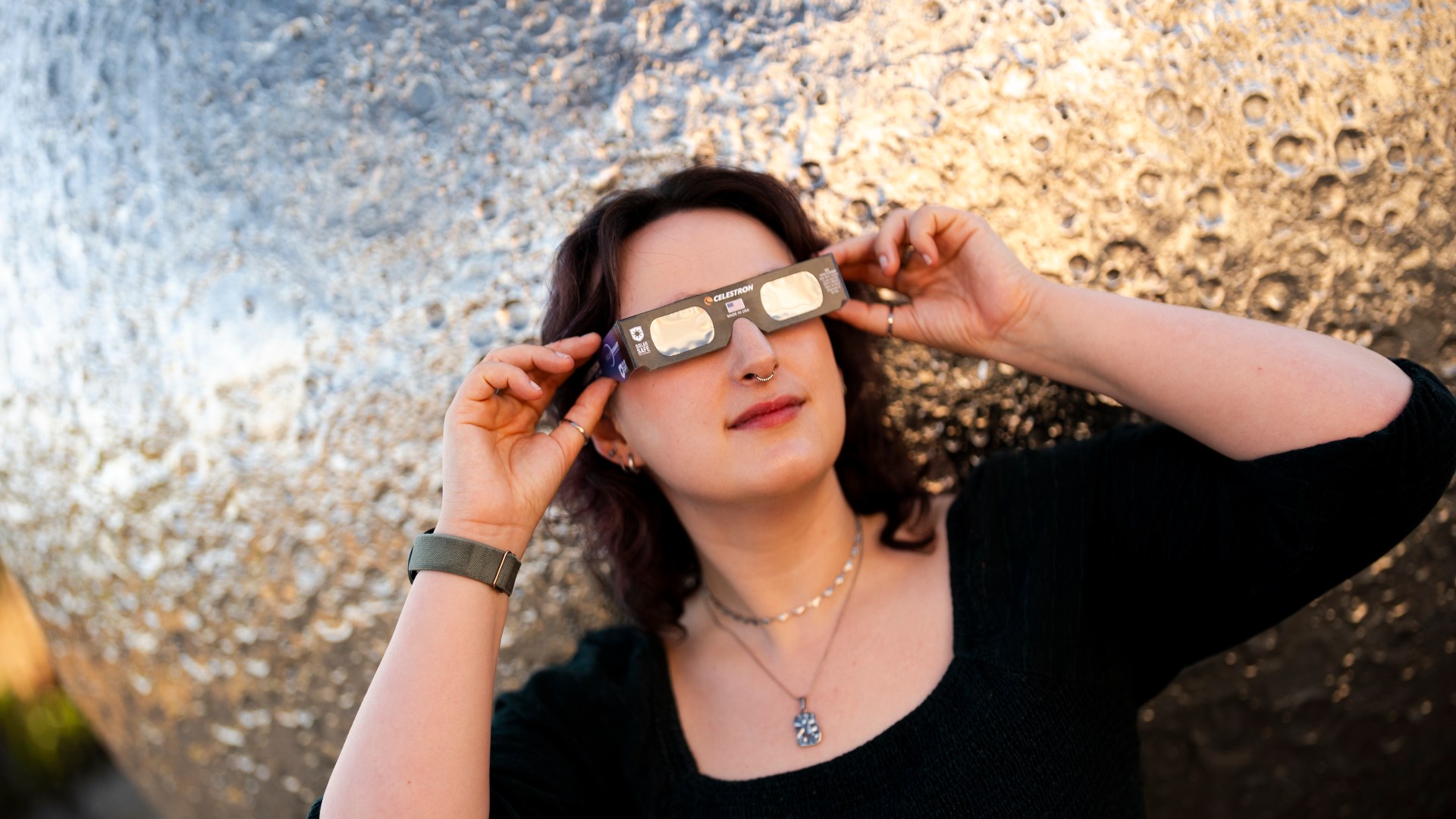
BRITAIN is gearing up for its biggest solar eclipse in nearly three decades on Wednesday, August 12. But whether you actually get to enjoy the celestial show rests on the mercy of the British weather, with the Met Office‘s forecast revealing a north-south divide around the UK. August’s eclipse will be visible across the UK, with between 90% and 96.5% of the Sun covered depending on your location Credit: Getty The Met Office has made this handy chart showing when and where the sun will be most obscured by the moon, and by how much Credit: Met Office What is the Met Office forecast for the solar eclipse? Those in much of England and Wales are set for ideal viewing conditions, with clear skies and summer heat, according to the Met Office. But skywatchers in more northern regions, particularly Scotland and Northern Ireland, may have to contend with thicker cloud cover. Sign up for The Sun newsletter Thank you! The Met Office says: “Weather conditions look most favourable across much of England and Wales, where largely clear skies should provide excellent viewing opportunities. “Cloudier conditions in northwestern Scotland and western parts of Northern Ireland may obscure views at times.” Some rain is also predicted for Scotland and Northern Ireland, with the Met Office advising: “Some outbreaks could become locally heavy and perhaps thundery, especially in northwestern Scotland”. The Sun will sit low on the horizon during the eclipse’s peak, meaning that clear skies are essential. The Moon will cover between 90% and 96% of the Sun in the UK And much of the rest of the UK is forecast to remain dry and sunny, ideal news for eclipse viewers. Temperatures should hit the mid-to-high 20s in central and northern England, with highs of up to 34C in southern areas. Most read in The Sun What time is the eclipse on August 12? The event will be visible across the entire UK as a deep partial eclipse, with between 90% and 96.5% of the Sun covered depending on your location. The key times for the celestial show are: 6.15pm: The partial eclipse begins as the Moon starts moving across the Sun’s disc. 7.05pm – 7.15pm: Peak coverage occurs, bringing maximum darkness. 8.05pm: The eclipse finishes as the Sun sits low on the western horizon. How to watch the eclipse safely Because the eclipse takes place in the late afternoon and early evening, the Sun will sit low in the sky, roughly 13 to 16 degrees above the west-northwest horizon. To get the best view, find an open spot: head to a beach, hilltop, or open field facing west-northwest with no buildings or trees blocking the horizon. Evening cloud build-up or coastal fog can develop quickly near sunset, so keep an eye on local Met Office forecasts on Wednesday afternoon. Never look directly at the Sun without ISO 12312-2 certified eclipse glasses or proper solar filters on optical equipment. For a safe alternative to eclipse glasses, stand with your back to the Sun and hold a kitchen colander, slotted spoon, or paper pinhole card to project crescent-shaped solar shadows onto the ground or a piece of card. Comment now
What is the Met Office weather forecast for the solar eclipse in the UK?
Full Article
Original Source
Read the full article at Thesun →KhanList aggregates and links to publicly available news content. We do not host full articles from third-party sources. Always verify important information with original sources.