
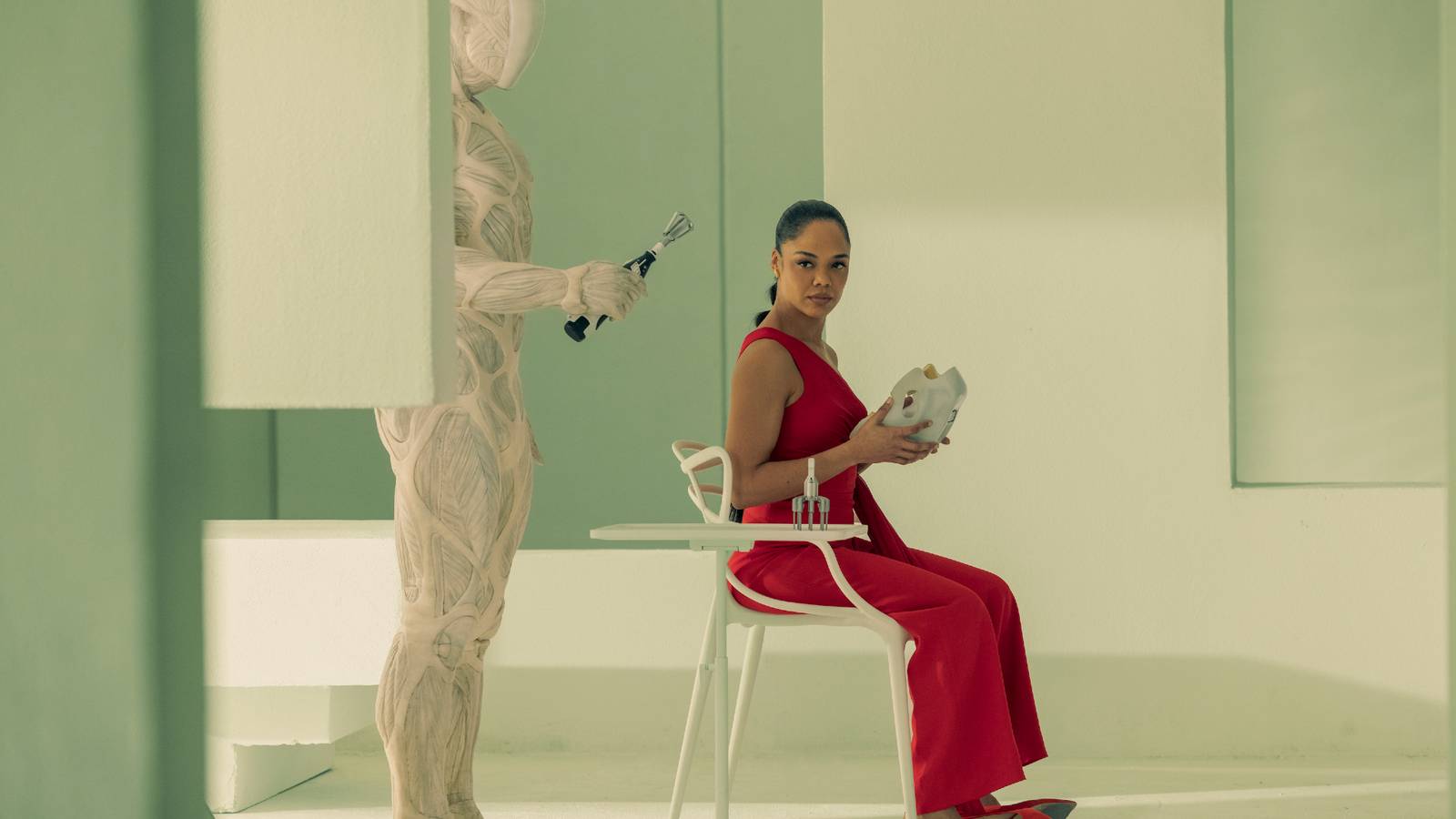
Published Aug 29, 2026, 7:00 PM EDT Craig began contributing to Screen Rant in 2016 and has been ranting ever since, mostly to himself in a darkened room. After previously writing for various outlets, Craig's focus turned to TV and film, where a steady upbringing of science fiction and comic books finally became useful. Craig has previously been published by sites such as Den of Geek. Craig is an approved critic on Rotten Tomatoes. LinkedIn: https://www.linkedin.com/in/craig-elvy-5b31a3381/ Not many TV shows debut with as much pomp and circumstance as Westworld. Riding onto the golden frontier of HBO in 2016, Westworld boasted a movie-level cast, movie-level production values, and a movie-level narrative (literally - the original sci-fi classic premiered in 1973). Beginning with the premise of a Wild West theme park populated by unfeasibly lifelike cyborgs, Westworld soon came to incorporate themes of data ethics, corporate power, dystopian control, and the hazards of the gig economy. For all its visual beauty and industry buzz, Westworld labored to a four-season run before being canceled by HBO in a move that was about as welcome as a fly on the eyeball. Whatever downward trend the series might have been on during those four seasons, Jonathan Nolan and Lisa Joy had spoken openly about their plans for a five-part arc, and Westworld season 4 ended on a peach of a cliffhanger. When reports emerged that Warner Bros. was plotting to reboot Westworld from scratch, viewers would have felt the distinct sting of salt entering a wound. General consensus will have you believe that Westworld enjoyed a stellar debut season before enduring a quick fall from grace. Rotten Tomatoes scores more or less back that argument up: Season RT Score Audience Score 1 87% 93% 2 86% 76% 3 73% 61% 4 75% 69% But consensus is only half of Westworld's story. The show can essentially be split into two halves: "Westworld" in seasons 1 and 2, and "Futureworld" in seasons 3 and 4. It's very easy to take the position that the "Westworld" half is good and the "Futureworld" half fell off a cliff. There is, however, another point of view: that Westworld seasons 2 and 3 were the weak links, and season 4 actually represented something of a recovery that makes HBO's decision to cancel the story early even more frustrating. What Went Wrong In Westworld Seasons 2 & 3 (The Short Version) Everyone is broadly in agreement that Westworld season 1 knocked it out of the park (Delos-branded or otherwise), and that the series never hit those heights again. The discord comes in pinpointing exactly when Westworld started getting clunky, and more specifically, whether season 2 was a clever continuation or a twist-obsessed mess. Certainly, Westworld season 2 doubled down on the first season's maze-like narrative with even more timelines, surprise host reveals, and post-credit dead ends. The weakness of season 2 compared to season 1 was that Westworld started to treat unpredictability as a barometer for success, as if the art of the surprise trumped logical storytelling. Westworld season 3 had the opposite problem. Enacting a soft reset after its sophomore effort, 'Westworld: Pig in the City' was almost starting from scratch, introducing new characters, reintroducing new versions of old characters, and laying out a whole new selection of mystery boxes. Predictably, that transition wasn't without its teething problems, and Westworld's new era couldn't help but knock momentum built up across those opening two seasons down a gear or two. Westworld Season 4 Started Bringing The Show Together While many rank Westworld's final season a significant way below the first two, it was actually the best stuff Nolan and Joy had delivered since 2016. Still not a patch in season 1, but a noticeable improvement nonetheless. Westworld season 4 allowed Aaron Paul's Caleb to finally come into his own after rays of potential briefly broke through during season 3. In giving him a family, Westworld also gave Caleb a reason to fight, and the audience a reason to cheer him on. Few actors play the tenacious underdog quite like Aaron Paul, after all. "Fidelity," Westworld's take on a time loop episode, depends entirely on Paul's ability to carry an emotional throughline by himself, and is easily one of the best episodes across all seasons. He felt like a passenger at times in season 3, fumbling through the futuristic setting as Dolores' sidekick, but Westworld's final season gave Caleb enough agency that he could finally spar on equal footing with fellow main protagonists. More importantly, Westworld season 4 was where the series finally started to make sense. If the big problem in season 2 was leaving us with the question "where is this going?" and the big problem in season 3 was making us say, "no, really, where is this going?" then season 4 was when light finally poked through the tunnel. Plot points such as the Forge and the multiple Doloreses (Dolori?) began to make sense, and even better, the answers were satisfying. For two seasons, Westworld had been dancing around the point it was really trying to make, but with a host-controlled dictatorship fighting human rebels, a meta story-flip where hosts control human behavior, and an outright apocalyptic finale, the Westworld train made some attempt at pulling into the station it had slowly been chugging toward since the beginning. The board was very neatly set for one final chapter that would end the finely-balanced struggle between man and machine. Westworld Deserved The Same Redemption Lost Had It's remarkable how much Westworld's overall trajectory matches that of Lost a decade or so prior. Both announced themselves in bombastic fashion with huge ensemble casts and the most cinematic of styles. Both had enormous fun tickling viewer imaginations with a multitude of mysteries, then both had considerably less fun once it became apparent that those mysteries actually needed to be answered at some point. Just as Westworld's fortunes suffered a mid-show dip in seasons 2 and 3, Lost fell away around seasons 3 and 4, meandering around its endgame in much the same way. After Lost set itself the goal of a sixth-season finish, however, the dots began connecting, and Lost season 6 was the series' best since season 2, ending on a note that, despite not pleasing everyone, was more than viewers dared to hope for during the dark days of season 3 when Jack was telling us about his tattoos. Lost was afforded the time and opportunity to change its ways, and change it did. Westworld started down that road in season 4, but still needed a fifth and final batch of episodes to complete the story - and the show's redemption arc. If Lost's final season is anything to go by, Westworld would have continued its rediscovery of form in season 5, and delivered a string of episodes somewhere vaguely close to the epic quality of season 1. Release Date 2016 - 2022-00-00 Network HBO Showrunner Jonathan Nolan, Lisa Joy Directors Fred Toye, Jennifer Getzinger, Stephen Williams, Vincenzo Natali, Craig William Macneill, Anna Foerster, Craig Zobel, Hanelle M. Culpepper, Helen Shaver, Jonny Campbell, Michelle MacLaren, Neil Marshall, Nicole Kassell, Tarik Saleh, Uta Briesewitz, Lisa Joy, Meera Menon Writers Roberto Patino, Carly Wray, Ron Fitzgerald, Daniel T. Thomsen, Karrie Crouse, Wes Humphrey
Westworld Got Canceled, But Don't Blame The Final Season
Full Article
Original Source
Read the full article at Screenrant →KhanList aggregates and links to publicly available news content. We do not host full articles from third-party sources. Always verify important information with original sources.