
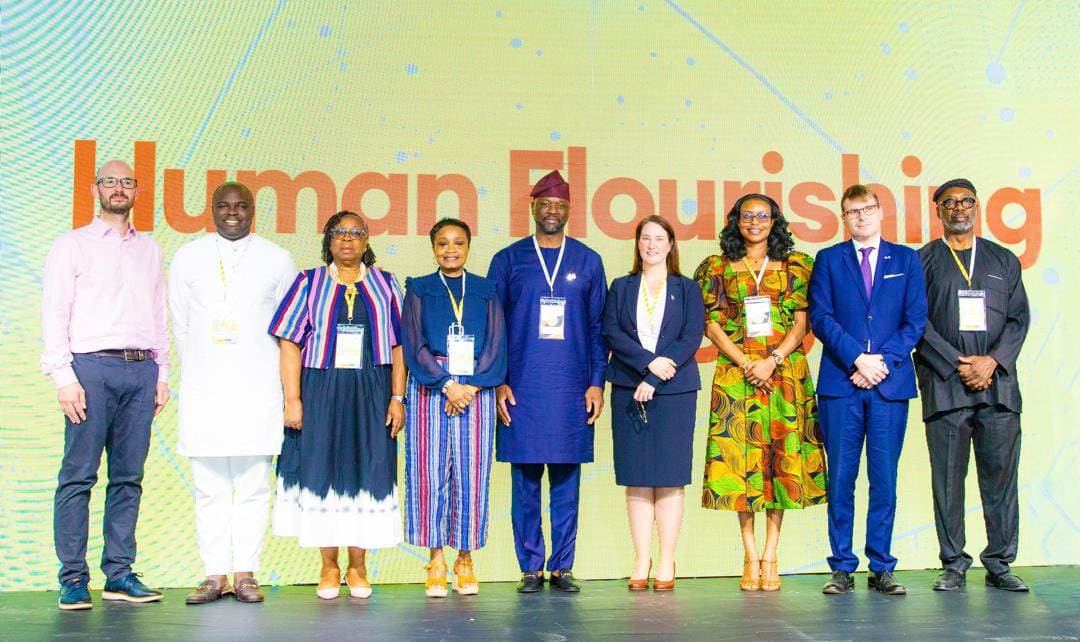
Wellington College Advocates Human-Centred Education in AI Era Follow THISDAYLIVE on GoogleAdd us as a preferred source to see more of our stories in Google Follow us on Google Funmi Ogundare Stakeholders in education, technology, government and business, Thursday converged on the Metropolitan Club, for the inaugural Thought Leadership Forum of Wellington College International Lagos, designed to explore how young people can be equipped not only to navigate technological change but also to thrive in a rapidly evolving world. Themed, ‘Human Flourishing in the Age of AI’, the forum examined how schools can balance academic excellence with the values, skills and human qualities needed to prepare young people for the future. In his keynote, ‘Education for Human Flourishing in the Age of AI’, the Director, Wellington College Institute of AI, Chris Rothwell, called for a shift from the traditional education model focused primarily on producing graduates for the labour market to one that develops critical thinking, ethical reasoning, adaptability and other human competencies needed to thrive in an increasingly AI-driven world. Rothwell said the rapid advancement of Artificial Intelligence (AI) had exposed the limitations of the conventional education system, making it imperative for schools to rethink their curricula, teaching methods and overall learning experiences to prepare young people for an uncertain future. He emphasised on the future of education and the concept of human flourishing, noting that the traditional education model, largely established after 1945, was no longer sufficient to meet the changing needs of learners, employers and society. According to him, “concerns about declining educational progress, widening inequalities, students’ mental health challenges and diminishing confidence in the traditional pathway from university education to employment had prompted the Organisation for Economic Co-operation and Development (OECD) to examine what the future of education should look like. The director explained that the OECD began the initiative in 2018, drawing on experiences from high-performing education systems, including Singapore, Estonia, Finland, the United Kingdom, Germany and parts of Canada. The exercise he noted, culminated in the Education for Human Flourishing framework, which seeks to redefine the purpose of education beyond academic achievement and individual economic success. He noted that the emergence of generative AI, particularly following the public release of ChatGPT in November 2022, had further intensified the need for a fundamental rethink of education. According to him, ” AI has demonstrated capabilities previously considered exclusively human, raising critical questions about human identity, the value of knowledge and the skills young people need to acquire to remain relevant.” Earlier in her remarks, the Headmaster of the college, Christine Haslett, called on schools to rethink their educational priorities in the age of AI, stressing the need to develop students’ character, critical thinking, emotional well-being and capacity to contribute positively to society. She stated that education must move beyond a traditional model focused largely on academic performance, examination results and university progression to embrace a more holistic approach that prepares young people for meaningful and fulfilling lives in an increasingly technology-driven world. According to her, although academic excellence remains important, schools must recognise that it represents only one dimension of a successful education. She said, “At Wellington, we want them to be great human beings: curious, compassionate, thoughtful, courageous, resilient and capable of contributing positively to the world around them.”
Wellington College Advocates Human-Centred Education in AI Era
Full Article
Original Source
Read the full article at Thisdaylive →KhanList aggregates and links to publicly available news content. We do not host full articles from third-party sources. Always verify important information with original sources.