
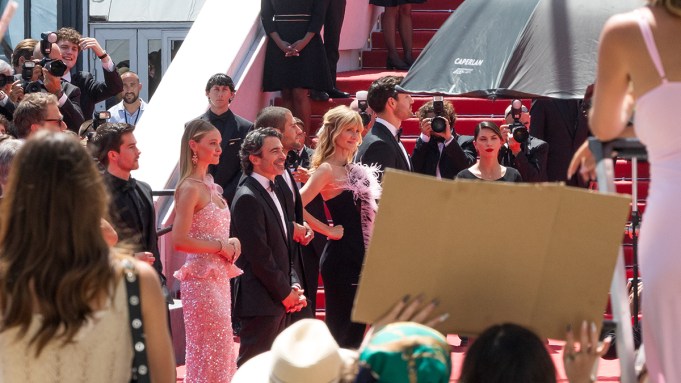
Few television shows have reshaped high-end tourism quite like The White Lotus. Every season sends viewers racing to book the real-life properties featured on screen, turning secluded retreats into viral bucket-list stops overnight. But as set-jetting evolves from a fun pop-culture trend into a defining force in hospitality, travel insiders warn it could be altering the luxury experience. Jaclyn Sienna India, founder and CEO of luxury travel firm Sienna Charles, views the show’s footprint as a symptom of a broader shift in high-end travel. She argues the series has fueled the “celebritization of travel,” encouraging tourists to chase hyped-up camera locations over authentic cultural exploration. In her view, turning storied hotels into social-media backdrops dilutes the exclusivity that defining properties once guaranteed. “Wealth has become a zoo,” she says. Jonathan Alder, founder and CEO of Jonathan’s Travels, agrees that the series operates on a strange paradox: “It inspires travel through dilemma—showing horrible people frequently doing horrible things, and yet it makes people want to go to a place.” Production crews were spotted filming scenes outside the Palais des Festivals. Arnold Jerocki/GC Images That tension between televised fantasy and destination reality will face its biggest test yet in season four. Leaving behind its traditional single-resort bubble—and wrapping up HBO‘s formal marketing partnership with Four Seasons—the Emmy-winning satire is heading to the French Riviera. According to HBO, the latest installment follows a group of guests and employees over the span of a week against the backdrop of the Cannes Film Festival. Rather than centering on vacationers attempting to unplug from reality, the narrative reportedly turns on two rival film crews arriving with competing festival entries. One crew checks into the fictional White Lotus Cannes—portrayed by the iconic Hôtel Martinez along the Croisette—while its rival decamps to White Lotus du Cap, brought to life by the ultra-exclusive Airelles Château de la Messardière in Saint-Tropez, Variety reported. HBO confirmed filming will also span Monaco and Paris. Robb Report reached out to The White Lotus location team for comment but did not receive a response. The pivot fundamentally alters the show’s DNA. Speaking at the Cannes International Series Festival, executive producer David Bernad revealed the season explores “the life of an artist,” examining how fame and success warp personal identity, Deadline reported. In previous seasons, guests were tucked away inside sprawling enclaves where the hotel acted as a gilded pressure cooker. This time, the action spills out into one of the global entertainment industry’s most high-stakes annual gatherings, with production crews spotted filming scenes right outside the Palais des Festivals. “They’re turning this from a resort feeling to now arriving at a city for work,” Alder says. Unlike Hawaii or Thailand, which revolved around passive leisure, Cannes is fueled by premieres, deal making and status anxiety. Airelles Château de la Messardière in Saint-Tropez will stand in for the White Lotus du Cap. Pascal Le Segretain/Sygma via Getty Images Yet the glossy, high-voltage Riviera portrayed on screen may bear little resemblance to what travelers encounter off-camera—especially if they arrive outside of May. “Cannes is a conference city—it’s not a vacation city,” Alder points out, noting that primary convention venues like the Carlton and Le Majestic Barrière cater heavily to trade shows and corporate events. Outside the two-week frenzy of the film festival, visitors expecting non-stop red carpets and celebrity-studded glamour may instead find a destination built primarily for business travel. Then there is the sheer geographic illusion. While the show’s narrative pits the two hotel crews against each other in close proximity, Airelles Château de la Messardière actually sits perched high above Saint-Tropez—roughly three hours by car from Cannes. Alder expects the show to rely on classic television magic to make the properties feel side-by-side. “Americans have no idea where these places are located,” Alder laughs. “Most people are going to think Saint-Tropez is next to Cannes.” (It wouldn’t be the franchise’s first spatial trick: season two famously led viewers to believe Sicily’s San Domenico Palace sat directly on the beach.) Hôtel Martinez in Cannes will appear in The White Lotus season four. VALERY HACHE/AFP via Getty Images Despite the distortion, the show could still be a huge exposure boost. Stacy Fischer-Rosenthal, president of Fischer Travel and a member of Four Seasons’ advisory board, thinks Airelles could be one of the biggest winners this season. With just seven properties, the French luxury brand has a lot more to gain from the spotlight than a global hotel chain. Airelles declined to comment on its role in the production. India, meanwhile, takes a much less rosy view, saying she wouldn’t recommend either hotel to clients once the season airs and arguing that luxury brands risk sacrificing long-term cachet for short-term exposure. She instead points to cultural hubs like Nice—and properties such as Hôtel du Couvent—as alternatives to the more obvious Saint-Tropez stops, while cautioning that smaller boutique collections may not have the infrastructure to absorb a major influx of visitors in the way global hotel groups can. The timing is also notable for Saint-Tropez, where Oetker Collection, the group behind Hôtel du Cap-Eden-Roc, is preparing to open its first property in town. “Saint-Tropez is a more sexy, vibey, glamorous destination,” says Fischer-Rosenthal. “It definitely fits The White Lotus themes of wealth, excess, romance, and intrigue. The grounds at Les Airelles are so prominent and incredible that those grounds couldn’t exist in a Cannes property. It just doesn’t have the space.” Down the coast, Michel Cottray, general manager of Hôtel Martinez, noted a “sense of quiet excitement” about hosting the crew, emphasizing that the Croisette landmark is part of festival history. At the time of Robb Report’s interview, filming at the hotel had not yet begun. Fischer-Rosenthal takes a pragmatic view on whether set-jetting will permanently ruin these enclaves, pointing out that ultra-luxury pricing acts as a natural barrier to entry. With peak summer rates regularly exceeding 3,000 euros per night, astronomical costs help preserve property exclusivity regardless of television exposure. Still, as The White Lotus trades isolated resorts for the public stage of the French Riviera, its biggest legacy may be cultural. The show isn’t just showcasing the Côte d’Azur—it’s manufacturing a cinematic version of it that millions of tourists will spend small fortunes trying to locate. Authors Abby Montanez Abigail Montanez is a staff writer at Robb Report. She has worked in both print and digital publishing for over half a decade, covering everything from real estate, entertainment, dining, travel to… Read More
‘Wealth Has Become a Zoo’: The Brewing Backlash to ‘The White Lotus’ in Luxury Travel
Full Article
Original Source
Read the full article at Robbreport →KhanList aggregates and links to publicly available news content. We do not host full articles from third-party sources. Always verify important information with original sources.