
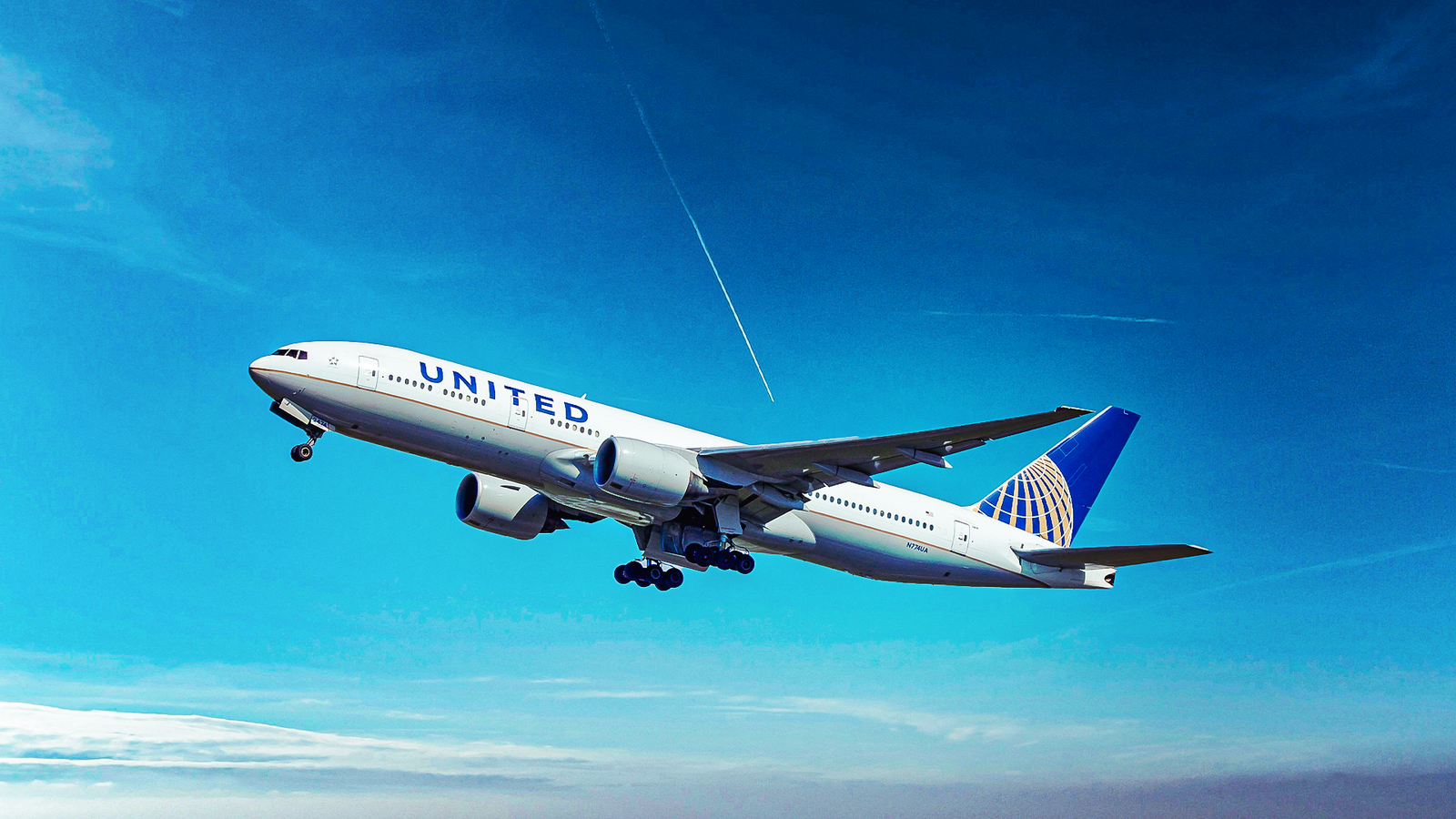
The oldest operational Boeing 777 in the world, and the second airframe produced, is still crisscrossing the nation on flights every day with United Airlines. The 30-year-old widebody completed 61 flying hours over 12 routes over the course of seven days in early November, as any enthusiast can see on Simple Flying's Flight Tracker. As a 777-200, it is neither the largest nor the longest-range jet in the 777 series. United counts on the big jet for high-demand domestic markets like Hawaii. N7774UA took its maiden flight on July 15, 1994, after rolling out of the factory in Everett, Washington, as line number two. This month it linked Daniel K. Inouye International Airport (HNL) in Honolulu with hubs in San Francisco, Los Angeles, Denver, and Houston. While the majority of carriers have retired first-generation 'triple sevens' to avoid maintenance costs and fuel costs, United still relies on the veteran widebody. Before beginning commercial airline service with United in early 1996, the plane spent nearly two years as part of Boeing's nine-aircraft flight test fleet to help certify the new series. The airframe has over 98,000 flight hours and 18,000 flight cycles, but at its current pace, the big twinjet isn't even halfway through its full service life. In May, United even flew N774UA back to Boeing's Paine Field (PAE) facility in Everett, Washington, celebrating the 777's legacy. From ETOPS Pioneer To Hawaii Workhorse Credit: Vytautas Kielaitis | Shutterstock With the original 777 prototype retired to a museum, N774UA remains the world's oldest active Boeing 777 still flying revenue passengers. While newer jets now dominate international long-haul routes, this historic airframe still earns its keep on the busy overwater corridors it helped open up to dual-engine jetliners. Each daily run between Hawaii and the mainland reinforces the industry standards N774UA helped create. Operating a widebody on high-frequency domestic schedules requires military-grade ground coordination. Unlike international long-haul jets that often sit at foreign gates for hours between flights, N774UA frequently turns around in under three hours. Ground crews must rapidly unload tons of luggage, restock galleys for hundreds of passengers, and refuel the massive wing tanks to keep the tight schedule intact. Every time N774UA crosses the open Pacific, it relies on the same engineering breakthrough its own test flights trailblazed three decades ago. Before the Boeing 777, overflying long stretches of open ocean was limited to three or four-engine aircraft. N774UA shattered that barrier right out of the box, relying on its Pratt & Whitney PW4077 turbofans to secure unprecedented 180-minute ETOPS approval. Until then, the Federal Aviation Administration had barred twinjets from venturing far from emergency diversion airfields. How N774UA’s Airframe Paved The Way For Boeing’s Next-Gen Giant Credit: Joe A. Kunzler | Shutterstock Built for United as the launch customer, N774UA changed aviation history as the first airliner designed completely on 3D computers and Boeing’s first jet with electronic fly-by-wire controls. Its body relies on tough aluminum alloys built to handle heavy flexing and pressure during flight. Carbon-fiber composites make up just 9% of N774UA's weight, compared to 50% on the newer 787-9 Dreamliners flying alongside it in United's fleet. While newer carbon-fiber jets like the 787-9 and A350-900 burn 25% to 30% less fuel per seat, N774UA’s sturdy metal frame still shines on medium-distance Pacific flights. It can haul up to 122,700 pounds of cargo and baggage, making it a heavy-lifting asset for United. Recent flight logs over a single week, the exact kind of busy routing visible on the Simple Flying Flight Tracker, show United flying N774UA exclusively on high-demand corridors between Honolulu and mainland hubs. Flight Number Origin Destination Takeoff Time Flight Time UA1947 Daniel K. Inouye International Airport (HNL) San Francisco International Airport (SFO) Nov 1 at 15:29 4.21 hours UA1031 San Francisco (SFO) George Bush Intercontinental Airport (IAH) Nov 2 at 16:34 3.05 hours UA253 Houston (IAH) Honolulu (HNL) Nov 3 at 10:01 8.00 hours UA383 Honolulu (HNL) Denver International Airport (DEN) Nov 3 at 20:45 5.99 hours UA384 Denver (DEN) Honolulu (HNL) Nov 4 at 13:52 6.69 hours UA252 Honolulu (HNL) Houston (IAH) Nov 4 at 20:52 7.50 hours UA253 Houston (IAH) Honolulu (HNL) Nov 5 at 09:53 7.84 hours UA1169 Honolulu (HNL) Los Angeles International Airport (LAX) Nov 5 at 23:00 4.82 hours UA1158 Los Angeles (LAX) Honolulu (HNL) Nov 6 at 09:19 5.03 hours UA1947 Honolulu (HNL) San Francisco (SFO) Nov 6 at 14:38 4.42 hours UA1031 San Francisco (SFO) Houston (IAH) Nov 7 at 14:47 3.17 hours UA253 Houston (IAH) Honolulu (HNL) Nov 8 at 10:38 7.81 hours UA252 Honolulu (HNL) Houston (IAH) Nov 8 at 20:41 7.20 hours UA2358 Houston (IAH) San Francisco (SFO) Nov 9 at 10:56 4.30 hours That stretch included three round trips on the 3,398-nautical-mile (6,293 km) route between Houston and Honolulu, averaging nearly eight hours each way. While rival airlines often use smaller single-aisle jets like the A321neo to reach Hawaii, United also values the 777's lower-deck cargo hold to haul freight like fresh Hawaiian food exports of pineapples or fish along with baggage. Because the computer design, electronic controls, and metal body shape pioneered with United on N774UA worked so well, Boeing chose to upgrade that exact blueprint for the upcoming 777X instead of starting over. By combining the proven body of United’s original 777 with the lightweight carbon-fiber breakthroughs from the 787, the 777X represents a massive leap forward. The new 777X features giant carbon-fiber wings with aviation's first folding wingtips, bigger windows, lower cabin pressure to reduce jet lag, and massive GE9X engines. It stands as living proof that the smart design United helped bring to life on N774UA was built to carry air travel into the future. From Testbed Troubles To Fleet Anchor: Why N774UA Still Matters In The Dreamliner Era Credit: Greg K__ca | Shutterstock Before N774UA ever carried a paying passenger, early test flights uncovered a few tough growing pains. The plane came off the assembly line about 3,000 pounds heavier than planned, and during a high-altitude test at 42,000 feet over Washington state, a door seal even burst, forcing pilots into a fast dive to check the body for pressure damage. Its early engines also burned about 2% more fuel than promised, pushing engineers to tweak the engines and reshape parts of the wing to cut wind drag. United held Boeing accountable for fuel and reliability standards, refusing delivery before finally accepting the jet in March 1996. N774UA faced its biggest scare yet 25 years after its debut on United's flightline. In February 2021, a hidden metal crack snapped a fan blade on a sister plane’s engine right after takeoff from Denver. Safety officials immediately grounded all 24 of United's similar 777s, sending N774UA into desert storage for 15 months while mechanics inspected every fan blade with ultrasound scanners and added stronger protective engine covers. The Blueprint That Beat The Rest: How N774UA’s DNA Lives On In The 777X Credit: Cangavi | Shutterstock Since returning to the skies in 2022, N774UA’s daily schedule between the US mainland and Hawaii proves why two-engine jets replaced older three- and four-engine airliners like the DC-10 and 747. Every few years, N774UA undergoes heavy maintenance visits where technicians strip down cabin interiors and inspect the airframe for metal fatigue. That overhaul regimen ensures the jet remains just as airworthy today as it was in 1996. Even as United brings on newer 787 Dreamliners, N774UA’s core design proved so ahead of its time that Boeing built the massive new 777X directly on top of it. Because the first 777 already had an optimized fuselage in the cabin along with computer-driven architecture, engineers didn't need to throw out the design and start over. While Boeing originally targeted a 2020 debut for the 777X, rigorous federal scrutiny and flight-testing hurdles pushed entry into service back by several years. Those delays have made reliable legacy widebodies like N774UA even more valuable to airlines. Until next-generation replacements arrive in large numbers, carriers depend on proven first-generation frames to hold down core routes. Classics In The Clouds: Inside The Engineering Of United's Last Pair Of Heritage Triple Sevens Credit: Tupungato | Shutterstock Standing out from United's world-leading fleet of jetliners, N774UA and sister ship N773UA are true aviation classics. The pair are the last two domestic 777s still wearing United's legacy Continental-era livery as they haul passengers to Hawaii. Keeping the tenured jets in the air comes down to simple balance-sheet math. Because United owns both planes outright, the airline pays zero monthly lease bills or depreciation costs on them. Inside, both classics are outfitted to maximize passenger volume rather than luxury. Each cabin packs 364 travelers into 28 domestic first-class recliners and 336 tight, ten-abreast economy seats. That massive seating density gives United unmatched crowd-moving power on its busiest Hawaii corridors. Meanwhile, flyers also lose out on the modern perks of a Dreamliner cabin, which keeps cabin air more humid and pressurized to a comfortable 6,000-foot altitude, compared to the 777's drier air and higher 8,000-foot cabin altitude. While these older widebodies burn roughly 20% more fuel per seat than modern carbon-fiber jets, using up to 90,000 pounds more fuel on an eight-hour run to Honolulu than a new 787-9, having no loan payments more than makes up for the extra gas on busy routes. Most importantly, N774UA and N773UA buy United time while factory backlogs stall the next era of air travel. These include slowdowns on the 787 assembly line and years-long testing delays for the 777-9. The next-gen widebody won't reach airlines like launch customer Lufthansa, Emirates, or Qatar Airways until at least 2027. This, combined with Airbus' similarly slow delivery rates, has created a worldwide shortage of big jets. Until factory deliveries finally catch up, United will keep paying for heavy maintenance to keep these two paid-off classics flying its most in-demand routes between Hawaii's sunny shores and the West Coast.
We Tracked The World’s Oldest Boeing 777 For A Week
Full Article
Original Source
Read the full article at Simpleflying →KhanList aggregates and links to publicly available news content. We do not host full articles from third-party sources. Always verify important information with original sources.