
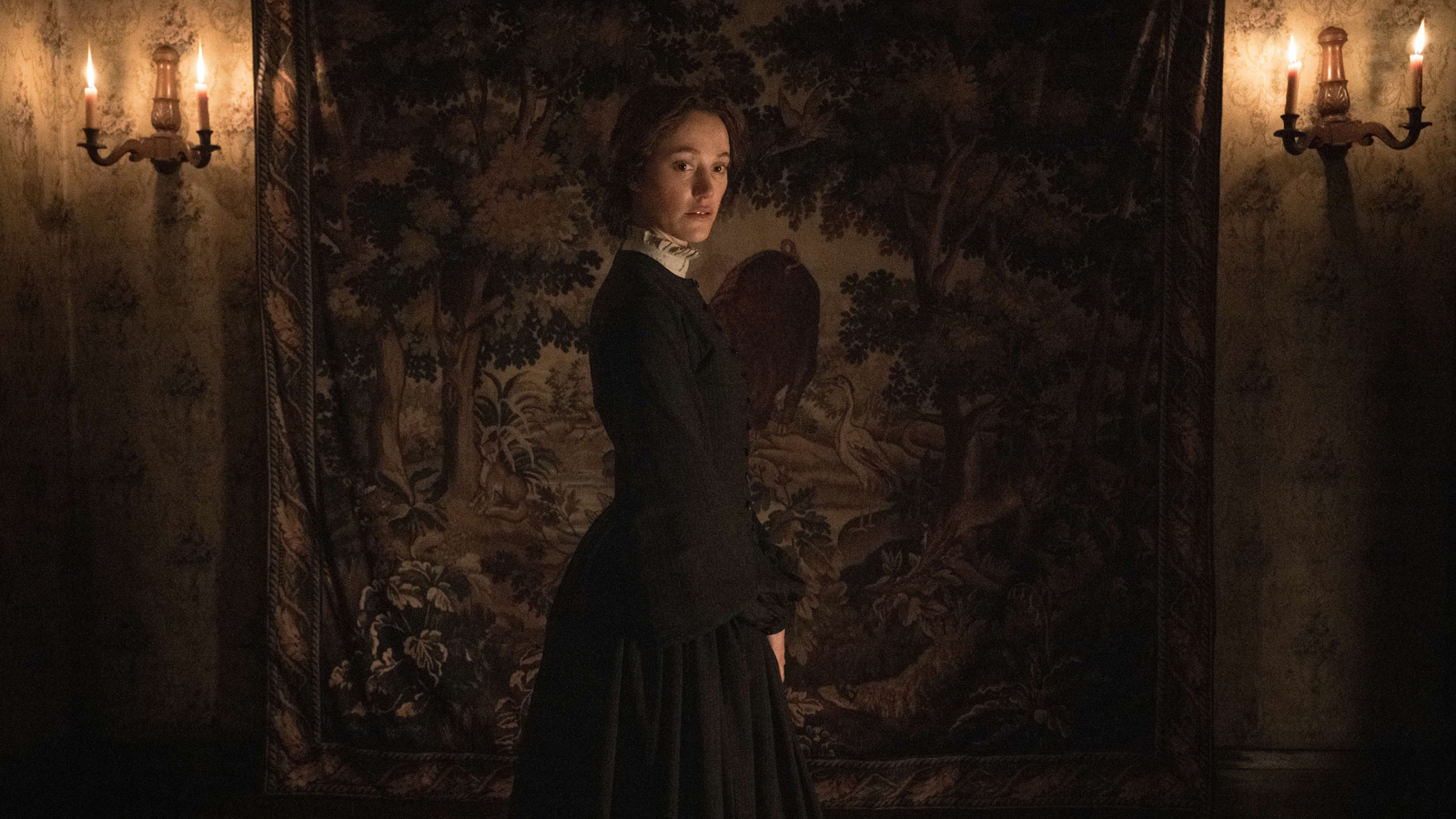
Published Nov 12, 2026, 3:55 PM EST Bee Delores is a Movies Writer for ScreenRant. After earning a Bachelor of Fine Arts in Acting from West Virginia University, they went on to grad school for Entertainment Business at Full Sail University. From their extensive studies in branding, artist management, and business, they dove into the deep end of journalism and has landed countless bylines all over the internet. A Rotten Tomatoes-approved critic, they also write for their own website, B-Sides & Badlands. Maika Monroe builds her entire career on interesting glimpses into the human spirit. From her breakout It Follows to the criminally underrated Villains with Bill Skarsgård, Longlegs, and The Hand That Rocks the Cradle remake, her work speaks volumes for the sort of curious and probing actor she is. With Victorian Psycho, she ventures deeper into the subconscious to excavate her strongest, most bizarre performance that feels both remarkably like a reinvention and a peak of her repertoire. The film, directed by Zachary Wigon, is based upon author Virginia Feito's novel of the same name. Feito also crafts the script; at times, it's an ensemble piece, while at others, a singular showcase for the breadth of Monroe's talents. Monroe has ventured to the precipice of complex and layered work before, as she has done with her most chilling film Watcher. But Victorian Psycho sees her going to such an exciting place that she's deserving of major industry accolades. She certainly gives Toni Collette a run for her money! Unsurprisingly, playing the governess Winifred Notty "made me re-fall in love with my job. I hadn’t had such a challenging role in a minute, and this really pushed me out of my comfort zone,” Monroe told Bloody Disgusting. “It’s really taking a big swing, which is terrifying, because then it is put out into the world and people are going to watch it and judge it and have their opinions." Winified Notty's Terrible Fate After the monstrous bloodbath, Drusilla (Evie Templeton) exposes Winifred's psychotic behavior, telling the police that she killed everyone in the mansion. The police are flabbergasted over the scene of carnage and immediately take her into custody. In the town square, a man sells Monster of Ensor House pamphlets detailing the grisly events. The crowd buzzes with chatter, as they all try to determine what exactly happened within those walls. There's even a puppet show that seeks answers. Historically, women have been pushed to the edge and then questioned about why they reacted in such an extreme fashion. Victorian Psycho, perhaps unintentionally, harkens to the landmark case of Lizzie Borden. Her abusive father and complicit mother shoved her to the edge before she tumbled over and plotted murder. While she was eventually acquitted in a court of law, it's largely believed that she did have a hand in killing her parents. Winifred Notty shares a kinship with Lizzie Borden—two oddball, spinster women who have been ostracized and abandoned by everyone in their lives. Winifred's punishment is to be hung in the town square for all to see. The crowd gathers with barely-contained excitement. The final line of the film is a rearrangement of the first line: "I was the sanest person I'd ever met." She takes that perception of herself to the grave. Maybe that's true. Maybe it's not. Victorian Psycho suggests that she's both sane and insane. That society led her here is true; what else is true is her view on the world is irreparably damaged. Why Winifred Notty Becomes A Governess "I'm the sanest person I've ever met," Maika Monroe delivers the very first line of the film. From the start, you know you'll see exactly how Winifred Notty debunks that delusion. Despite her father's objections to her mere existence, Winifred schemes to worm her way into the Pounds household. In an early conversation with Drusilla, she confesses as much. The Ultimate · Horror Quote Challenge Name That Horror Movie “They’re coming to get you, Barbara.” ☠1960s 🔪1970s 👻1980s 💀1990s 🎭2000s ENTER IF YOU DARE → 01 Which horror movie features this iconic line?“I am your number one fan.” ASingle White Female (1992) BCape Fear (1991) CMisery (1990) DFatal Attraction (1987) ✓ Correct! Annie Wilkes’s obsessive declaration to author Paul Sheldon in Misery — Kathy Bates won the Oscar for this role. ✗ Not quite — it’s Misery (1990). Kathy Bates as Annie Wilkes delivers this line before things get very, very painful for her favorite author. NEXT → 02 Which horror movie features this iconic line?“We all go a little mad sometimes.” APeeping Tom (1960) BThe Birds (1963) CWhatever Happened to Baby Jane? (1962) DPsycho (1960) ✓ Correct! Norman Bates’s unsettling confession in Hitchcock’s Psycho — the film that invented the slasher. ✗ Not quite — it’s Psycho (1960). Norman Bates delivers this chilling line to Marion Crane before the shower scene changes cinema forever. NEXT → 03 Which horror movie features this iconic line?“Here’s Johnny!” AThe Amityville Horror (1979) BPoltergeist (1982) CThe Changeling (1980) DThe Shining (1980) ✓ Correct! Jack Nicholson’s terrifying ad-lib as he axes through the bathroom door in The Shining. ✗ Not quite — it’s The Shining (1980). Nicholson improvised this line while hacking through the door — Kubrick kept the cameras rolling. NEXT → 04 Which horror movie features this iconic line?“They’re all gonna laugh at you!” ACarrie (1976) BThe Exorcist (1973) CThe Omen (1976) DSuspiria (1977) ✓ Correct! Margaret White’s cruel warning to her daughter before prom night turns deadly in Carrie. ✗ Not quite — it’s Carrie (1976). Piper Laurie as Margaret White torments her telekinetic daughter with this prophetic warning. NEXT → 05 Which horror movie features this iconic line?“One, two, Freddy’s coming for you.” AFriday the 13th (1980) BChild’s Play (1988) CHellraiser (1987) DA Nightmare on Elm Street (1984) ✓ Correct! The eerie children’s jump-rope rhyme that haunts the dreams of Elm Street. ✗ Not quite — it’s A Nightmare on Elm Street (1984). The nursery rhyme warning of Freddy Krueger’s arrival. All five are iconic slashers, but only one invades your dreams. NEXT → 06 Which horror movie features this iconic line?“I want to play a game.” AHostel (2005) BSaw (2004) CThe Collector (2009) DCube (1997) ✓ Correct! Jigsaw’s signature greeting, delivered through his puppet Billy in Saw. ✗ Not quite — it’s Saw (2004). The Jigsaw Killer’s chilling invitation before his victims face impossible choices. NEXT → 07 Which horror movie features this iconic line?“It was the boogeyman.” ABlack Christmas (1974) BThe Texas Chain Saw Massacre (1974) CHalloween (1978) DWhen a Stranger Calls (1979) ✓ Correct! Laurie Strode’s terrified whisper to Dr. Loomis after surviving Michael Myers in Halloween. ✗ Not quite — it’s Halloween (1978). Laurie Strode whispers this to Dr. Loomis, who replies: “As a matter of fact, it was.” NEXT → 08 Which horror movie features this iconic line?“It rubs the lotion on its skin or else it gets the hose again.” ASe7en (1995) BAmerican Psycho (2000) CRed Dragon (2002) DThe Silence of the Lambs (1991) ✓ Correct! Buffalo Bill’s skin-crawling command to his captive in The Silence of the Lambs. ✗ Not quite — it’s The Silence of the Lambs (1991). Buffalo Bill delivers this disturbing line from his basement. All five films feature serial killers, but only one has this scene. REVEAL MY SCORE → The Body Count Your Survival Score 💀 / 8 Did you survive the horror quiz? ↻ SURVIVE AGAIN One of the rawest forms of horror storytelling is revenge. Early entries such as The Last House on the Left and I Spit on Your Grave in the 1970s explore vengeance as a cathartic valve after unspeakable trauma, while others like the Guatemalan film La Llorona examine cultural and generational genocide. Even Saw X has something powerful to say about the exploitative nature of the healthcare system through the razor-sharp eye of revenge. Winifred Notty's brand of revenge stems from a deeply hurt, personal place. Her well-earned deception gives her a chance to confront her biological father and also beg for his unconditional love. However, he quickly denies such egregious, money-hungry allegations before spurning her forever. It's the moment that finally pushes her over the edge. There's no coming back from this. The moment that her father, decades after her birth, admitted to still not wanting her could distort anyone's sense of self and identity. Who is Winifred if not Mr. Pounds' long-lost daughter? More importantly, can she recover from this? Victorian Psycho ponders these questions throughout the rest of the film. Emphatically, the answers seem to be: nothing and no. Winifred never sees the light or silliness again. She's a steaming locomotive barreling down the tracks to the only outcome there could possibly be. Who Is Fred? Victorian Psycho brings up a fascinating nature versus nurture debate. Did that near-death experience as an infant send Winifred Notty down a dark path? Or was evil always lurking in the back of her mind? “There’s evil in the hearts of men and women," she tells Andrew and Drusilla in their very first lesson about right and wrong in society. The question "what is evil?" becomes the prominent thread in the film, explored through Winifred's backstory and her reactionary behavior in the present. After tucking Andrew into bed one night, he calls her Winnie, much to her chagrin. She reveals to him that she has a demon named Fred inside her. It's initially unclear whether she's being truthful or simply fabricating to scare him. In the finale, the answer becomes crystal when Winifred, with the noose 'round her neck, gazes out into the crowd and sees Drusilla wearing a crooked smile on her crooked head. The transference of evil is the exclamation mark on the film. The suggestion here is that the cycle begins anew, with Drusilla taking up the psychotic mantel. What Happens During Victorian Psycho's Bloody Massacre Winifred Notty's bloodthirsty rampage begins when Ms. Lamb (Thomasin McKenzie) confronts her about her perversions and the things she does in private. Lamb will confess the truth about her, but she doesn't get the chance. Before she realizes it, Winifred slices her neck and then bludgeons the baby in the bassinet. While the second kill is offscreen, it's a savage moment that demonstrates her nondiscriminatory selection of her victims. The meat of the massacre happens after Mr. Pounds dismisses her. With her luggage in tow, Winifred marches away from the property. But her revenge is just getting started. She later returns with a rifle outfitted with a bayonet. She enters the dining room and is greeted by smiling faces and applause from the family. She's taken aback at first, but as the evening unravels, screams pierce through her hallucinations. When she picks up a spoon to enjoy her dinner, she sees what's really happening in the reflection. She stabs; she shoots; and she savagely murders the family and staff. Her mind has fractured into a million pieces, mirrored through Wigon's masterful storytelling. Winifred fails to see what she's done, perhaps in the same way as Lizzie Borden. Many serial killers have stated that they have blacked out during their murders, and that certainly seems to be the case here. She also uses a peeled pineapple to kill little Andrew, a callback to his obsession with pineapples as a symbol of wealth and status. She later attacks Mr. Pounds while he's sleeping, and as he chokes her, Drusilla stabs him in the back, indicating the passage of Fred. Drusilla also seems ripped from the Lizzie Borden playbook. She's been terribly neglected and abused by her parents, e.g., forced to hold up her sketchbook while her father uses it as target practice. She eventually snaps and viciously stabs Mr. Pounds, likely as Lizzie Borden did, and blood splashes upon the four-poster bed in Victorian Pyscho. Release Date November 13, 2026 Runtime 90 minutes Director Zachary Wigon Writers Virginia Feito Producers Sebastien Raybaud, Nick Shumaker, Dan Kagan, Zachary Wigon, Elizabeth Siegal Cast Thomasin McKenzie Miss Lamb In 1858, governess Winifred Notty arrives at the remote Ensor House to educate the Pounds family's children in manners and family history, but her proper exterior hides violent psychopathic tendencies that become harder to contain.
Victorian Psycho Ending Explained: Maika Monroe's Secret Mission Revealed
Full Article
Original Source
Read the full article at Screenrant →KhanList aggregates and links to publicly available news content. We do not host full articles from third-party sources. Always verify important information with original sources.