
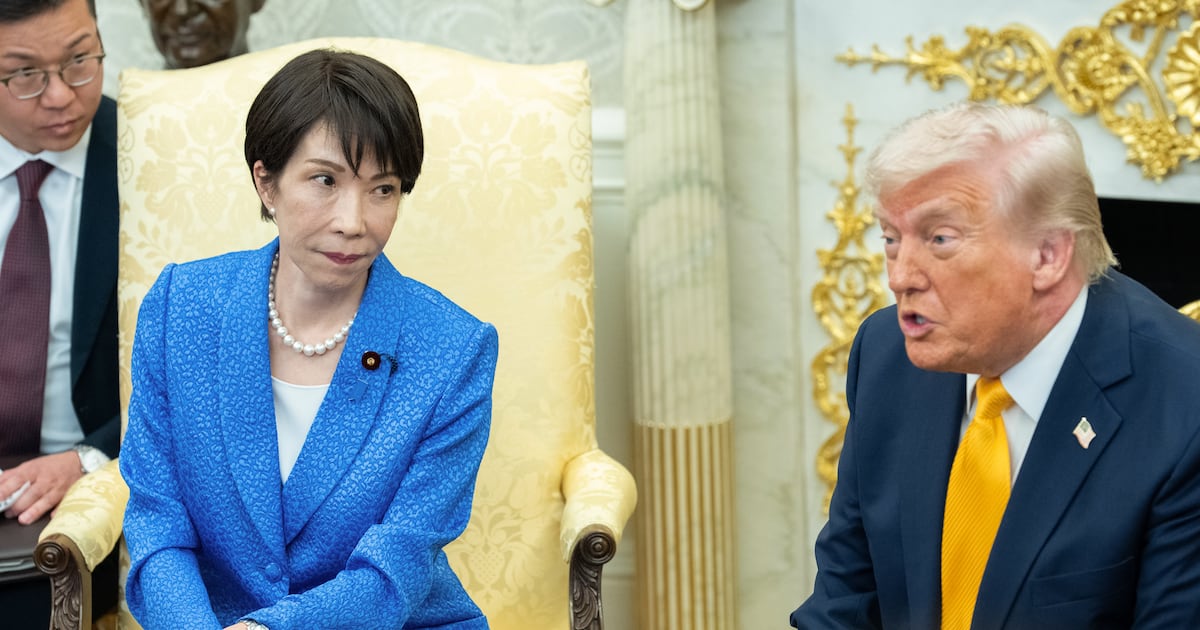
The Trump administration’s decision to sanction Tomoko Akane, president of the International Criminal Court (ICC), has put Japan in a bind. US secretary of state Marco Rubio imposed the sanctions this month to “protect Americans” from what he called a “sham” court. Akane and lawyer Abdoulaye Seye had “directly engaged in efforts ... to investigate, arrest, detain, or prosecute officials whose government has not consented to ICC jurisdiction”, he wrote on social media.The sanction is part of what the US state department calls a “whole-of-government response to systematically disable the ICC’s ability to operate, target American servicemen or officials, or otherwise threaten American sovereignty”. Seye is head of the ICC’s unified team leading the investigation into the “situation in the State of Palestine”.READ MOREJapan responded to what many see as an outrageous legal attack on one of the world’s most prominent Japanese citizens by calling it “very unfortunate”, a stock phrase expressing mild regret but not criticism. A Tokyo government source said the expression was settled upon only “after much agonising”.Prime minister Sanae Takaichi has since carefully parroted the phrase, despite a growing domestic backlash. Criticism of Takaichi has coalesced around a non-partisan group of politicians, led by Gen Nakatani, a former defence minister, and former prime minister Shigeru Ishiba.The lawmakers say the Takaichi government must clearly protest the sanctions against Akane and demand their immediate withdrawal.“‘Very unfortunate’ is an expression of sentiment, not of intent,” the group said in a statement.Japan is the world’s top financial contributor to the ICC, ahead of Germany, France and the United Kingdom. Akane is only an ICC judge because she was nominated as a candidate by the Japanese government (the United States shuns the ICC, along with China and Russia).There is a lot of incentive, therefore, for Takaichi to live up to her “iron lady” tag. But the US-Japan alliance is also “the cornerstone of Japan’s foreign and security policy,” says the Tokyo government. As part of this alliance, Japan hosts more than 50,000 US military personnel. Tokyo has long been loath to upset its powerful Washington patron. Japan's prime minister Sanae Takaichi. Photograph: Yuichi Yamazaki/AFP via Getty Images [ Why the United States can’t quit its warsOpens in new window ]Takaichi has already taken a domestic political hit for a “cringing” charm offensive on US president Donald Trump. In their first official meeting last October, Takaichi praised Trump’s “unwavering commitment to world peace and prosperity” and said he deserves the Nobel Peace Prize. Not surprisingly, Takaichi is now trying to strike a tougher note. “Japan has consistently attached importance to the rule of law in the international community,” she said last week. [The sanction on Akane] is incompatible with Japan’s position, and we take it extremely seriously.”But her admission that her government knew the sanctions were coming and had powerlessly lobbied “behind the scenes” to stop them is hardly a good look. Washington has done little to bail her out. It has been left to Takaichi’s aides to explain Rubio’s move. One told the Japanese media that the US beef is with the ICC, not Japan. “It just so happens a Japanese national is at the top.”Before the controversy began, Takaichi had praised Akane and Yuji Iwasawa, president of the International Court of Justice (ICJ), for playing a “central role” in upholding the international rule of law. “I take great pride in the fact that both courts are led by Japanese individuals”, she said.Akane has expressed frustration that those words are not matched by political deeds. In interviews last week she said all she had done was perform her duties and there was “absolutely no reason” for the sanctions. She called them a “critical moment” in the existence of The Hague court and in international order. The ICC is especially important for Japan, she said, because her country had won international respect by adhering to the rule of law since the second World War.The sanctions have already started to bite: Akane said she can no longer use her credit cards or travel to the US for meetings. “To the people of Japan, I ask that you watch closely to ensure Japan does not drift toward a direction where justice is enforced by force, or where we simply follow the lead of powerful nations,” she said. The bottom line is that the road to dismantling The Hague runs through Tokyo, according to an article by Mieczyslaw Boduszyński and Christopher K Lamont in Just Security, an independent journal based at the New York University School of Law. “Tokyo is being asked, in effect, to decide whether preserving its privileged relationship with Washington requires sacrificing a leading Japanese citizen’s reputation and an institution Japan has spent nearly two decades financing, staffing and defending.” So what will Takaichi do?[ Naomi O'Leary: US sanctions lock ICC judge out of daily lifeOpens in new window ]
‘Very unfortunate’: the phrase that captures Japan’s Trump dilemma
Full Article
Original Source
Read the full article at Irishtimes →KhanList aggregates and links to publicly available news content. We do not host full articles from third-party sources. Always verify important information with original sources.