
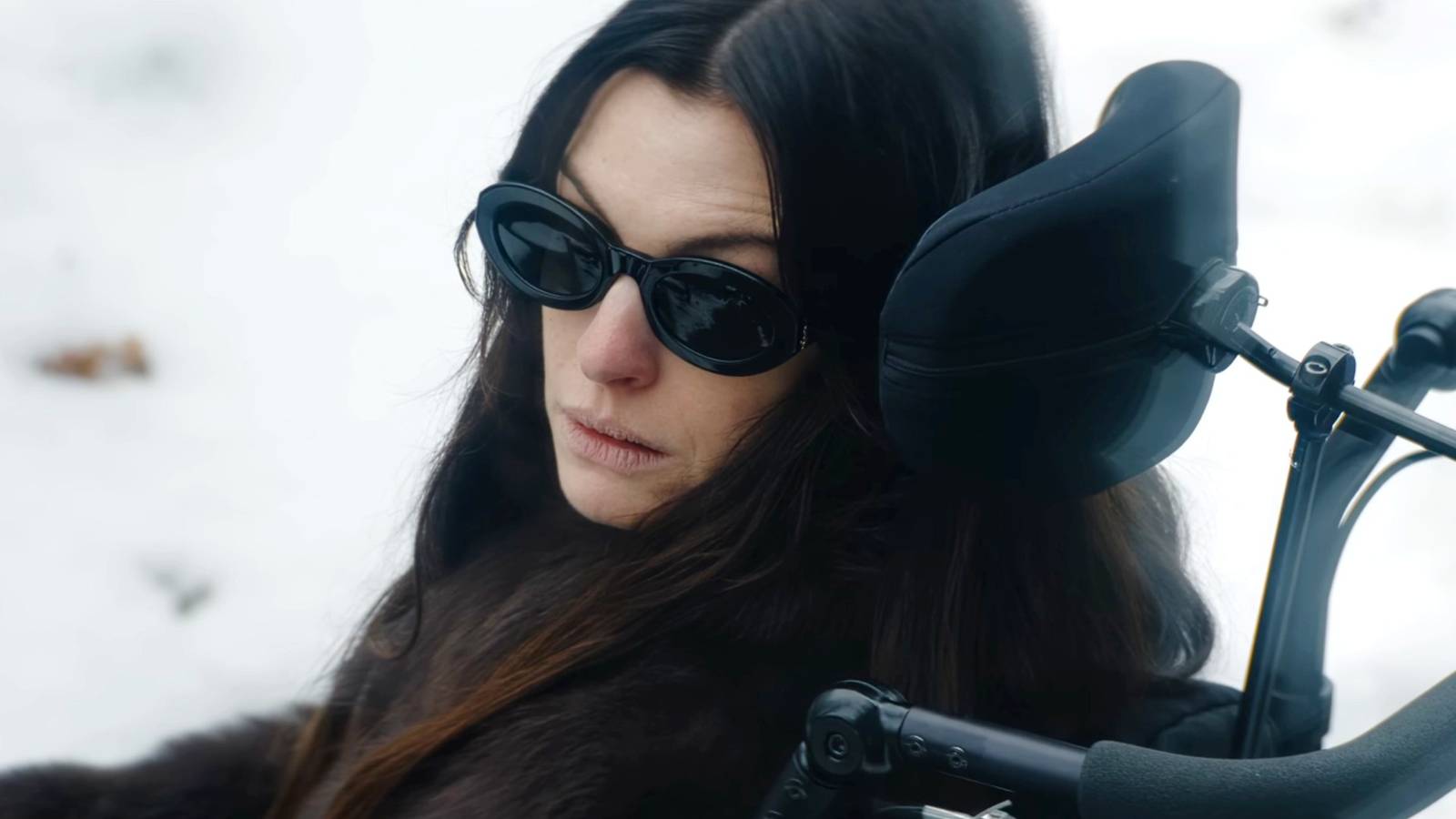
Published Oct 2, 2026, 5:01 PM EDT This article contains major spoilers for Verity. EXCLUSIVE: Anne Hathaway and Dakota Johnson's new psychological thriller Verity makes some changes to Colleen Hoover's beloved novel. The newest Colleen Hoover movie adaptation hits theaters, and its star-studded cast brings the novel's blood, romance, suspense, and creepiness to life on screen. The story centers on Lowen Ashleigh (Johnson) as she moves into the home of Verity Crawford (Hathaway) to write her next book after the latter suffers a debilitating accident. Many story beats are the same, including that Lowen ends up with Verity's husband, Jeremy, and Verity dies. However, adjustments were made to the novel's conclusion, including Verity's ending. The thriller maintains the action-packed narrative in which Lowen uncovers a manuscript that seems to detail the prolific author's various heinous actions, including intentionally killing her daughter, Harper, and Verity is revealed to be faking her vegetative state. What happens after that, though, looks slightly different. In an interview with ScreenRant's Liam Crowley, Verity author Colleen Hoover and director Michael Showalter explain a bit more about why they made the changes that they did and how they decided which alterations to make. Hoover "learned a lot in the last few years of adaptations as an author," so she found it "very easy to let things go from the book." Even then, she defended that "you walk away from the movie with the same feeling that you got walking away from the book, and that was the most important thing to me. I didn't need an exact copy." Colleen Hoover: I feel like I've learned a lot in the last few years of adaptations as an author. I find it very easy to let things go from the book. I think that things that I knew were important to readers, I wanted to keep in, but as an author and a producer on the film, I feel like I was very much feeling that if it benefited the movie itself, I was very okay with things changing. I feel like you walk away from the movie with the same feeling that you got walking away from the book, and that was the most important thing to me. I didn't need an exact copy. I just wanted the same feels. Meanwhile, Showalter shared that "there were drafts of the script that had a totally different ending," particularly the big reveal of the antagonistic journaling because "it's a bit of an esoteric idea." However, he reasoned that it was "a more muscular Hollywood ending" because "that was so important and so original, and there's no human being on the planet that will be able to predict that that is what's going on." Michael Showalter: When I first read the script, there were drafts of the script that had a totally different ending. I'm specifically talking about the antagonistic journaling. There were versions of the script that ended in a different way. I would say the thinking behind it was a more muscular Hollywood ending, a different kind of reveal, because the antagonistic journaling is something that is very specific to the writing process, and it's a little bit of an esoteric idea. I felt, and we all did, that that was so important and so original, and there's no human being on the planet that will be able to predict that that is what's going on. That was something that I felt was essential, was to do that ending, which is, like I said, in a million years, no one is going to be like, "Oh, I know what's going on. It's antagonistic journaling." It's such a fun and surprising and thought-provoking way to end the movie. Showalter refers to the twist regarding the manuscript. According to Verity's note, the manuscript that Lowen found wasn't actually the confessional of true events that it seemed to be. Rather, it was a writing exercise called antagonistic journaling, in which a writer will intentionally write from the perspective of a villain and/or using their darkest, most disturbing thoughts. That original novel twist was honored, but what occurred as a result was slightly different on screen and left the conclusion more open to interpretation. In the book, Lowen destroys the letter and seems to refuse to entertain the idea that Jeremy (and she, by extension) had done anything wrong; in the movie, Lowen holds onto the note. Hoover and Showalter both explained their rationale for altering that conclusion. Showalter explained, "It's the telltale heart. The letter still exists. She's not ready to destroy it. So yes, when the movie ends, that letter is still in her pocket." Meanwhile, when Hoover was asked if Lowen would accept the reality, she exclaimed, "Yeah, I think she felt forced to, and also because she was pregnant, and she just wanted this life that was a dream life to her. And I do think that that letter could have ruined that and put that at risk." The movie actually makes yet another detour before its true end, showing a clip of Verity explaining that, as an author, she likes to trick the audience. This only calls the truth into question even more, making multiple possible explanations seem completely reasonable—it's simply something that viewers have to decide for themselves. Verity hits theaters on October 2. Release Date October 2, 2026 Runtime 117 minutes Director Michael Showalter Writers Nick Antosca, Colleen Hoover Producers Alex Hedlund, Anne Hathaway, Colleen Hoover, Jordana Mollick, Michael Showalter, Nick Antosca, Stacey Sher Cast
Verity Ending's Major Changes From Colleen Hoover Novel Explained By Director & Author
Full Article
Original Source
Read the full article at Screenrant →KhanList aggregates and links to publicly available news content. We do not host full articles from third-party sources. Always verify important information with original sources.