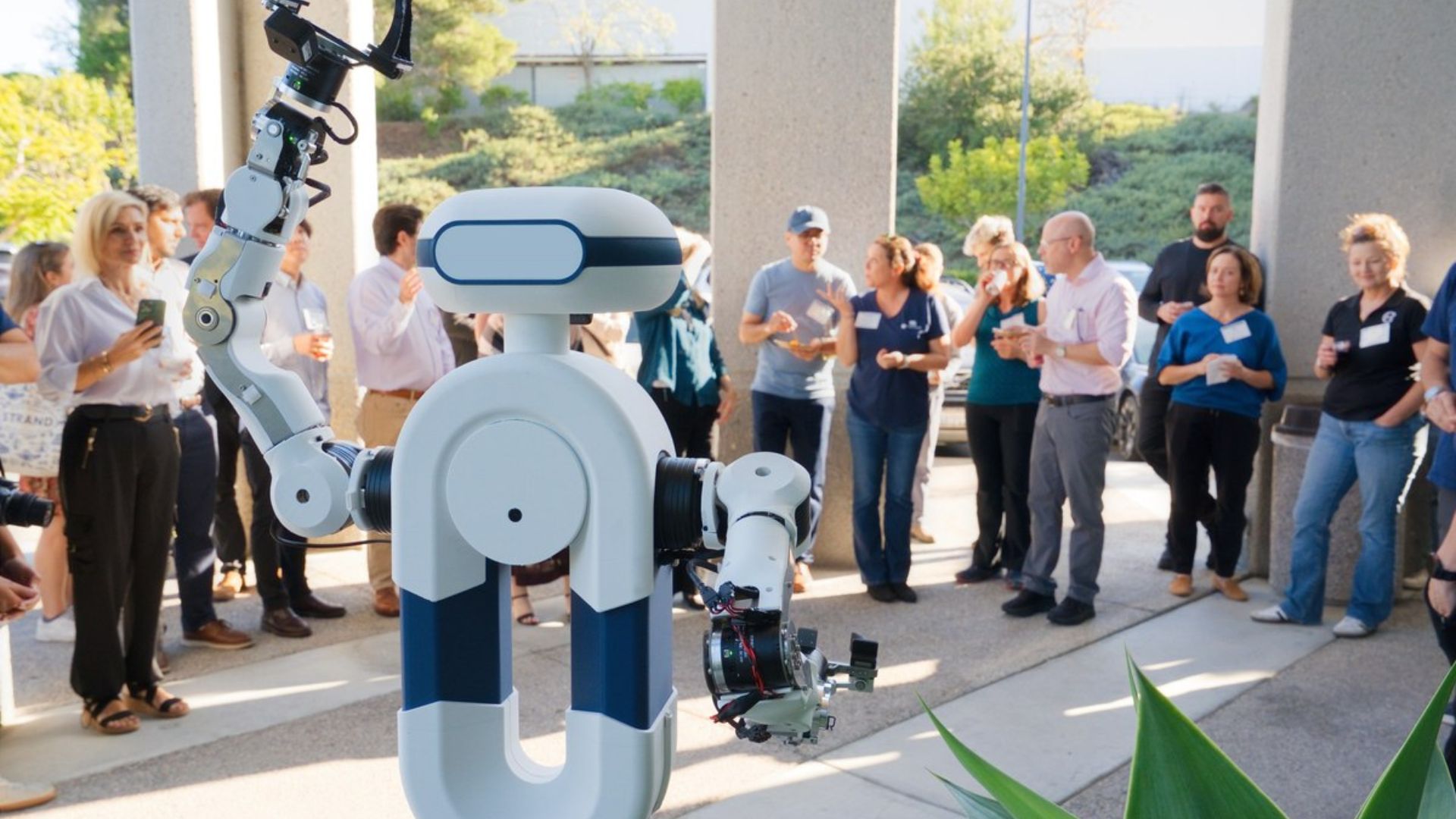
Elsie operates existing lab instruments without requiring equipment replacement or major retooling.Tactus AI A U.S. startup has developed an autonomous humanoid laboratory assistant designed to work alongside clinical staff and operate existing diagnostic instruments. Tactus AI introduced its two-armed robot, Elsie, at the 2026 Association for Diagnostics & Laboratory Medicine (ADLM) Annual Scientific Meeting & Clinical Lab Expo. Powered by physical AI, Elsie uses touch, force, depth, and machine-vision sensors to navigate laboratory environments and perform tasks at the bench. Tactus AI says the system can operate existing laboratory equipment using a facility’s validated procedures, potentially allowing laboratories to automate workflows without replacing or significantly modifying their current instruments and infrastructure. Elsie transforms laboratories Elsie is an autonomous wheeled humanoid laboratory assistant designed to perform hands-on work at clinical laboratory benches using existing instruments, tools, and validated operating procedures. Built around physical AI, Elsie combines a two-armed humanoid platform with sensors for touch, force, depth, and machine vision. These capabilities allow the robot to perceive its surroundings, handle laboratory equipment, and perform physical tasks at workstations designed for human staff. Elsie is designed to operate existing laboratory instruments and tools, enabling facilities to introduce robotic automation without replacing equipment or significantly modifying their established infrastructure and workflows. Tactus AI says the technology is aimed at addressing a growing gap between laboratory workload and available staff. The US Bureau of Labor Statistics projects about 22,600 annual openings for clinical laboratory technologists and technicians through 2034, while the American Society for Clinical Pathology’s 2024 vacancy survey reported a 28 percent vacancy rate in anatomic pathology and vacancy rates of 7 percent to 15 percent across most other departments. Tactus plans to select three to five launch laboratories this year, starting with US academic medical centers. Each site undergoes a readiness review covering infrastructure, instruments, workflows, and data systems, followed by a 30-day assessment, pilot roadmap, and defined success criteria. AI-powered lab automation The company’s technology stack consists of three main components: the Elsie humanoid, a Lab Orchestration platform, and a library of validated robotic skills. The humanoid provides the physical capabilities needed to work with human-scale laboratory equipment, while the orchestration layer coordinates multi-step procedures involving robots, instruments, and human staff. The skill library provides reusable capabilities for specific laboratory operations. These include monitoring instruments and identifying exceptions, transporting samples and consumables, executing tests according to validated standard operating procedures, clearing first-line instrument faults, performing routine cleaning and calibration, changing consumables, and recording actions within the platform. Before deployment, Tactus AI builds a digital twin of the customer’s laboratory bench using information such as instrument configurations, SOPs, error codes, and designated technical leads. Elsie’s control policies can then be trained and stress-tested in a physics-based simulation environment across hundreds of virtual runs. The system is subsequently validated on site alongside laboratory personnel using the customer’s own acceptance criteria. According to Tactus AI, individual skills are not deployed on live workflows until the customer’s quality team approves them.According to the firm, by combining humanoid manipulation, robotic orchestration, simulation-based training, and customer-specific validation, it is positioning Elsie as a way to automate physical laboratory work while keeping existing infrastructure and procedures at the center of the workflow.Recommended ArticlesGet the latest in engineering, tech, space & science - delivered daily to your inbox.Jijo is an automotive and business journalist based in India. Armed with a BA in History (Honors) from St. Stephen's College, Delhi University, and a PG diploma in Journalism from the Indian Institute of Mass Communication, Delhi, he has worked for news agencies, national newspapers, and automotive magazines. In his spare time, he likes to go off-roading, engage in political discourse, travel, and teach languages.
US startup unveils humanoid robot to help hospital labs with routine testing work
Full Article
Original Source
Read the full article at Interestingengineering →KhanList aggregates and links to publicly available news content. We do not host full articles from third-party sources. Always verify important information with original sources.