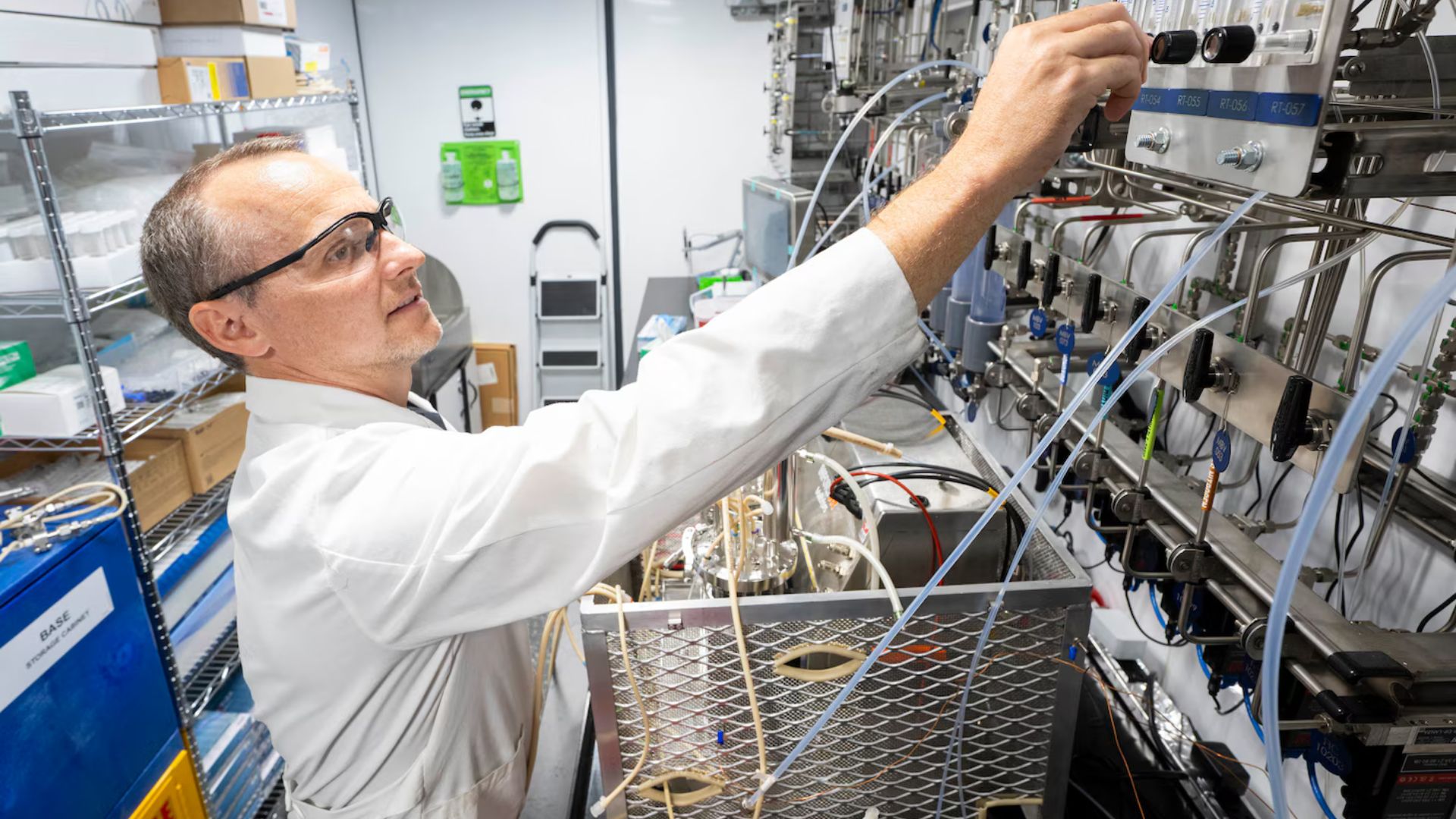
US researchers are developing a continuous biomanufacturing system that could enable on-demand production of critical materials using smaller, more efficient, and sustainable processes. Unlike conventional batch-based manufacturing, the approach uses surface-bound microbial cells to continuously produce valuable compounds over extended periods, reducing downtime and improving productivity. The technology developed by the US Naval Research Laboratory (NRL) is designed to strengthen supply chain resilience by allowing essential materials to be manufactured closer to where they are needed, including in remote or operational environments. According to the team, the research aligns with US Department of Defense priorities to advance biotechnology and flexible biomanufacturing capabilities for future missions. Biofilm reactor research NRL is advancing research into continuous biomanufacturing systems that could enable on-demand production of critical materials using smaller, more efficient, and sustainable manufacturing processes. The new work aims to replace conventional batch-based biomanufacturing with continuous production technologies that operate for weeks or even months, reducing energy consumption, equipment size, and operational complexity. Traditional biomanufacturing relies on large fermentation tanks that require significant infrastructure and periodic shutdowns between production cycles. NRL researchers are instead developing biofilm-based reactors, in which microorganisms attach to engineered surfaces and continuously produce target compounds as nutrients flow through the system. This approach increases microbial cell density while reducing reactor volume and energy requirements. According to the researchers, the technology has the potential to produce a wide range of materials important for both military and commercial applications. Laboratory demonstrations have already shown production pathways for lubricant precursors, munition components, active pharmaceutical ingredients, bioplastics, and single-cell proteins. A key element of the research is the use of additive manufacturing to rapidly design and fabricate custom bioreactors. By using 3D printing, researchers can quickly prototype, test, and refine reactor designs for different microorganisms and production targets. The flexibility of additive manufacturing could also support future field operations, where replacement reactor components could be produced on-site instead of transported from centralized manufacturing facilities. Resilient manufacturing platform The team is also investigating ways to simplify downstream processing, one of the most resource-intensive stages of biomanufacturing. Early experiments indicate that some target molecules naturally accumulate within the 3D-printed reactor matrix, potentially allowing production, separation, and concentration to occur in a single system. If confirmed through further testing, this could significantly lower production costs while improving overall efficiency. In parallel, researchers are studying marine microorganisms capable of growing in seawater and utilizing alternative feedstocks. Eliminating the need for freshwater could expand the technology’s use in resource-constrained environments while reducing logistical demands associated with conventional biomanufacturing. The laboratory has already demonstrated a mobile, containerized biomanufacturing platform housed inside a standard shipping container. Future research aims to integrate continuous production technologies into these deployable systems, enabling critical materials to be manufactured closer to where they are needed. The research is being carried out in collaboration with the Air Force Research Laboratory and the US Army Combat Capabilities Development Command Chemical Biological Center. Together, the teams are evaluating multiple microbial strains, reactor designs, and production pathways to improve scalability, versatility, and long-term performance. The researchers believe continuous biomanufacturing could provide a foundation for more resilient domestic manufacturing and future point-of-need production systems for a broad range of strategic materials.Recommended ArticlesGet the latest in engineering, tech, space & science - delivered daily to your inbox.Jijo is an automotive and business journalist based in India. Armed with a BA in History (Honors) from St. Stephen's College, Delhi University, and a PG diploma in Journalism from the Indian Institute of Mass Communication, Delhi, he has worked for news agencies, national newspapers, and automotive magazines. In his spare time, he likes to go off-roading, engage in political discourse, travel, and teach languages.
US researchers develop continuous biomanufacturing for on-demand critical materials
Full Article
Original Source
Read the full article at Interestingengineering →KhanList aggregates and links to publicly available news content. We do not host full articles from third-party sources. Always verify important information with original sources.