
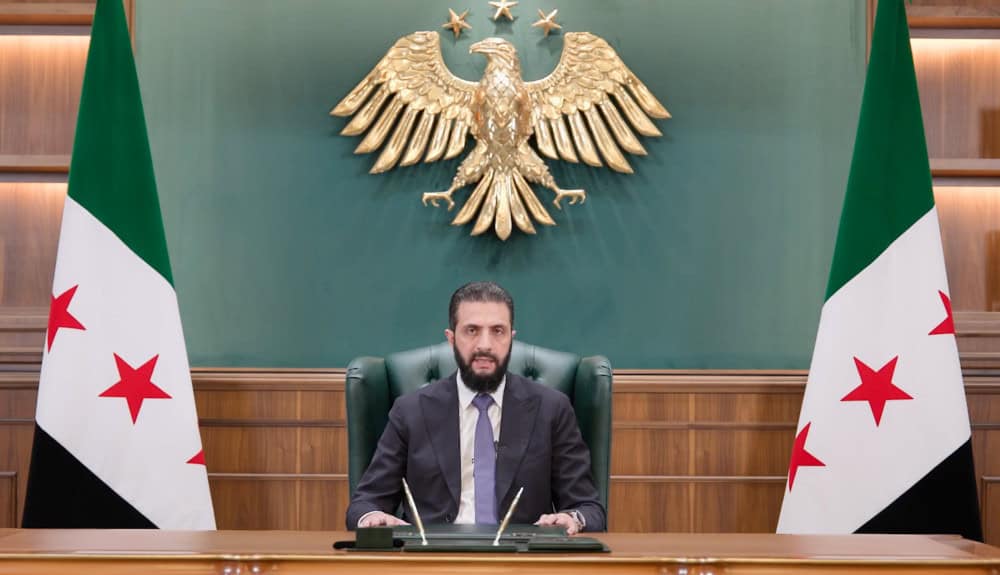
On August 24, the US rescinded Syria’s designation as a State Sponsor of Terrorism. “I congratulate the Syrian people on the official removal of Syria’s name from the list of state sponsors of terrorism, and I thank His Excellency President Donald Trump for this historic decision,” Syrian President Ahmad al Sharaa posted on social media. The change in status comes amid several notable domestic and international developments. On August 23, Syria held a meeting in Jordan with US and Israeli officials to reduce tensions between Israel and Syria following Israeli strikes in Syria. In addition, the Syrian Democratic Forces (SDF), the US-supported, Kurdish-led coalition that fought the Islamic State, held meetings in Damascus with Syrian officials on August 25 to discuss the completion of integrating their respective security forces. The Trump administration has been seeking to end sanctions on Syria over the past year. President Donald Trump signed an Executive Order to terminate sanctions in June 2025. That policy culminated in the August 24announcement. “Today, I authorized the formal rescission of Syria’s designation as a State Sponsor of Terrorism (SST), following the conclusion of the mandatory 45-day Congressional notification period,” US Secretary of State Marco Rubio said. “I have also delisted Hay’at Tahrir al-Sham’s (HTS) [the jihadist group formerly led by Sharaa] designation as a Specially Designated Global Terrorist (SDGT). These actions represent another historic step by President Trump to give the Syrian people a path to prosperity,” he added. US Ambassador Tom Barrack, who serves as ambassador to Turkey and US Envoy to Syria and Iraq, praised the rescission of the designation. “Today, another wall comes down. Capital can replace conflict, enterprise can replace isolation, and commerce can continue to triumph over chaos,” Barrack wrote. The US Embassy in Syria said the move would lead to a new relationship between Washington and Damascus, “built on shared interests, mutual security, and shared prosperity.” Syria’s president has praised the US decision, which has been widely covered by Syrian state media. “Upon the directives of President Ahmad al-Sharaa [sic], we will continue working to remove the effects of isolation and create an environment based on transparency, mutual interests and respect, in a way that enhances development and stability in Syria and the region,” the Syrian Foreign Minister Asaad Hassan al Shaibani said, according to the Syrian Arab News Agency. The US decision came as reports also emerged that the US was holding talks with Syria and Israel in Jordan to calm recent tensions. During the evening of August 17-18, Israel carried out airstrikes on Abu al Duhor Military Airport in northern Syria. The strikes were aimed at warning Turkey against expanding its military role in Syria. Damascus expressed that it hoped talks with Israel would resume. “The negotiations were frozen after the Iranian-Israeli war, and we hope they will resume in the near future so that we can complete this process,” Foreign Minister Shaibani said on August 23. The result of the meeting in Jordan remains to be seen. “The meeting, which brought the Syrian foreign minister together with the head of the Israeli foreign intelligence service, was the highest-level publicly announced direct contact since the start of the security track between the two sides,” The New Arab noted. The report added that Syria is seeking to have Israel withdraw from a buffer zone that the Israeli military seized on December 8, 2024, when Syria’s former Bashar al Assad regime fell. The Israel Defense Forces (IDF) took control of the old 1974 ceasefire buffer zone at the time and has subsequently carried out raids in Syrian villages near the zone. Israeli Defense Minister Israel Katz visited IDF troops on Mount Hermon overlooking Lebanon and Syria on August 25 and said the IDF would remain in its positions. The IDF also seized the peak of Mount Hermon on December 8, 2024. As Syria emerges from sanctions, it is also working to complete the full integration of members of the SDF into the new Syrian security forces. “Syrian Democratic Forces (SDF) commander Mazloum Abdi and top SDF official Ilham Ahmed held talks with Syrian government officials in Damascus on Monday as the two sides seek to complete integration measures by the end of the month,” the London-based Asharq al Awsat reported on August 25. The messaging from Mazloum Abdi, the commander of the SDF, is that integration is complete. A report from Rudaw Media Network, a Kurdish outlet, noted on August 24 that Abdi was now shifting to focus on other domestic policies, such as Kurdish rights in Syria. “Abdi also said that Kurdish education has been a priority in talks with Damascus, reiterating that they will not accept Kurdish as an optional language in Rojava but want it to remain the main language of instruction. He said they were open to Arabic being taught alongside Kurdish in the region, as proposed by the government,” Rudaw said. Reporting from Israel, Seth J. Frantzman is an adjunct fellow at FDD and a contributor to FDD’s Long War Journal. He is the senior Middle East correspondent and analyst at The Jerusalem Post, and author of The October 7 War: Israel’s Battle for Security in Gaza (2024).
US rescinds Syria’s designation as a State Sponsor of Terrorism
Full Article
Original Source
Read the full article at Fdd →KhanList aggregates and links to publicly available news content. We do not host full articles from third-party sources. Always verify important information with original sources.