
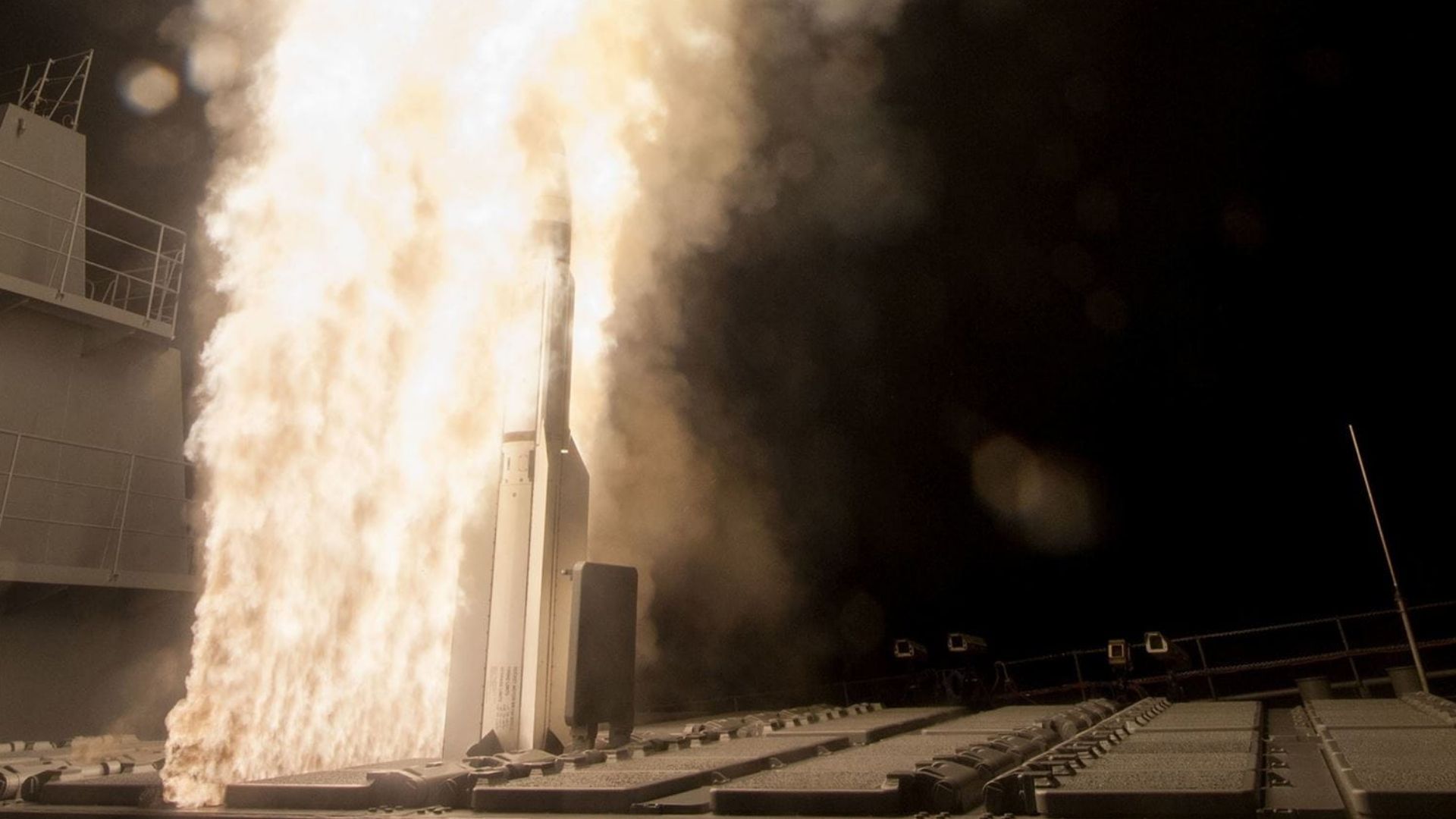
RTX’s Raytheon has secured a multiyear contract worth up to $6.3 billion to produce and sustain Standard Missile-3 Block IB (SM-3 IB) interceptors as the U.S. replenishes missile defense inventories after combat use. Announced on October 8, the agreement covers five years of work, with two additional option years. Production will primarily take place at Raytheon facilities in Tucson, Arizona, and Huntsville, Alabama. Reuters reported that recent conflicts in the Middle East have depleted missile-defense stockpiles, increasing demand for interceptors and other air-defense weapons. This contract is also part of the push to increase U.S. weapons manufacturing capacity and replenish critical munitions. A missile designed to intercept threats in space The SM-3 IB is a ballistic missile defense interceptor designed to destroy short- to intermediate-range ballistic missiles during the midcourse phase of flight. Unlike systems designed to intercept threats closer to the ground, the SM-3 engages targets outside Earth’s atmosphere. It is part of the Aegis Ballistic Missile Defense system, which combines shipboard sensors, tracking and command systems, and interceptors launched from naval vessels. The SM-3 can also operate from land-based Aegis Ashore installations. The interceptor uses hit-to-kill technology. Rather than relying on a conventional explosive warhead, its kill vehicle is designed to collide directly with an incoming missile’s warhead. The Block IB variant features an improved two-color infrared seeker and upgraded steering and propulsion capabilities to help guide the interceptor toward its target. Raytheon said the SM-3 IB was first used in combat in 2024, when US naval forces employed SM-3 interceptors during the response to Iran’s attack on Israel. The engagement marked the first combat use of the SM-3 family, according to reporting by USNI News. The SM-3 family has several variants designed to address different ballistic missile defense requirements. The Block IB improves on the earlier Block IA with an upgraded seeker and enhanced divert and attitude control capabilities, helping the interceptor track and maneuver toward its target during the final stages of an engagement. The more advanced SM-3 Block IIA, developed jointly by the U.S. and Japan, features a larger rocket motor and a larger kinetic warhead to engage more challenging ballistic missile threats. The bigger weapons production push The new agreement follows other major U.S. missile procurement deals as the Pentagon seeks to expand production and restore inventories. In October 2026, Raytheon also secured a contract worth up to $24.4 billion for Standard Missile-6 (SM-6) production, while Lockheed Martin received a $58.6 billion Patriot missile contract in July. Although the SM-3 IB and SM-6 belong to the same broader family of naval missiles, they serve different roles. The SM-3 specializes in exo-atmospheric ballistic missile interception, while the SM-6 supports a wider range of missions, including air defense and certain terminal ballistic missile engagements. Raytheon President Phil Jasper said the SM-3 IB contract would help replenish inventories and maintain the defensive capabilities required by the U.S. Navy, the Missile Defense Agency, and their partners. The agreement is valued at up to $6.3 billion, meaning the announced ceiling should not be interpreted as guaranteed spending. Its five-year base period and two additional option years provide a longer-term framework for production and sustainment. At the same time, the actual pace of replenishment will depend on contract execution and manufacturing capacity.Get the latest in engineering, tech, space & science - delivered daily to your inbox.Kaif Shaikh is a journalist and writer passionate about turning complex information into clear, impactful stories. His writing covers technology, sustainability, geopolitics, and occasionally fiction. A graduate in Journalism and Mass Communication, his work has appeared in the Times of India and beyond. After a near-fatal experience, Kaif began seeing both stories and silences differently. Outside work, he juggles far too many projects and passions, but always makes time to read, reflect, and hold onto the thread of wonder.
US: Raytheon to build more missile interceptors that can destroy threats in space
Full Article
Original Source
Read the full article at Interestingengineering →KhanList aggregates and links to publicly available news content. We do not host full articles from third-party sources. Always verify important information with original sources.