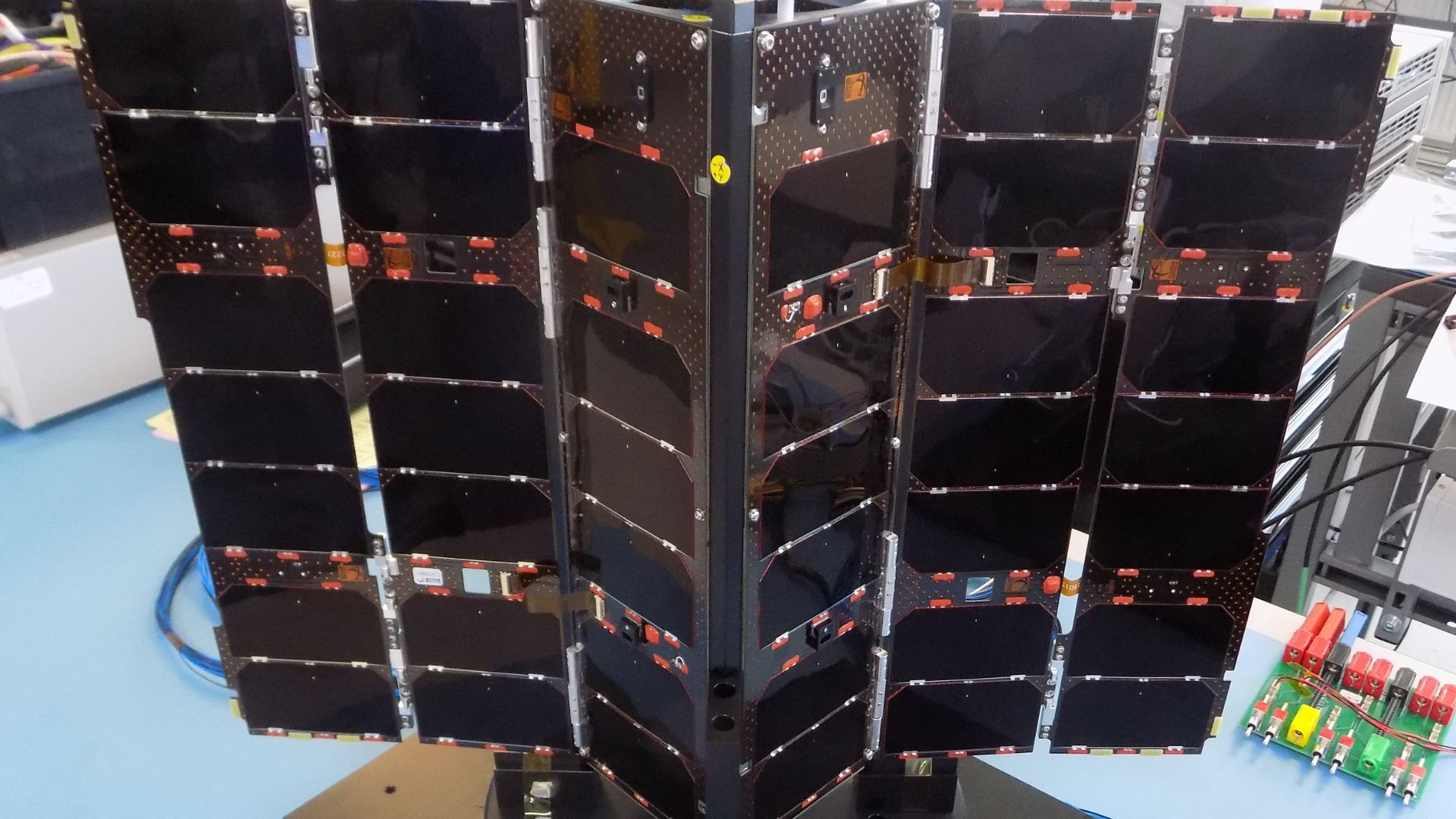
The US has demonstrated a level of artificial intelligence in orbit after a neural network autonomously controlled the orientation of a satellite without human intervention. The flight, conducted by the Air Force Research Laboratory (AFRL), moved AI beyond managing sensors and payloads and placed it in charge of a core spacecraft function. During the mission, an AI agent was uploaded to a satellite orbiting hundreds of miles above Earth and directed the vehicle toward its objective within a single orbit. The system also avoided hazardous conditions while controlling the spacecraft’s orientation, showing how autonomous software could reduce dependence on ground commands during military and scientific missions. From payload management to spacecraft control The demonstration represents a shift in how AI could be used in space operations. Instead of supporting only mission equipment, the neural network directly commanded the satellite bus, which determines how a spacecraft points and maneuvers in orbit. “We have a responsibility to translate advances in AI to give our Airmen and Guardians trustworthy autonomous teammates to meet today’s fast-moving challenges,” said Department of the Air Force Technology Executive Officer and AFRL Commander Brig. Gen. Douglas P. Wickert. “The AFRL vision is to win the future by executing our mission to discover, develop and deliver war-winning science and technology,” he added. AFRL’s Autonomy Capability Team, known as ACT3, developed the neural network using reinforcement learning. The team trained the model through repeated simulations before exposing it to laboratory tests designed to narrow the gap between virtual performance and real spacecraft operations. Reinforcement learning model reaches orbit The project followed a rapid development approach intended to move AI systems from research environments into operational testing quickly. “We used startup-like agility to take a reinforcement learning model from the lab directly to orbit,” said Dr. Steve “Cap” Rogers, AFRL senior scientist for AI enabled autonomy. “This flight is a perfect example of ACT3’s core mission to operationalize AI at scale for the Air and Space Force.” Reinforcement learning allows an AI model to improve its decisions by receiving feedback from simulated actions and outcomes. For this mission, the approach enabled the agent to learn how to orient the spacecraft while remaining within operational limits. The successful flight offers evidence that neural network-based control can operate on physical spacecraft after simulation and ground validation. Safety systems monitor autonomous decisions Alongside the neural network, the mission evaluated an AI watchdog and runtime assurance guardrails designed to reduce the risks of autonomous control. The watchdog system identifies when an AI approaches situations that have not been sufficiently verified, allowing control to shift to backup systems. The guardrails monitor the spacecraft’s condition and the neural network’s outputs, intervening when predefined safety limits are approached. Both safety systems operated in shadow mode during the flight. They did not control the vehicle but recorded how they would have responded to the AI’s decisions in real-time. With autonomous orientation now demonstrated in orbit, AFRL plans to test more complex AI-controlled spacecraft operations on future missions.Recommended ArticlesGet the latest in engineering, tech, space & science - delivered daily to your inbox.Atharva is a full-time content writer with a post-graduate degree in media & amp; entertainment and a graduate degree in electronics & telecommunications. He has written in the sports and technology domains respectively. In his leisure time, Atharva loves learning about digital marketing and watching soccer matches. His main goal behind joining Interesting Engineering is to learn more about how the recent technological advancements are helping human beings on both societal and individual levels in their daily lives.
US: Onboard neural network guides satellite, reduces ground control need
Full Article
Original Source
Read the full article at Interestingengineering →KhanList aggregates and links to publicly available news content. We do not host full articles from third-party sources. Always verify important information with original sources.