
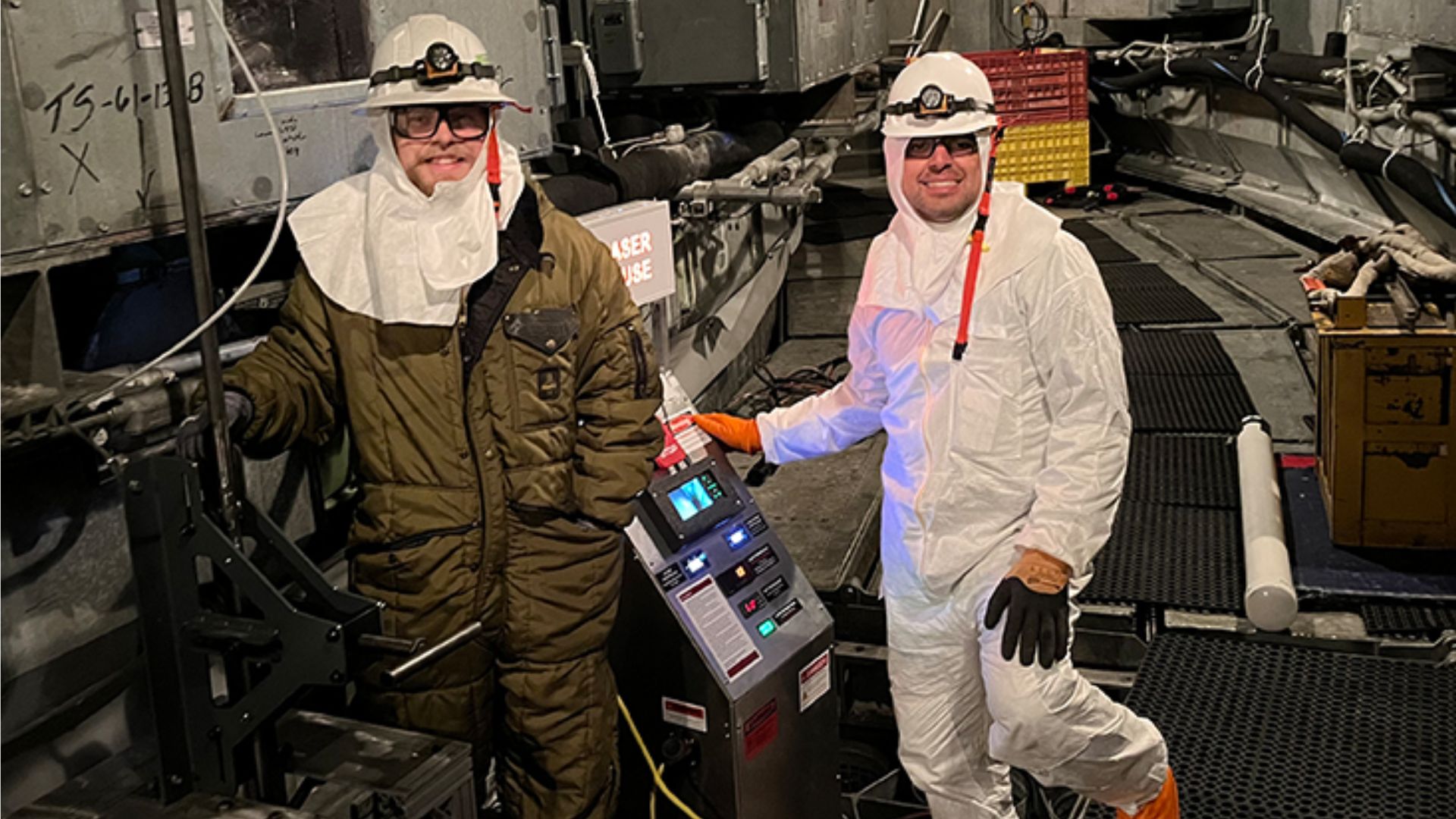
Engineers at the University of South Florida (USF) have developed a laser-based system to tackle a difficult maintenance problem inside nuclear power plants. After four years of research and testing, they successfully demonstrated the technology at two Tennessee Valley Authority (TVA) nuclear sites. The system was developed by Ahmad Vaselbehagh, a professor of mechanical and aerospace engineering, and postdoctoral research associate Ty Hagan. It is designed for nuclear plants that use ice condensers as part of their containment safety systems. During inspections, workers must lift and weigh thousands of baskets containing borated ice. The ice helps absorb heat and reduce pressure inside the containment building during a severe accident. Laser cuts through frozen connections The maintenance process can create another problem. When fresh ice is added to replenish the baskets, neighboring baskets can sometimes freeze together. That makes it difficult for workers to remove individual baskets for inspection. TVA asked the USF team to find a way to separate the frozen baskets without damaging them or relying on extensive manual labor. The researchers developed a specialized laser de-icing system that can operate more than 40 feet below the surface. The device fits into narrow spaces between the baskets and uses a precision laser to cut through the sheets of ice connecting them. The approach avoids completely melting the ice. That helps limit the amount of meltwater produced, which could otherwise refreeze elsewhere or collect at lower levels and create additional maintenance work. “This was one of the most challenging projects I’ve ever led because it included conceptualization, design, engineering, fabrication, testing, and production of something that had to work flawlessly in the hands of the plant’s personnel without our presence to guide or support them,” Vaselbehagh said in a press statement. “There is a huge difference between theoretical work and developing a system that can perform reliably in a real industrial environment.” Designed for tight nuclear spaces Creating the equipment required knowledge spanning mechanical and electrical engineering, optics, controls, manufacturing, and safety. The team had to make the system compact enough to pass through extremely narrow openings while ensuring it could function in freezing conditions. It also had to satisfy the strict requirements governing work inside nuclear facilities. The researchers completed radiation worker and laser safety certifications before conducting extensive tests in freezing environments and contamination-controlled areas. The completed system contains hundreds of components and was built to withstand the demanding conditions expected during nuclear plant maintenance. Faster inspections for plant workers USF researchers also prepared operating procedures, technical documentation, and training materials. These resources are intended to allow plant personnel to operate and maintain the equipment without requiring the researchers to be present. “When you’re building a system that has to work in the real world, it’s never just one discipline,” Hagan explained. “You have to understand mechanical systems, electrical systems, controls, safety requirements, and how everything works together.” The laser can remove several feet of ice buildup within minutes, helping workers separate baskets faster and complete inspections of the critical safety system with less manual effort. From university lab to power plants The project shows how engineering research can address specialized problems in critical infrastructure. The technology was developed for nuclear plants in the United States and could have relevance for facilities using similar ice condenser systems in countries including Japan and Finland. For USF, the successful deployment also highlights the challenges of taking an experimental concept into an operating industrial environment. The system had to meet practical performance requirements while complying with nuclear safety rules and allowing trained plant personnel to use it independently. Get the latest in engineering, tech, space & science - delivered daily to your inbox.A versatile writer, Sujita has worked with Mashable Middle East and News Daily 24. When she isn't writing, you can find her glued to the latest web series and movies.
US: New laser tool clears nuclear plant ice buildup in minutes from 40 feet deep
Full Article
Original Source
Read the full article at Interestingengineering →KhanList aggregates and links to publicly available news content. We do not host full articles from third-party sources. Always verify important information with original sources.