
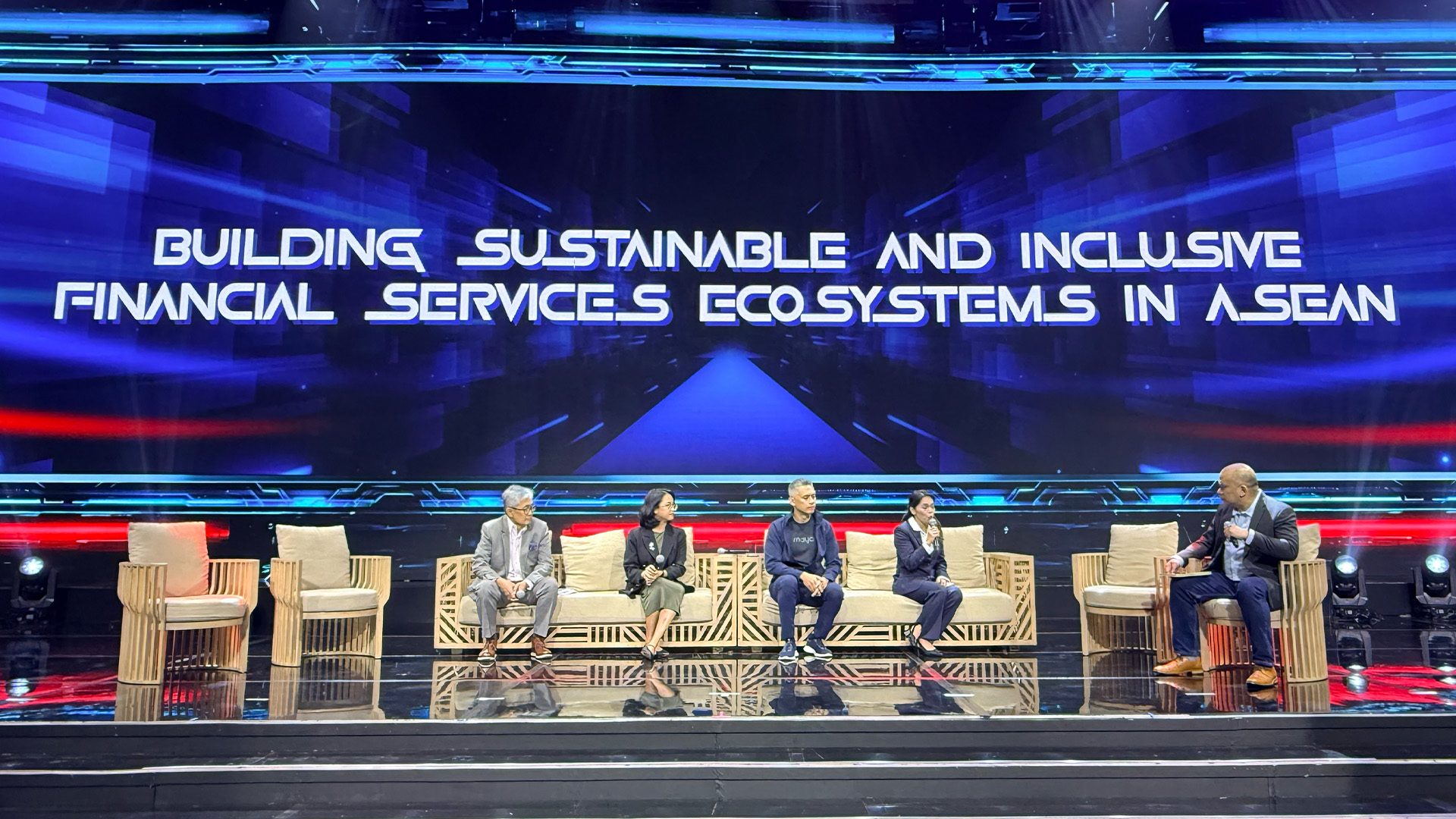
GCash says keeping digital financial services accessible also means building a business that can sustain them Editor’s note: This content is sponsored by GCash and was handled by BrandRap, the sales and marketing arm of Rappler. No member of the news and editorial team participated in the publishing of this piece. Financial inclusion has become one of Southeast Asia’s biggest digital ambitions. According to the Philippine Statistics Authority, the digital economy contributed P2.74 trillion to the country’s GDP in 2025, accounting for nearly 10% of the total. With more of everyday life moving online, there is naturally more room for digital financial services to reach people who may have previously been left out of the formal financial system. But reaching more people, and eventually more markets, also brings up the less visible part that asks what it costs to keep these services accessible. This was among the questions raised during the ASEAN Tech Summit’s “Futurecast Panel: Building Sustainable and Inclusive Financial Services Ecosystems in ASEAN”, where leaders from GCash, Maya Bank, Tala Philippines, and ATIN (Alliance of Tech Innovators for the Nation) talked about what it takes to make financial inclusion work for both the people using these services and the businesses building them. For Barbie Rodriguez-Dapul, COO and general manager for consumer business at G-Xchange, digital payments play an important role in making that possible. “It’s really the digital payments that enable us to make the investments needed to sustain the innovation and the infrastructure needed to be able to give quality services to our customers,” Rodriguez-Dapul said. FINANCE FOR ALL. Barbie Rodriguez-Dapul discusses how reducing barriers to onboarding can help bring more Filipinos into the formal financial system. From a user’s point of view, it could be seen as simply moving money from one account to another. But behind it is a business that has to keep investing in the systems that make those transactions possible — and, eventually, make them available to more people. That becomes even more apparent when fintech companies start looking beyond the markets they already serve. Across Southeast Asia, people enter the digital economy from different starting points. Access to identification, familiarity with digital tools, and even the ease of opening an account can vary widely from one person to another. A Filipino in a grassroots community may already have a smartphone and an internet connection to download a digital wallet, but still encounter difficulty proving their identity or completing the requirements needed to open an account. For Rodriguez-Dapul, reaching these communities means looking at financial inclusion beyond affordability alone. “Our mission is to raise finance for all,” she said. “Inclusion is not only about affordability. It’s about designing services that are relevant to those that are traditionally excluded.” This has led GCash to look at some of the barriers people encounter before they can even make their first transaction. Rodriguez-Dapul highlighted the company’s integration with the PSA, which makes identity verification easier through the national ID system, as well as KYC-on-the-Go, where GCash goes directly to grassroots communities to help people complete the onboarding process. “We also want to make sure that onboarding is very easy. When they are not capable of doing it themselves because they are not digitally savvy, then we also have KYC-on-the-Go programs where we go to the grassroots to assist them in terms of their onboarding journey,” she said. For GCash, financial inclusion is shaped by what access looks like on the ground. Those realities help inform decisions around onboarding, service design, and how the company reaches different communities. As ASEAN moves toward a more integrated digital economy, financial inclusion becomes less of a standalone goal and more of a foundation for everything else the region hopes to achieve. The broader the participation, and the more technology is designed around the realities of the people it serves, the stronger the digital economy it can build. – Rappler.com How does this make you feel? Loading
What it really takes to bring more Filipinos into the digital economy, according to GCash
Full Article
Original Source
Read the full article at Rappler →KhanList aggregates and links to publicly available news content. We do not host full articles from third-party sources. Always verify important information with original sources.