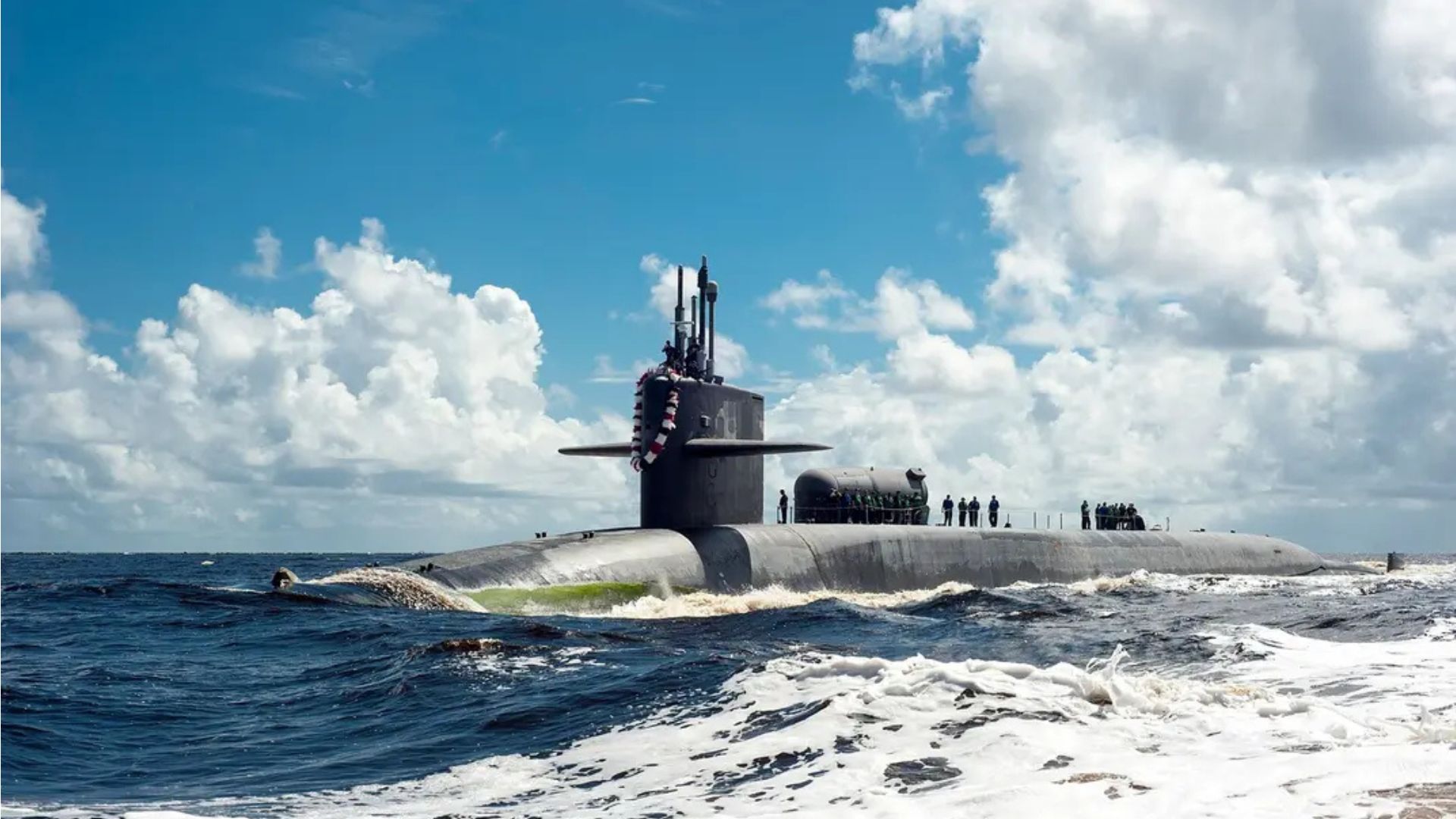
The U.S. Navy will redesignate 19 planned Virginia-class submarines with the Virginia Payload Module (VPM) as guided missile submarines (SSGNs). The change reflects their much larger missile capacity compared with standard Virginia-class attack submarines. Navy officials said the reclassification reflects the expanded strike capability provided by the VPM and the submarines’ growing role in deterrence and power projection. The new SSGNs are expected to strengthen the Navy’s long-range precision strike capabilities and boost combat flexibility for future operations. “These submarines will provide our Nation with a powerful and persistent deterrent, expand options for our combatant commanders, and ensure the Navy remains ready to fight and win whenever and wherever called upon,” said Admiral Daryl Caudle, Chief of U.S. Naval Operations, in a statement. Missile subs redesignated The U.S. Navy has announced a major shift in the way it classifies its next generation of Virginia-class submarines, redesignating 19 planned boats equipped with the VPM as guided missile submarines SSGNs instead of fast attack submarines (SSNs). The move reflects the significantly expanded strike capability of the enlarged submarines. It comes as the Navy prepares to retire its four Ohio-class guided missile submarines by the end of the decade. The reclassified submarines will include Virginia Block V and Block VI variants fitted with the 70-foot-long Virginia Payload Module, a hull extension that substantially increases the vessels’ payload capacity. The additional section houses four large vertical launch tubes, allowing each submarine to carry 28 extra missiles beyond its standard load. Combined with existing launch systems, the new boats will be capable of carrying up to 40 Tomahawk cruise missiles while also supporting future weapons such as the Intermediate-Range Conventional Prompt Strike hypersonic missile and other emerging payloads. The Navy said the redesignation better reflects the expanded role these submarines will play in long-range precision strike missions, distributed maritime operations, and strategic deterrence. Although they will carry the SSGN designation, they will remain part of the Virginia-class submarine program and continue performing a wide range of missions, including anti-submarine warfare, anti-surface warfare, intelligence gathering, mine warfare, irregular warfare, and special operations support. Undersea arsenal evolves The first VPM-equipped submarine, designated SSGN 803, is expected to enter service in fiscal year 2029, with deliveries continuing through 2038. Once operational, the submarines will be deployed across key regions to provide persistent forward presence, strengthen deterrence, and deliver rapid conventional strike capability in contested environments. The redesignation coincides with the retirement of the Navy’s Ohio-class SSGNs, beginning with USS Georgia. Those converted ballistic missile submarines have long been among the Navy’s most capable conventional strike platforms, carrying up to 154 Tomahawk cruise missiles while also serving as special operations motherships, intelligence platforms, and underwater command centers. While the new Virginia SSGNs introduce improved stealth, survivability, and flexibility, they will not provide a one-for-one replacement in terms of missile capacity. Each Ohio-class SSGN can carry roughly four times as many cruise missiles as a single VPM-equipped Virginia submarine. As a result, the Navy will need to field most of the planned Virginia SSGN fleet before matching the strike capacity lost with the retirement of the four Ohio-class boats. The transition also highlights broader challenges facing the Navy’s undersea force. The final Ohio-class SSGN is expected to retire years before all 19 Virginia SSGNs are delivered, creating a temporary reduction in undersea missile capacity. Production schedules remain under pressure as US shipbuilders work to increase submarine output while simultaneously constructing Columbia-class ballistic missile submarines and supporting commitments under the AUKUS security partnership. Despite the capability gap, the Navy views the reclassified Virginia SSGNs as a critical element of its future undersea force, combining advanced stealth, expanded missile capacity, and flexibility to support high-end combat operations and global deterrence for decades to come. Recommended ArticlesGet the latest in engineering, tech, space & science - delivered daily to your inbox.Jijo is an automotive and business journalist based in India. Armed with a BA in History (Honors) from St. Stephen's College, Delhi University, and a PG diploma in Journalism from the Indian Institute of Mass Communication, Delhi, he has worked for news agencies, national newspapers, and automotive magazines. In his spare time, he likes to go off-roading, engage in political discourse, travel, and teach languages.
US Navy upgrades 19 nuclear-powered submarines into powerful guided missile warships
Full Article
Original Source
Read the full article at Interestingengineering →KhanList aggregates and links to publicly available news content. We do not host full articles from third-party sources. Always verify important information with original sources.