
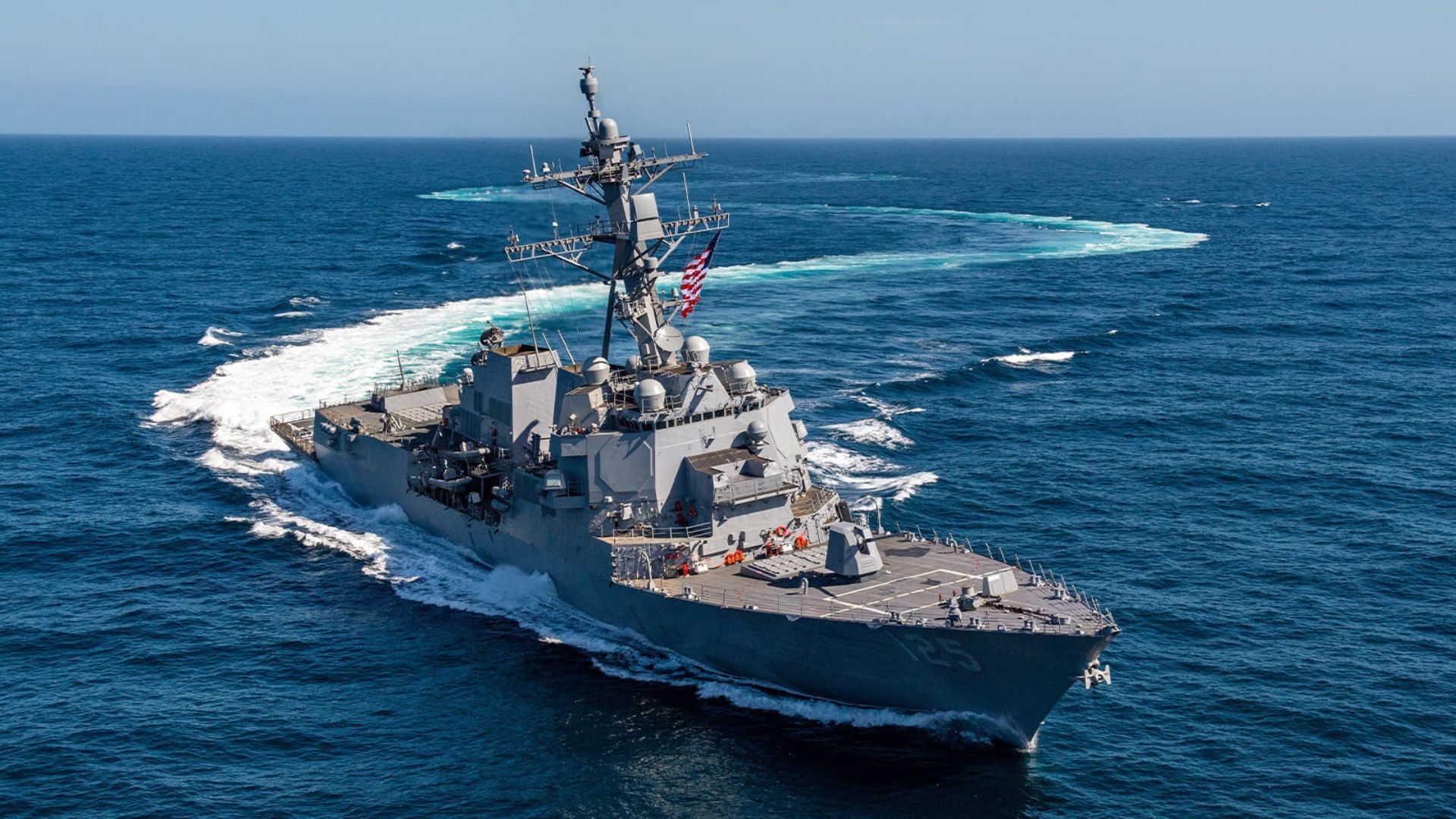
Raytheon reports that its advanced SPY-6 radar has been successfully tested during the recent “Pacific Dragon” missile-defense exercise near Hawaii. The exercise featured assets from various allied nations, including the United States, Australia, Italy, Japan, the Republic of Korea, Chile, and Spain. During the exercise, Raytheon’s system was tested onboard the U.S. Navy (the Navy) destroyer USS Jack H. Lucas (DDG-125). The exercise included a series of information-sharing and target-tracking events designed to test and improve the participating nations’ air and missile-defense capabilities. Designed to improve a ship’s situational awareness, SPY-6 can feed its tracking data into the wider Aegis combat system, allowing that information to be shared with other fleet and allied assets through tactical data links. A powerful upgrade over existing radars, the system is able to monitor surrounding air and sea, track objects, and send targeting-quality data to the ship’s weapons. US Navy test drives Raytheon’s SPY-6 Moreover, the SPY-6 is able to detect and track several targets at once. These include ballistic missiles, low-flying cruise missiles, aircraft, hypersonic threats, ships, and other surface targets. SPY-6 is not a weapon and cannot destroy a target independently. Instead, it supplies the tracking and targeting data needed by the ship’s combat system and defensive weapons. This includes feeding tracking data into the ship’s Aegis Combat System, which aboard USS Jack H. Lucas operates using the Baseline 10 configuration. This can give commanders a clearer picture of the battlespace and potentially reduce the time needed to respond to a threat. The system is also what is called “interoperable.” This means one country’s ship might detect a missile and transmit its track over a tactical data link to other ships. In turn, those ships can then prepare their weapons, supplement the track with their own sensors or potentially conduct the engagement. That matters because missile defense is much more effective when several ships and countries operate as one network rather than as isolated platforms. Critically, according to Raytheon, the SPY-6 is also modular. This means that its basic building block is a Radar Modular Assembly, essentially a self-contained radar unit. This means that Raytheon can combine different numbers of these modules to create radars of different sizes and power levels for destroyers, carriers, frigates and amphibious ships. To this end, a large installation on Flight III destroyers is considerably more capable than the smaller variants intended for other vessels. Data sharing between ships and allies According to reports, the test did not involve any live firing. As for the host ship, the USS Jack H. Lucas is the first Flight III Arleigh Burke-class destroyer. This means it is the newest and most substantially upgraded version of the Burke line of destroyers. “During Pacific Dragon 2026 (PD26), SPY-6 participated aboard USS Jack H. Lucas (DDG 125), the Navy’s first Flight III destroyer equipped with Baseline 10 and AN/SPY-6, alongside the Missile Defense Agency and allied forces,” explained in a social media post. “By enhancing interoperability across the fleet and with allied forces, SPY-6 is helping strengthen readiness and support regional security,” they added. Get the latest in engineering, tech, space & science - delivered daily to your inbox.Christopher graduated from Cardiff University in 2004 with a Masters Degree in Geology. Since then, he has worked exclusively within the Built Environment, Occupational Health and Safety and Environmental Consultancy industries. He is a qualified and accredited Energy Consultant, Green Deal Assessor and Practitioner member of IEMA. Chris’s main interests range from Science and Engineering, Military and Ancient History to Politics and Philosophy.
US Navy exercises SPY-6 radar aboard its first 9700-ton next-gen destroyer
Full Article
Original Source
Read the full article at Interestingengineering →KhanList aggregates and links to publicly available news content. We do not host full articles from third-party sources. Always verify important information with original sources.