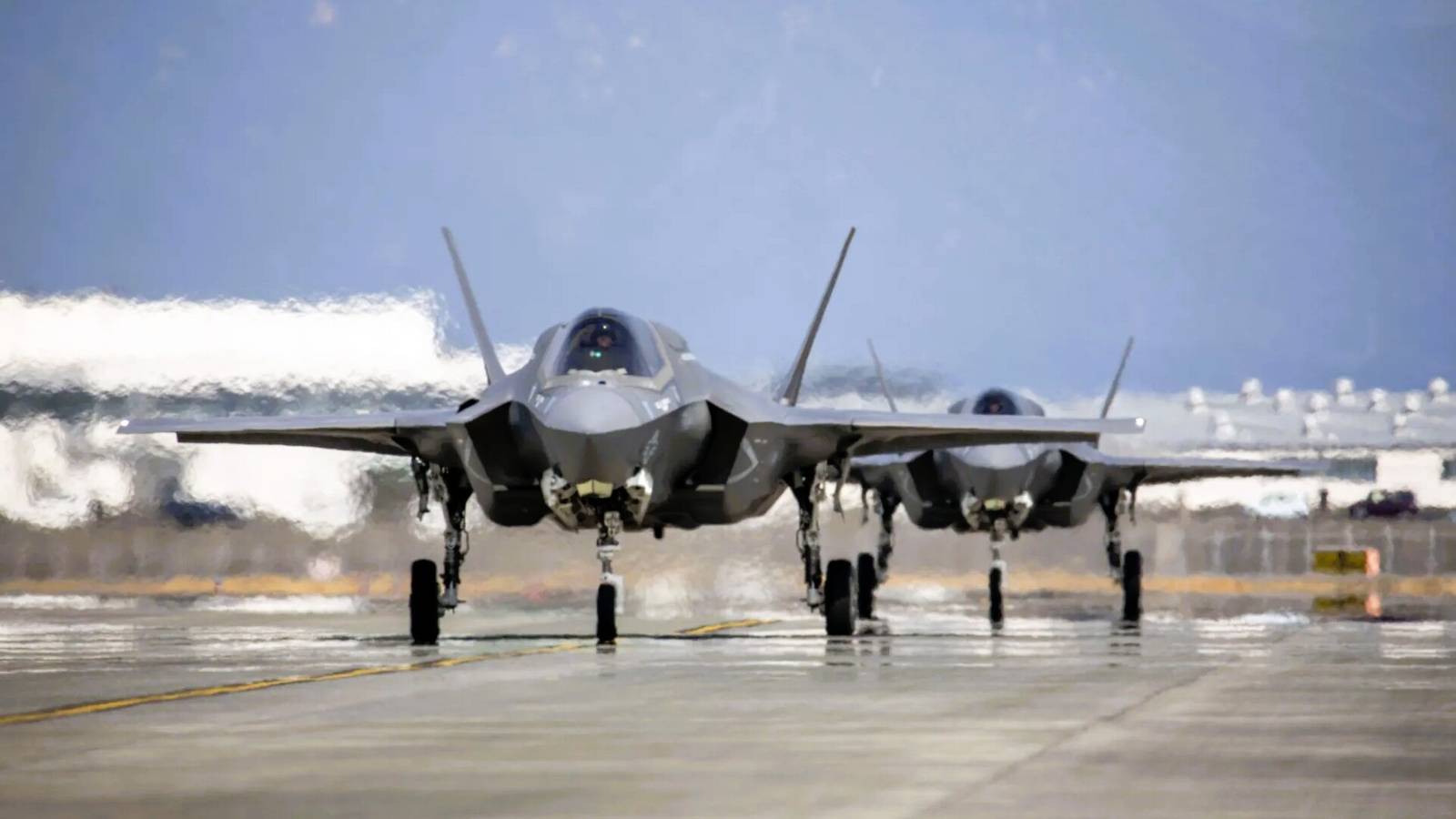
Published Jul 31, 2026, 5:47 PM EDT Paul has had a career of 25+ years focused on the international technology sector, which has taken him to over 100 countries. Along the way, he developed a deep love for aviation, with a travel bucket list measured by aircraft types flown rather than destinations reached. Now he is bringing that avgeek passion, along with the journalism experience he accumulated early in his career, to write insightful pieces for Simple Flying. A US Marine Corps pilot has survived after ejecting from a Lockheed Martin F-35B Lightning II before the stealth fighter crashed at Marine Corps Air Station Miramar in San Diego on Friday. The pilot was transported to a local medical facility in stable condition for evaluation and treatment of non-life-threatening injuries. The aircraft was destroyed in what the Marine Corps classified as a Class A mishap, the military’s most serious accident category. The cause has not been disclosed, and the service has not yet identified the aircraft’s squadron, serial number, mission, or precise phase of flight. What happened at MCAS Miramar? Credit: Department of Defense The F-35B crashed at around 10:00 AM local time on Friday morning near the flight line at MCAS Miramar, which is famous as the former home of the US Navy’s TOPGUN school and a major filming location for the original Top Gun movie. Emergency personnel responded shortly thereafter, with local reporting placing the wreckage south of Miramar Road near Mitscher Way, within the northern San Diego installation. The aircraft was assigned to Marine Aircraft Group 11, part of the 3rd Marine Aircraft Wing. Video from the scene showed thick black smoke rising from wreckage in a dirt field, surrounded by military and civilian emergency vehicles. White firefighting foam or retardant covered part of the site as crews worked around the burned aircraft. Aerial footage showed the fighter broken into two major sections inside a heavily burned area, with a plume of black smoke visible from surrounding roads. The impact ignited a vegetation fire that spread across several acres before firefighters extinguished it during the early afternoon. First Lieutenant Blake Starbuck, an MCAS Miramar spokesperson, said officials could not immediately confirm whether the aircraft had been taking off or landing, what kind of mission it was conducting, or whether it had been participating in a training exercise. However, he was able to confirm that the pilot ejected before the aircraft struck the ground and was recovered by emergency personnel. “The pilot ejected, and was transported to a local medical facility in stable condition for evaluation and treatment of non-life-threatening injuries.” F-35B: The Marine Corps Variant Credit: Department of Defense The F-35B is the short-takeoff and vertical-landing member of the three-aircraft F-35 family. Its propulsion system combines a shaft-driven LiftFan designed by Rolls-Royce, with roll-control ducts and a swiveling rear exhaust nozzle, allowing the aircraft to land vertically and depart from much shorter surfaces than conventional fighters. Variant Primary US operator Takeoff and landing capability Principal operating environment F-35A US Air Force Conventional takeoff and landing Land bases F-35B US Marine Corps Short takeoff and vertical landing Amphibious ships and expeditionary bases F-35C US Navy and Marine Corps Catapult launch and arrested landing Aircraft carriers That capability allows Marine Corps F-35Bs to fly from amphibious assault ships and expeditionary airfields with runways shorter than 2,000 feet. It also gives deployed Marine units access to a supersonic stealth fighter without requiring a full-sized aircraft carrier or an established conventional airbase. The additional machinery needed for vertical flight makes the F-35B mechanically and visually distinct from the other versions. The cost of a single aircraft at approximately $109 million, making Friday’s crash a significant material loss to the Marine Corps. The 14th F-35 Crash Credit: Department of Defense The Miramar accident is the 14th crash to destroy an F-35 since the type first entered service with the Marine Corps in July 2015. Using a broader hull-loss definition, 18 F-35s have been permanently removed from flying service: 14 following crashes and four after serious incidents that did not involve a conventional crash. Those four were a 2014 engine fire at Eglin Air Force Base, two separate aircraft fires in 2016 and South Korea’s 2022 bird-strike belly landing. Date Variant/Operator Location Outcome September 28, 2018 F-35B / US Marine Corps Near MCAS Beaufort, South Carolina Crashed during a training flight; pilot ejected April 9, 2019 F-35A / Japan Air Self-Defense Force Pacific Ocean near Japan Crashed during training; pilot killed May 19, 2020 F-35A / US Air Force Eglin AFB, Florida Crashed while landing; pilot ejected September 29, 2020 F-35B / US Marine Corps Imperial County, California Crashed after colliding with a KC-130 during aerial refueling; pilot ejected November 17, 2021 F-35B / United Kingdom Mediterranean Sea Fell from HMS Queen Elizabeth during takeoff; pilot ejected January 24, 2022 F-35C / US Navy South China Sea Struck the carrier’s deck edge and fell into the sea; pilot ejected October 19, 2022 F-35A / US Air Force Hill AFB, Utah Crashed while approaching the runway; pilot ejected December 15, 2022 F-35B / Lockheed Martin Fort Worth, Texas Crashed during a production test flight; pilot ejected September 17, 2023 F-35B / US Marine Corps South Carolina Continued flying after the pilot ejected before crashing May 28, 2024 F-35B / US government Albuquerque, New Mexico Crashed after departing a refueling stop; pilot ejected January 28, 2025 F-35A / US Air Force Eielson AFB, Alaska Crashed during a landing-gear emergency; pilot ejected July 30, 2025 F-35C / US Navy Near NAS Lemoore, California Crashed during a training flight; pilot ejected March 31, 2026 F-35A / US Air Force Nevada Test and Training Range Crashed during a training mission; pilot ejected July 31, 2026 F-35B / US Marine Corps Near MCAS Miramar, California Crashed; pilot ejected The April 2019 loss of a Japanese F-35A remains the type’s only fatal crash. The pilots survived all 13 other crashes, although some sustained injuries and seven sailors were injured when a US Navy F-35C struck the edge of the USS Carl Vinson’s flight deck in January 2022. The previous F-35 crash occurred earlier this year in March when a US Air Force F-35A went down during a training mission over the Nevada Test and Training Range. Its pilot ejected and sustained minor injuries. There were also two F-35 crashes last year, including a US Navy F-35C that went down in flames at NAS Lemoore. The recent spate of accidents are being treated as separate events, and there is currently no evidence that they share any common cause.
US Marine Corps F-35B Stealth Fighter Crashes In San Diego, Pilot Ejects Safely
Full Article
Original Source
Read the full article at Simpleflying →KhanList aggregates and links to publicly available news content. We do not host full articles from third-party sources. Always verify important information with original sources.