
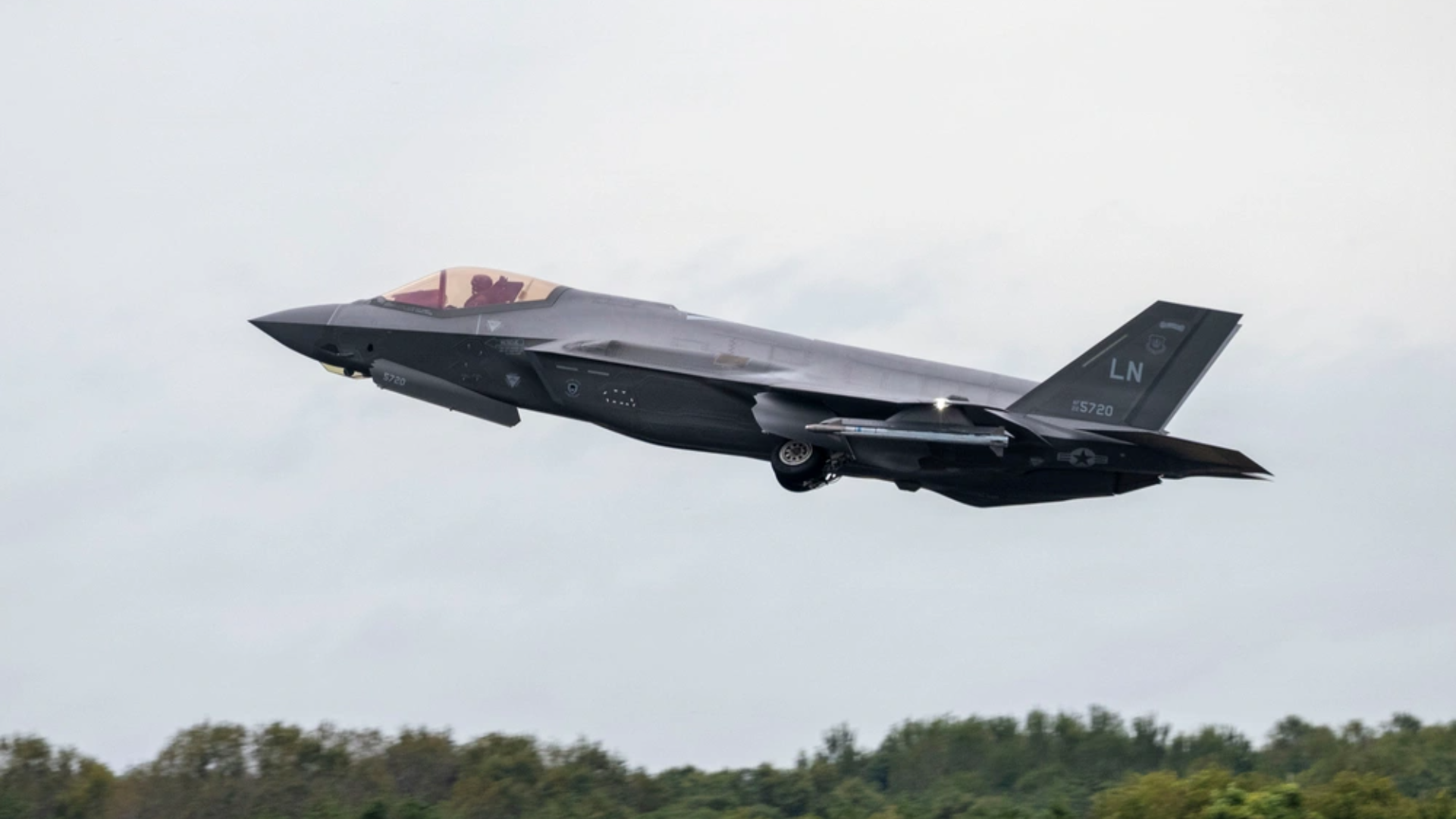
Japan and the US have completed Keen Sword 27, an 11-day military exercise involving approximately 56,000 personnel, 200 aircraft and 40 ships. The drills tested the two allies’ ability to coordinate operations across land, sea and air, while also incorporating space, cyber, electromagnetic warfare and logistics training. The exercise concluded on October 29 after 161 training events, including eight live-fire drills in which Japanese and US forces fired munitions from ships, aircraft and helicopters. Pilots conducted 366 sorties, while military personnel made approximately 130 parachute jumps. Seven other countries also participated, illustrating the exercise’s growing multinational dimension. Australia, Canada, France, Germany, the Netherlands, New Zealand and the Philippines joined forces operating around Japan, including in waters and airspace near Okinawa and the Sakishima Islands. Eight live-fire drills test joint combat capabilities The Japan Self-Defense Forces contributed approximately 45,000 personnel, while around 11,000 US troops took part. The exercise involved approximately 200 aircraft and 40 naval vessels, including the USS Theodore Roosevelt Carrier Strike Group. Across 161 training events, the two militaries practiced coordinated operations using naval vessels, aircraft and helicopters. Eight of those events involved live-fire activity, allowing personnel to train with actual munitions rather than relying exclusively on simulated engagements. The 366 sorties flown during the exercise provided opportunities to practice air operations and coordination between participating forces. Approximately 130 parachute jumps added an airborne component to the training. Activities took place across several areas of Japan and its surrounding waters, including Okinawa, the Sakishima Islands and Tanegashima. Training also extended into the Sea of Japan and East China Sea, giving participating forces experience operating across different maritime and geographical environments. The involvement of the Theodore Roosevelt Carrier Strike Group added a major naval aviation component, bringing carrier-based aircraft and accompanying warships into the broader exercise. Exercise expands beyond conventional warfare Keen Sword 27 was designed to test more than the ability of Japanese and US forces to conduct conventional military operations. Training also covered space, cyber, electromagnetic and information operations, alongside logistics and sustainment – areas that have become increasingly important to modern military planning, as forces depend on satellite communications, digital networks, intelligence systems and electronic warfare capabilities to coordinate operations. The exercise also focused on maintaining communications and logistical support across a multinational force, which included testing how participating militaries could coordinate operational, medical and sustainment requirements while operating across multiple locations. Rear Adm. Jay Clark, director of the exercise’s Bilateral Exercise Control Group, said the drills demonstrated the ability to provide infrastructure supporting operational, medical, logistics and sustainment activities for participating countries. He also highlighted the importance of strengthening resilient communications channels between Japan, the US and their partners. Japan and the US have conducted Keen Sword approximately every two years since 1986, with the exercise becoming a central part of their efforts to improve interoperability and ensure that their forces can operate together under realistic conditions. Get the latest in engineering, tech, space & science - delivered daily to your inbox.Bojan Stojkovski is a freelance journalist based in Skopje, North Macedonia, covering foreign policy and technology for more than a decade. His work has appeared in Foreign Policy, ZDNet, and Nature.
US, Japan deploy 200 aircraft and 40 ships; coordinate across land, sea, air in major military drill
Full Article
Original Source
Read the full article at Interestingengineering →KhanList aggregates and links to publicly available news content. We do not host full articles from third-party sources. Always verify important information with original sources.