
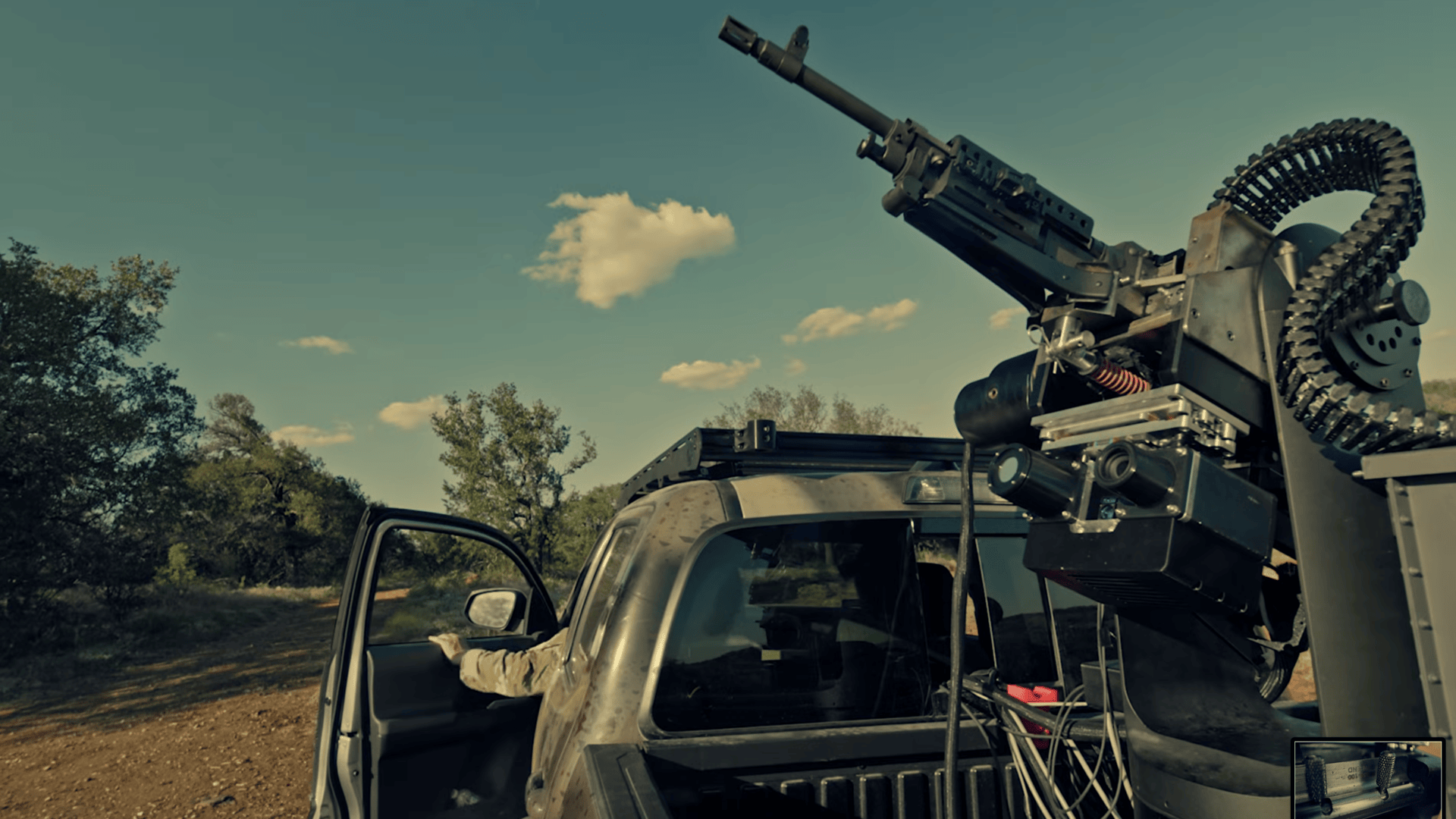
In Austin, Texas, Alien Control Systems (ACS) is opening a new 191,000-square-foot manufacturing plant to increase production of its Bullfrog counter-drone system in response to demand from the U.S. and its allies. In a press release, ACS said the new facility will enable the company to quickly scale up production of Bullfrog, the autonomous weapon station it designed to counter low-cost weaponized drones. The expansion will also involve hiring in engineering, manufacturing, quality, testing, and supply chain. “The United States and allied nations have sent us a clear message: they need Bullfrog to safeguard U.S. and allied forces and critical infrastructure from this omnipresent threat, now,” said ACS co-founder and CEO Mike Wior. “We’re building the production capacity, so Bullfrog is at the ready when and where it is needed most, and we’re proud to do our part to support the reindustrialization of American manufacturing in the process,” he added. The Bullfrog system combines computer vision, autonomous control, and precision robotics with existing weapons; ACS said the U.S. Army and Navy have already deployed it, and it has contracts with Joint Interagency Task Force 401 and several allied militaries. The system was also recently selected by the U.S. Marine Corps for its Ground Based Air Defense (GBAD) program, according to ACS. Bullfrog: AI and computer vision to track aerial targets The Marine Corps selected Bullfrog for the Light Marine Air Defense Integrated System (LMADIS), an expeditionary, vehicle-based counter-unmanned aircraft system under the broader GBAD program, Tectonic Defense reported. Bullfrog uses artificial intelligence and computer vision to identify and track aerial targets and can be operated alongside a standard M240 machine gun. ACS had obtained more than $120 million in contracts for Bullfrog with the U.S. Special Operations Command, the Navy, the Army and the militaries of various allies, including the United Arab Emirates and South Korea. Bullfrog can be installed on platforms including pickup trucks, unmanned surface vessels and fixed sites, according to Tectonic. While the system was developed with small Group 1 drones in mind, Wior told the publication that Bullfrog had also demonstrated success against larger Group 3 drones. The initial Marine Corps other transaction agreement for Bullfrog was valued at approximately $6.2 million, Tectonic continued. The system can fire up to 850 rounds per minute as part of its integration with LMADIS. “Advanced defense production is a national security imperative,” said ACS Chief Operating Officer Laura Komkov in a press release. “By expanding our manufacturing capabilities and highly skilled workforce, we are further strengthening our ability to produce and deliver mission-critical hardware to the field as quickly as possible.” Counter-drone attack needed The manufacturing expansion comes as ACS broadens Bullfrog’s use across U.S. military services. In addition to its Marine Corps selection, the system is deployed with U.S. forces, and the company holds contracts with the Army, Marine Corps, Special Operations Command, and Joint Interagency Task Force 401. ACS, headquartered in Austin, also operates offices in Alexandria, Virginia, and an innovation lab in Huntsville, Alabama. The company said the new Texas facility is part of its continued investment in domestic manufacturing capacity and the workforce needed to produce its defense systems at scale. Get the latest in engineering, tech, space & science - delivered daily to your inbox.Originally from LA, Maria Mocerino has been published in Business Insider, The Irish Examiner, The Rogue Mag, Chacruna Institute for Psychedelic Plant Medicines, and now Interesting Engineering.
US firm expands counter-drone production with 191,000-square-foot facility
Full Article
Original Source
Read the full article at Interestingengineering →KhanList aggregates and links to publicly available news content. We do not host full articles from third-party sources. Always verify important information with original sources.