
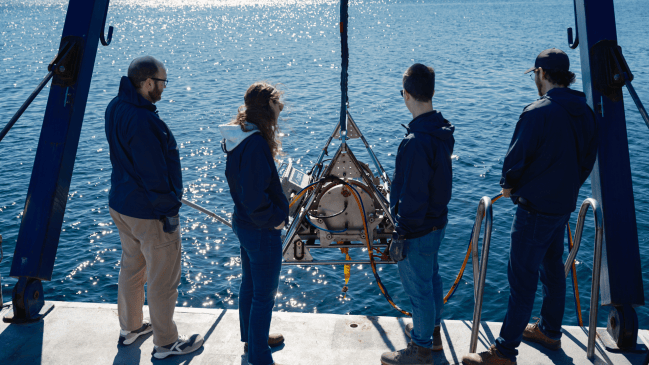
Underwater nuclear battery prototype generates electricity in seabed testZeno PowerKey TakeawaysZeno Power completed a two-week maritime demonstration of an electrically heated Stirling generator, producing more than 20 watts of electricity.The test used an electric heating element instead of radioactive fuel, with radiological testing in a controlled tank planned as the next milestone.The company plans its first operational deployment of a fueled maritime nuclear battery in 2027. US company Zeno Power has completed a two-week open-water demonstration of a Stirling generator designed for its maritime nuclear battery, marking a step toward developing long-lasting power sources for underwater infrastructure and other systems operating at sea. The demonstration took place in a controlled maritime environment in Washington state and produced more than 20 watts of electrical power. According to the company, it was the first time an electrically heated Stirling generator had generated electricity on the seabed. The test used a non-radioactive prototype, with an electric heating element replacing the radioisotope heat source that would power an operational nuclear battery. Zeno said the system was deployed, operated for two weeks, and successfully recovered, allowing engineers to evaluate its power conversion technology, material compatibility, and overall functionality before introducing radioactive materials. Engine converts heat into electricity Central to Zeno Power’s system is a Stirling engine, which generates electricity by cycling gas through heating and cooling phases inside a cylinder. The temperature difference causes the gas to expand and contract, driving mechanical movement that can be converted into electrical power. The approach differs from conventional radioisotope thermoelectric generators, which use thermoelectric materials to convert heat directly into electricity. Stirling systems can offer higher conversion efficiency, potentially extracting more usable electrical power from a given amount of heat. For maritime applications, this could make a significant difference as underwater sensors, communications equipment and monitoring systems can operate far from shore, where replacing batteries or supplying electricity through cables is difficult and expensive. A compact power source capable of operating for years could therefore reduce the need for maintenance missions and support infrastructure in remote locations. Zeno Chief Product Officer Lindsey Boles said the test provided evidence that the technology could operate beyond laboratory conditions, including successful deployment, power generation and recovery. “Watching our ESG safely deploy, generate power, and recover it gives us real confidence heading into radiological testing,” Boles added. Powering long-duration missions Zeno is developing compact nuclear batteries that use heat produced by the radioactive decay of radioisotopes to generate electricity. Unlike conventional batteries, which store a finite amount of energy, radioisotope power systems continuously produce heat as their fuel decays. This makes them potentially useful for applications where access to conventional power sources is limited, including remote monitoring stations, subsea infrastructure, space missions and equipment operating in extreme environments. Furthermore, the company is positioning its maritime system for applications involving distributed underwater infrastructure, where long operating lifetimes and reduced maintenance requirements are important. Such systems could support persistent monitoring of critical subsea assets and other equipment operating in increasingly contested maritime environments. Former US Chief of Naval Operations Admiral John M. Richardson, who serves on Zeno’s board, said long-lived subsea power systems could become increasingly important as competition in maritime domains intensifies. The company has also been building the industrial infrastructure required to manufacture its systems. It says it has secured an initial nuclear fuel supply chain and established a radiological facility for nuclear battery production. To date, the Seattle-based company has secured more than $165 million in funding, including $105 million in private investment and $60 million in contracts with the Pentagon and NASA, noting that it is on track to deliver its first systems in 2027.Get the latest in engineering, tech, space & science - delivered daily to your inbox.Bojan Stojkovski is a freelance journalist based in Skopje, North Macedonia, covering foreign policy and technology for more than a decade. His work has appeared in Foreign Policy, ZDNet, and Nature.
US firm advances maritime nuclear batteries with two-week generator demonstration
Full Article
Original Source
Read the full article at Interestingengineering →KhanList aggregates and links to publicly available news content. We do not host full articles from third-party sources. Always verify important information with original sources.