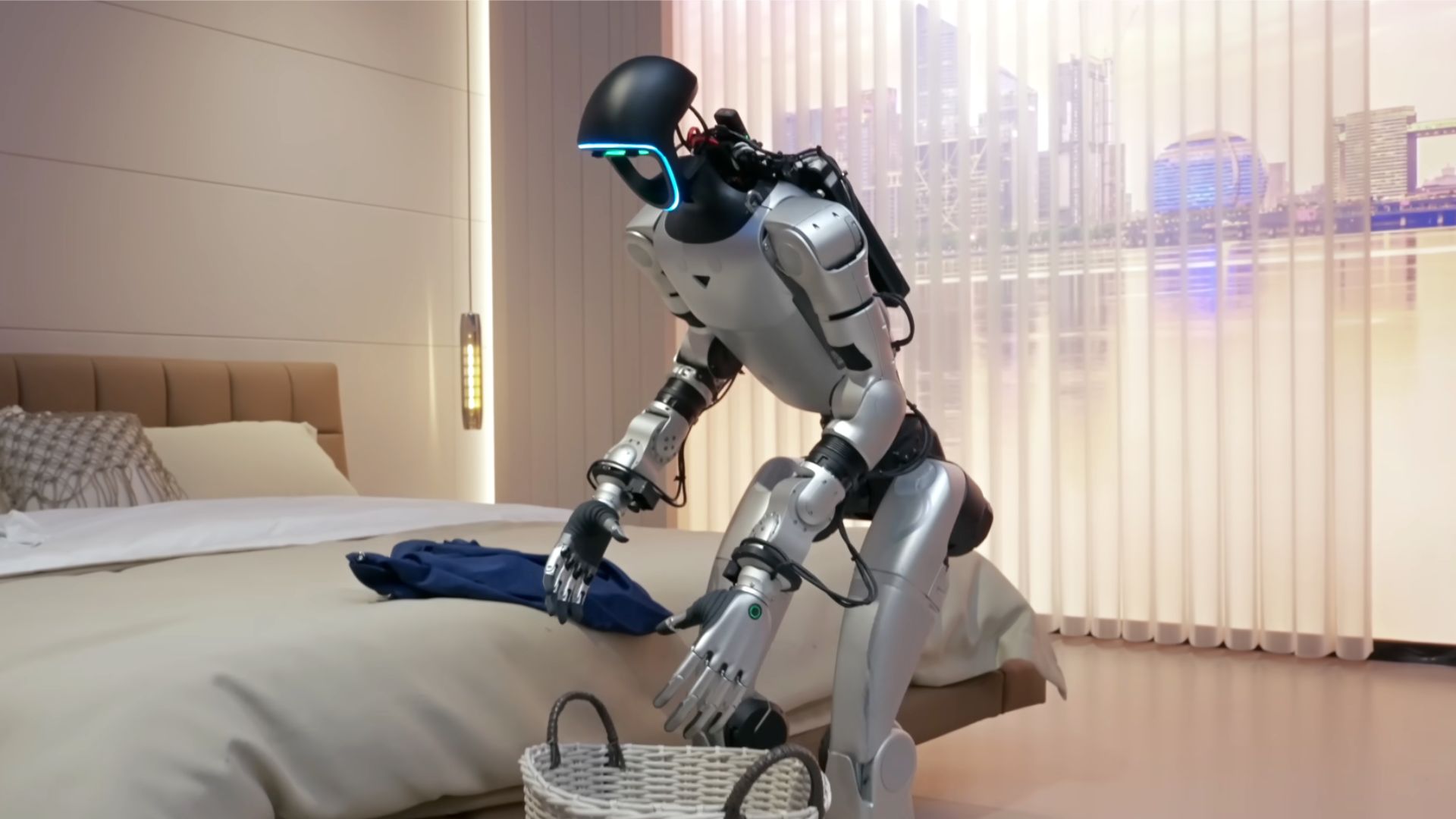
The Pentagon would be barred from using humanoid robots linked to China, Russia, Iran, and other foreign adversaries.Unitree Robotics/YouTube The US has passed a defense bill that would bar the US military from procuring, leasing, or operating humanoid robots made by companies linked to China and other designated foreign adversaries. The measure is part of the National Defense Authorization Act (NDAA) and reflects growing US concerns over national security, data privacy, and the risks posed by foreign autonomous systems. The proposed restriction targets humanoid robots connected to countries including China, Russia, and Iran under Section 163 of the legislation. The move marks the latest escalation in the US-China technology rivalry as Washington expands restrictions on Chinese-made technologies. US robot crackdown The US House of Representatives has passed the NDAA, advancing legislation that would prohibit the US military from procuring, leasing, or operating humanoid robots made by companies linked to China and other designated foreign adversaries, NBC News reports. The move marks the latest escalation in Washington’s efforts to curb the use of Chinese technology in critical sectors, expanding restrictions beyond semiconductors, telecommunications equipment, and drones to include advanced humanoid robotics. The annual defense policy bill includes Section 163, which bars the Pentagon from using “covered humanoid robotic systems” connected to countries designated as foreign adversaries, including China, Russia, and Iran. Lawmakers say the provision is aimed at addressing national security and data privacy concerns associated with autonomous systems that could collect sensitive information or introduce vulnerabilities into military operations. According to experts, the military restriction reflects growing concern in Washington over China’s rapid progress in robotics and artificial intelligence. Chinese companies have emerged as global leaders in humanoid robot development, supported by advances in AI, lower manufacturing costs, and strong domestic supply chains. As humanoid robots move beyond research laboratories into factories, warehouses, healthcare facilities, and public services, US policymakers are increasingly treating the technology as strategically important, according to the South China Morning Post (SCMP). Humanoid race heats The NDAA provision draws heavily from the proposed Guarding the US Against Adversarial Robotics Dominance (GUARD) Act, introduced last year by Representative John Moolenaar, chairman of the House Select Committee on the Strategic Competition between the United States and the Chinese Communist Party. However, lawmakers stopped short of adopting the bill’s broader commercial restrictions. Under the original GUARD Act, Chinese-made humanoid robots and quadruped robotic systems, commonly known as robot dogs, could be added to the Federal Communications Commission’s “Covered List.” Inclusion on that list would prevent the machines from obtaining the wireless communication authorizations required to operate in the United States, effectively blocking their commercial sale nationwide. The version included in the NDAA limits the restrictions solely to military procurement, leaving commercial imports and private-sector sales unaffected for now. That narrower approach signals that Congress is taking a phased strategy, beginning with defense applications before considering broader restrictions on civilian use. After the House vote, lawmakers said the military restrictions were a first step, warning that the US should not allow Chinese humanoid robots to gain a dominant position in the domestic market. Those concerns are reinforced by China’s commanding position in the global humanoid robotics industry. According to Counterpoint Research, Chinese manufacturers accounted for approximately 80 percent of global humanoid robot shipments in 2025. The country’s robotics ecosystem has benefited from strong government support, vertically integrated manufacturing, and aggressive commercialization efforts, reports SCMP. Industry shipment data highlights the widening gap between Chinese and US developers. Unitree Robotics said it shipped more than 5,500 humanoid robots in 2025, while rival AgiBot delivered 5,168 units, according to Omdia data published in January. In comparison, leading US developers, including Figure AI, Agility Robotics, and Tesla, each shipped only around 150 humanoid robots during the same period. Recommended ArticlesGet the latest in engineering, tech, space & science - delivered daily to your inbox.Jijo is an automotive and business journalist based in India. Armed with a BA in History (Honors) from St. Stephen's College, Delhi University, and a PG diploma in Journalism from the Indian Institute of Mass Communication, Delhi, he has worked for news agencies, national newspapers, and automotive magazines. In his spare time, he likes to go off-roading, engage in political discourse, travel, and teach languages.
US expands China tech crackdown with proposed military ban on humanoid robots
Full Article
Original Source
Read the full article at Interestingengineering →KhanList aggregates and links to publicly available news content. We do not host full articles from third-party sources. Always verify important information with original sources.