
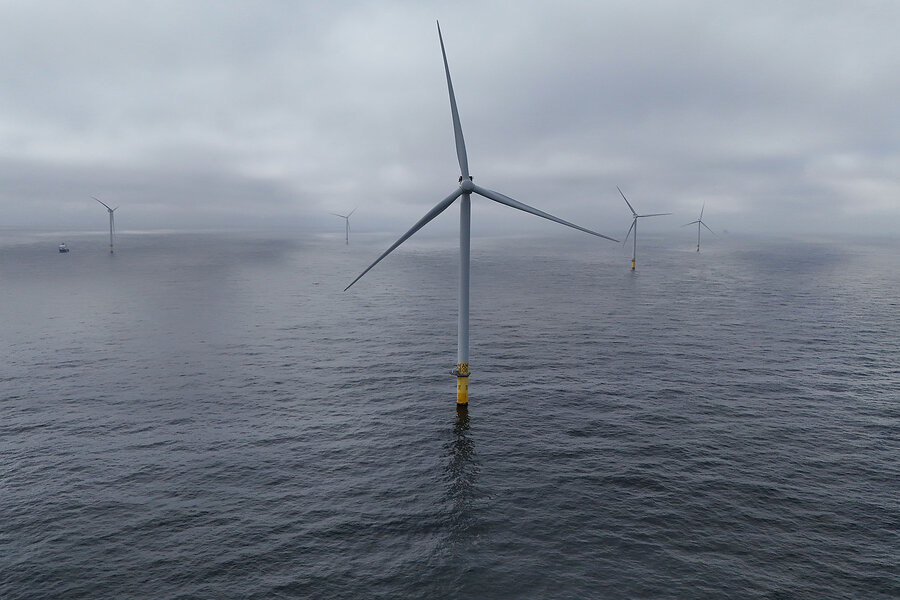
Washington | Nov. 18, 2026, 5:55 p.m. ET | 5 min read Fossil fuel and renewable energy advocates have long shared a similar sentiment: It’s too expensive and too time-intensive to build new energy projects in America.The 303-mile Mountain Valley Pipeline through West Virginia and Virginia opened in 2024, a decade after it was introduced, due to years of permitting delays and litigation that caused its cost to more than double. In New Mexico, the SunZia Wind Project, the largest wind farm in the United States, came online in June – 18 years after developers applied for federal approval and 15 years after the Obama administration “fast-tracked” the project. It was beset by federal and state permitting delays and lawsuits.Proponents of the Bipartisan American Affordability and Jobs Act (BAAJA), who include Republican and Democratic legislators, the president, and industry groups, say the bill would streamline the permitting process at a time when it is desperately needed. Electricity demand in the U.S. is projected to increase by 25% by 2030, and average electricity prices continue to climb – part of the affordability issue that many midterm voters said was a top priority. “We need the savings for consumers and the improvements to the environment right away,” says Sen. Sheldon Whitehouse, a Democrat from Rhode Island who is one of the bill’s lead negotiators. J. Scott Applewhite/APFrom left, Sen. Mike Lee, R-Utah; Sen. Shelly Moore Capito, R-W.Va.; and Sen. Sheldon Whitehouse, D-R.I., talk to reporters about the Bipartisan American Affordability and Jobs Act at the Capitol in Washington, Sept. 30, 2026. The Senate could vote on the bill as soon as Wednesday evening and send it to the Republican-controlled House. But environmental groups – and many Democrats – say the bill would weaken bedrock environmental laws and expedite fossil fuel projects.What would the Bipartisan American Affordability and Jobs Act do?A group of Republican and Democratic senators and the White House negotiated for more than a year and agreed on the almost 500-page bill that seeks to fully reform the permitting process while making it harder for presidents to revoke permits and cancel projects already underway.Some lawmakers have pushed for this kind of reform for years. The landmark environmental laws of the 1970s gave the public a say in projects that could pollute their communities, but they added years or decades to some projects’ timelines. This includes renewable energy projects that would over time build a more sustainable America, say Senator Whitehouse and other BAAJA advocates. Jenny Kane/AP/FileA worker takes a photo under the Trans-Alaska Pipeline after a news conference at Pump Station 1, June 2, 2025, near Deadhorse, Alaska. Some important elements of the bill: It would change core aspects of environmental laws that define how infrastructure and energy projects are built. Currently, if a court finds that a project violates the National Environmental Policy Act, a project must stop until it complies with the law. But BAAJA would allow projects to continue, and would expand the type of projects that are exempted from NEPA review. The Clean Water Act would only apply to “direct point source discharge” into U.S. waters, rather than the entire project. Similarly, select projects would be exempted from the Endangered Species Act, and federal agencies would have less time to review a project’s impact on an endangered species. A less controversial change involves transmission lines, which transport electricity to different parts of the country. They are how New Mexico’s SunZia project powers parts of California, for example. Transmission line shortages and delayed upgrades have created a bottleneck for new renewable energy projects, but BAAJA could cut the timeline for new lines from a decade down to five years by reducing individual states’ ability to delay projects and streamlining the permitting process. While BAAJA would speed up that process for data centers, another key voter concern in the midterms, it would also require data centers to pay for their own grid infrastructure updates and additional costs associated with connecting to the system. Who opposes this and why?Many environmental advocates and groups appreciate the proposed improvement of transmission lines and fast-tracking of renewable energy expansion. As climate scientist Zeke Hausfather noted earlier this week, the obstacle to renewable energy in the U.S. is no longer cost but rather the yearslong wait to be approved and the lack of transmission lines to move energy from solar and wind farms across the country.“This is ultimately not the bill that I or many climate advocates would have written,” writes Dr. Hausfather. But, he adds, “Every year a solar farm spends waiting in line to connect to the grid is a year a gas or coal plant runs in its place.” Critics argue that BAAJA unnecessarily weakens key environmental safeguards. They’ve specifically criticized what they call “forever permits,” which limit the government’s ability to cancel or suspend already issued permits. (This has happened under presidents of both parties: President Joe Biden revoked a permit for the Keystone XL natural gas pipeline in 2021 and President Donald Trump suspended five offshore wind projects in 2025.) Robert F. Bukaty/AP/FileCentral Maine Power transmission lines float over Pownal, Maine, Oct. 6, 2021. Transmission lines are key to bringing projects, including those involving renewable energy, onto the electric grid. The bill would benefit fossil fuel projects (particularly natural gas). But climate advocates like Senator Whitehouse say that renewable energy will have the leg up due to market demand.Liz Zepeda, federal regulatory director at the Southern Environmental Law Center, says the bill will lock in our current system, which is “so heavily weighted” in favor of the fossil fuel industry. That industry benefits more from less stringent environmental law, while litigation that slows renewable energy projects is “not a serious issue.”Ms. Zepeda is particularly worried about a section that would allow energy developers to sue the government for “disparate treatment.” If developers could prove the same kinds of energy projects aren’t being approved at the same rate as in the previous 10-year period, then taxpayers could be forced to pay developers for 100% of their project’s cost. This means that the Trump administration would be required to approve wind projects at roughly the same rate as the Biden administration, but a future president would be required to approve coal projects at roughly the same rate of the Trump administration.“It’s a huge disincentive to roll back fossil fuels in the future,” says Ms. Zepeda. “It’s pretty crazy when you think about it in the long term.”What’s next?The bill has strong support in the Senate, despite opposition from a sizable cohort of Democrats. The House is a different story. While Minority Leader Hakeem Jeffries has not outright opposed the bill, he’s indicated he has serious concerns.Some Democrats say they are worried Mr. Trump would refuse their priorities but approve Republican ones, and that the bill could make it harder for a future Democratic administration to undo new projects the president approves. Alex Brandon/APPresident Donald Trump signs a permit regarding pipeline construction, in the Oval Office of the White House, April 30, 2026, in Washington. Others want to wait until the new Congress is sworn in on Jan. 3, giving Democrats a sizable majority and theoretically more leverage to shape the bill. Many Democrats, and a few Republicans, are open to permitting reform but take issue with specific sections of the bill.Sen. Mike Rounds of South Dakota, one of two Republicans who voted against advancing the bill Monday, says he’s concerned it would move certain energy decisions away from local control, and he’s hearing pushback from tribes.“They don’t feel as though they’ve had the ability to actually communicate their concerns,” he said.Those concerns also resonate for Democratic Sen. Mark Kelly of Arizona, which has a large Native American population. Asked what it would take for him to vote yes, he simply said, “Take out Title III,” which opponents say would limit tribal consultation for new projects. Deepen your worldviewwith Monitor Highlights.Politics with respectGet political stories with respectful analysis.There‘s a world of new ideas in everyBooks newsletter.There‘s more to life, enrich yours withCulture & Learning weekly.Follow humanity‘s discoveries withScience & Nature stories in your inbox.Gain a spiritual perspectivefrom the stories in your inbox.Want to understand the deeper impact of critical events? Learn the Monitor‘s insight.Already a subscriber? Log in to hide ads. Mr. Trump supports the bill and is expected to sign it into law if it passes Congress.Story Hinckley reported from Richmond, Virginia. ALREADY A SUBSCRIBER? LoginReal news can be honest, hopeful, credible, constructive.The Christian Science Monitor was founded in 1908 to lift the standard of journalism and uplift humanity. We aim to “speak the truth in love.” Our goal is not to tell you what to think, but to give you the essential knowledge and understanding to come to your own intelligent conclusions. Join us in this mission by subscribing.
US could ease paths for energy projects. There are risks as well as benefits.
Full Article
Original Source
Read the full article at Csmonitor →KhanList aggregates and links to publicly available news content. We do not host full articles from third-party sources. Always verify important information with original sources.