
Published Nov 18, 2026, 6:22 PM EST Luc Haasbroek is a writer and videographer from Durban, South Africa. He has been writing professionally about pop culture for eight years. Luc's areas of interest are broad: he's just as passionate about psychology and history as he is about movies and TV. He's especially drawn to the places where these topics overlap. Luc is also an avid producer of video essays and looks forward to expanding his writing career. When not writing, he can be found hiking, playing Dungeons & Dragons, hanging out with his cats, and doing deep dives on whatever topic happens to have captured his interest that week. The second half of the 20th century was defined by the Cold War. The decades-long conflict shaped international politics, fueled devastating proxy conflicts, and brought humanity frighteningly close to annihilation. Unsurprisingly, these tensions provided fertile ground for novelists, particularly those interested in espionage. The result was a deep and diverse body of work exploring the Cold War from every angle and perspective, covering many genres and introducing some of literature's most timeless settings, narratives, and characters. This list looks at some of the very best of them, from meticulously researched military thrillers to character studies about compromise and disillusionment. 8 'The Manchurian Candidate' (1959) Image via Orion "Why don't you pass the time by playing a little solitaire?" Many people will be familiar with the classic film, but The Manchurian Candidate actually started out as a novel. It focuses on Raymond Shaw, an American soldier who returns from the Korean War as a decorated hero after supposedly saving the lives of his fellow servicemen. However, the truth is considerably more disturbing. During his captivity, Raymond was subjected to an elaborate brainwashing experiment designed to transform him into an unwitting assassin. Meanwhile, his former commanding officer, Bennett Marco, begins experiencing troubling nightmares that suggest their official recollections of the war are false. Building off that setup, the book becomes a chilling political thriller, as well as a striking time capsule for the paranoia and ideological hysteria of the 1950s. The cynicism and satire have aged surprisingly well. 7 'The Hunt for Red October' (1984) Image via G.P. Putnam's Sons "An alarm clock is a strange thing in a submarine." Shifting gears, we have Tom Clancy's breakout book, which turns Cold War tensions into a suspenseful, blockbuster entertainment. In The Hunt for Red October, Soviet commander Marko Ramius takes control of the Red October, an advanced nuclear submarine equipped with a revolutionary propulsion system that makes it exceptionally difficult to detect. When Ramius unexpectedly changes course toward the Atlantic, Soviet authorities launch a massive operation to intercept him. Meanwhile, CIA analyst Jack Ryan becomes convinced that Ramius intends to defect to the United States, placing him at the center of a potentially catastrophic international confrontation. There is mystery and action aplenty here, but it's elevated by Clancy's meticulous research and attention to detail. He gets granular with the descriptions of submarine warfare, sonar systems, naval tactics, and the bureaucracy of intelligence operations. 6 'Winter of the World' (2012) Image via Dutton Penguin "Sometimes the most important battles are fought without weapons." Winter of the World is the second entry in Ken Follett's sweeping Century Trilogy. It's a masterful historical epic that charts the major events of the 20th century through the eyes of a few families. The first book was all about the Great War and, here, the focus is on World War II and the early stages of the Cold War. The sprawling cast includes characters from Britain, Germany, the Soviet Union, and the USA, whose personal ambitions and relationships become entangled with the major social forces of their time. Through them, the book brings many crucial historical moments to life, rendering them all in accessible prose and compelling plotting. As a result, a fairly weighty book winds up being quite a page-turner. Not for nothing, Winter of the World hit number one on the New York Times bestseller list. 5 'The Innocent' (1990) Image via Anchor "It was the beginning of his life." This is a gripping psychological thriller by Atonement's Ian McEwan. Set in Berlin during the 1950s, The Innocent centers on Leonard Marnham, a young British telecommunications technician recruited to assist with a secret Anglo-American intelligence operation. His assignment involves helping construct and maintain a tunnel beneath Soviet-controlled territory, allowing Western intelligence agencies to intercept sensitive communications. However, Leonard's life changes dramatically when he begins a relationship with Maria Eckdorf, a German woman whose troubled past introduces complications far removed from his professional responsibilities. From here, we get an unusually smart and character-driven espionage story, expressed through McEwan's dependably brilliant prose. The Innocent gets pretty deep with its themes, too. Indeed, the title refers to the deluded belief that nations or individuals can engage in covert power struggles without getting blood on their hands. 4 'Berlin Game' (1983) Image via Penguin Books "Some things are too important to be left to the intelligence services." This one is the opening entry in a trilogy (which itself is the first of three trilogies) about Bernard Samson, an MI6 officer who has spent much of his career operating in Berlin. Having grown up in the city, he understands the divided society intimately, as well as the complicated relationships between Western intelligence agencies and their Soviet counterparts. His latest assignment involves extracting a valuable British agent from East Germany, but the operation becomes increasingly dangerous when evidence suggests that a Soviet mole has infiltrated British intelligence. Refreshingly, the book portrays spycraft as a grimy profession divided by personal rivalries and conflicting loyalties rather than glamorous adventures. Likewise, the protagonist is cynical and sarcastic, in stark contrast to the suave super-spies of classic espionage fiction. 3 'The Quiet American' (1955) Image via Penguin Classics "Innocence is like a dumb leper who has lost his bell, wandering the world, meaning no harm." This is one of the defining works by English novelist and journalist Graham Greene, who also wrote The Heart of the Matter and the novella that became the movie The Third Man. Set in Vietnam during the final years of French colonial rule, The Quiet American revolves around Thomas Fowler, a cynical British journalist who has become emotionally attached to the country despite his insistence on remaining politically neutral. He then crosses paths with Alden Pyle, an idealistic young American whose enthusiasm for political theories contrasts sharply with Fowler's more experienced understanding of the conflict. Through these two men, the book examines the dangers of imposing ideological solutions on complex societies, especially as an outsider. It's something governments continue to fail to take to heart. 2 'From Russia with Love' (1957) Image via Vintage Classics "The first one was a woman." One of the strongest James Bond books. The story begins with the Soviet counterintelligence organization SMERSH devising an elaborate operation to destroy 007. Their scheme involves Tatiana Romanova, a young cipher clerk who is instructed to pretend that she wishes to defect to the West. As an additional incentive, she offers to provide British intelligence with a valuable Soviet decoding machine. Bond is subsequently dispatched to Istanbul, though the true objectives of the operation are concealed from him. Intriguingly, the entire first third of the novel doesn't feature Bond at all, instead detailing the inner workings of SMERSH in Moscow. All in all, From Russia with Love is a typically enjoyable mix of intrigue, espionage thrills, and juicy narrative switcheroos. Some of the series' most memorable supporting characters also appear here, particularly the resourceful Turkish operative Darko Kerim and the terrifying assassin Red Grant. 1 'The Spy Who Came in from the Cold' (1963) Image via Penguin "What do you think spies are: priests, saints, and martyrs?" When it comes to quintessential Cold War books, it's hard to top The Spy Who Came in from the Cold, John le Carré's magnum opus. In it, we meet Alec Leamas, a disillusioned British agent whose network of agents in East Germany has been systematically dismantled. Following the death of his last remaining operative, Leamas is recalled to London, where his superiors devise an elaborate operation intended to undermine a powerful East German intelligence official. To make the deception convincing, Leamas must appear to have become a bitter, alcoholic willing to betray his country. However, as the operation progresses, the line between calculated manipulation and genuine betrayal becomes increasingly blurred. The result is a hard-edged, world-weary spy story that captures the grimness of the Cold War in the 1960s, forever changing the genre in the process.
The 8 Greatest Cold War Books of All Time, Ranked
Full Article
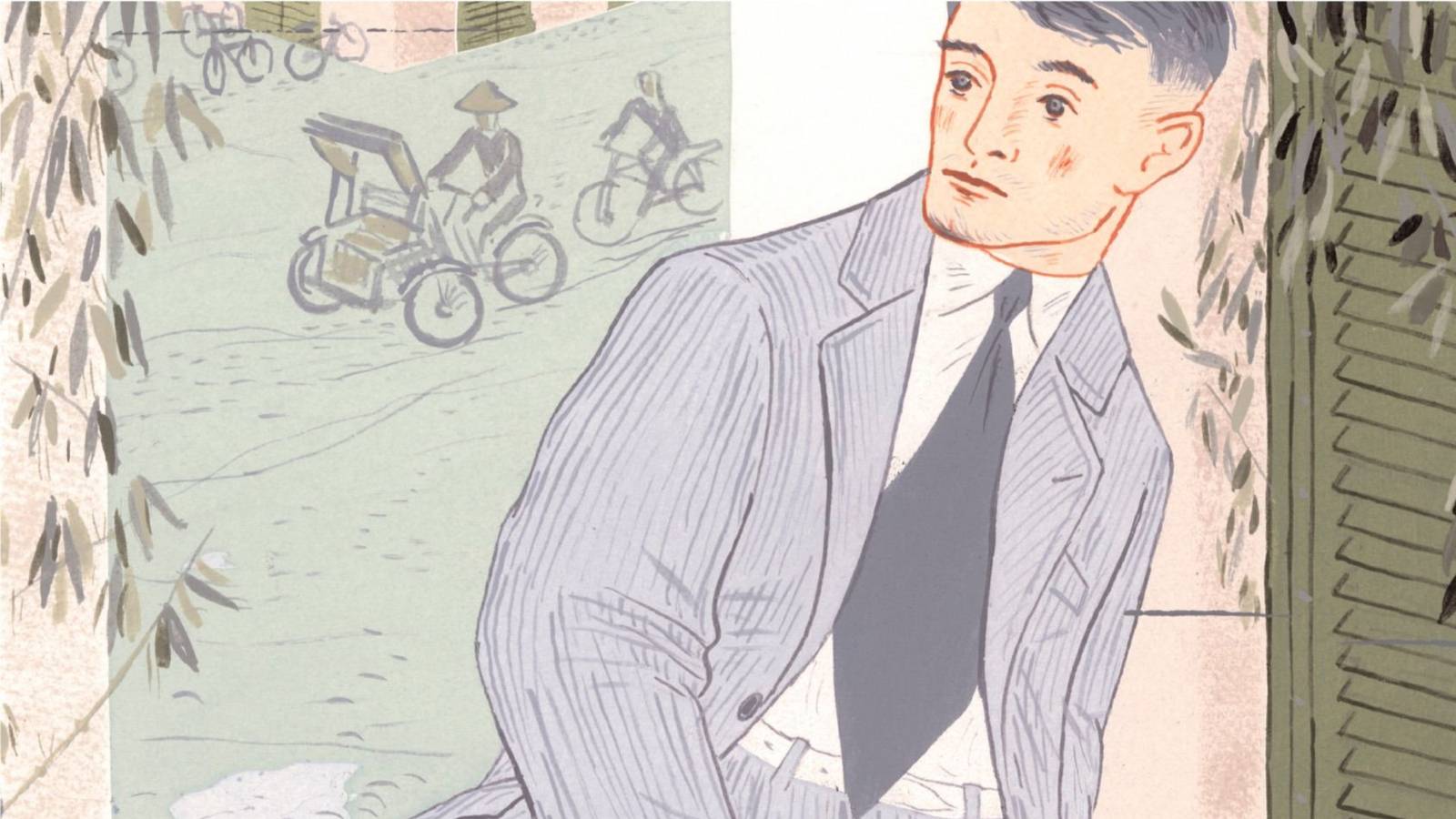
Original Source
Read the full article at Collider →KhanList aggregates and links to publicly available news content. We do not host full articles from third-party sources. Always verify important information with original sources.