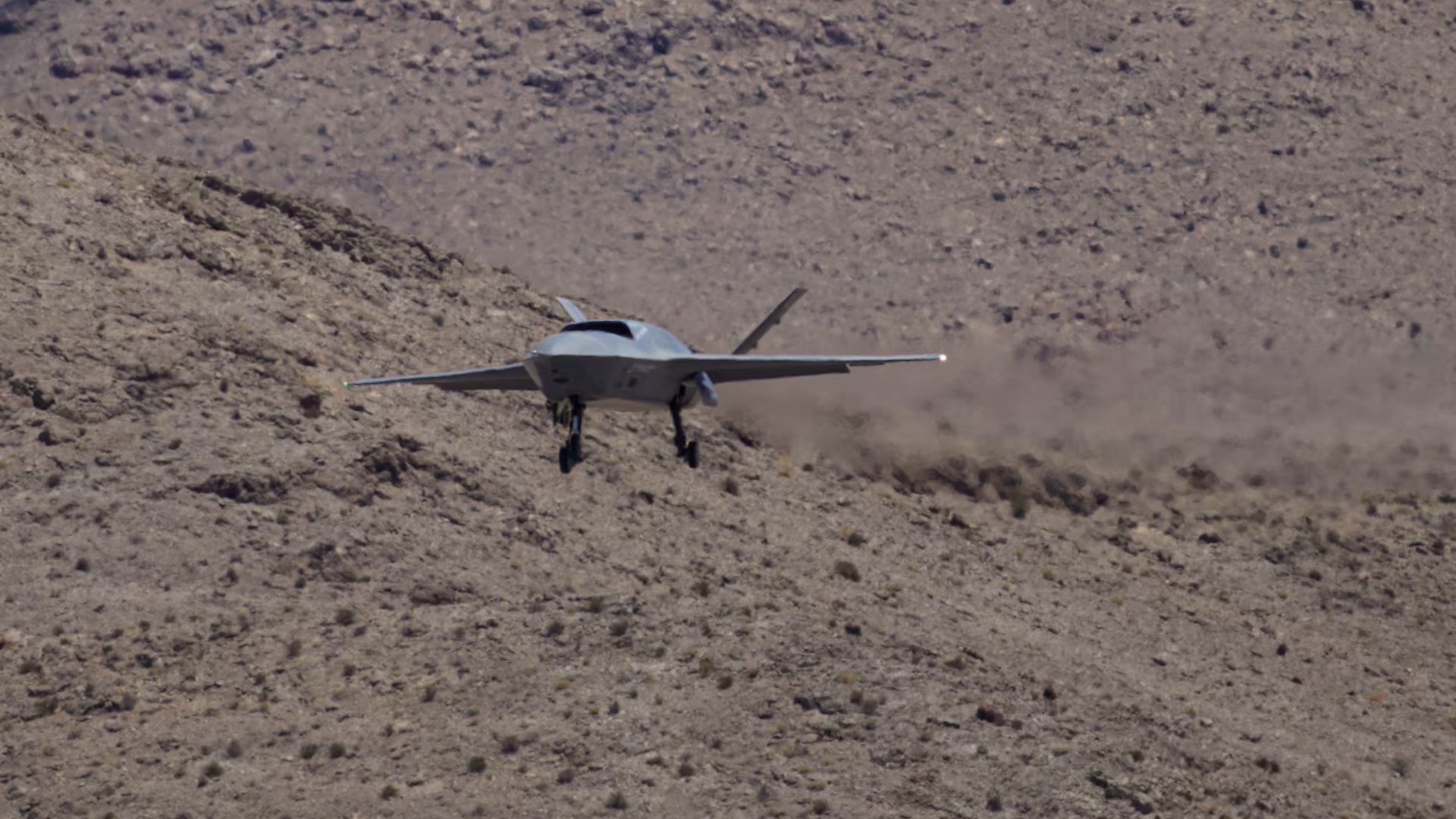
The U.S. Air Force recently carried out a multi-day Agile Combat Employment exercise at Creech Air Force Base, Nevada, moving its Collaborative Combat Aircraft (CCA) program beyond controlled test settings and into real-world conditions. The Air Force’s Collaborative Combat Aircraft Experimental Operations Unit (EOU) led the drills, testing semi-autonomous uncrewed aircraft with manned platforms to see how they might work together in future combat missions. The exercise aimed to develop new ways to use uncrewed aircraft and gather data to help the Air Force plan how to add them to frontline operations. “Air superiority in today’s increasingly contested environments requires the rapid fielding of affordable mass,” said Air Force Chief of Staff Gen. Ken Wilsbach, emphasizing the strategic driver for the platform. “CCA are essential to this effort. By integrating uncrewed systems to fly alongside our Airmen, we extend reach and increase lethality.” Building tactics for future combat missions This exercise was a key step for the CCA program because it let operational crews use the aircraft, not just test teams. The main goal was to create tactics and procedures for how these uncrewed systems will work with regular aircraft. During the event, the Experimental Operations Unit flew several missions to test the aircraft’s reliability and range. The team also worked with manned aircraft in local airspace and ran simulated combat scenarios to help define what future versions of the platform will need. “This exercise was about getting the systems into the hands of the warfighter,” said Lt. Col. Matthew Jensen, Experimental Operations Unit commander. “We are focused on operating CCA outside of a traditional test environment so we can continue to learn, inform and rapidly iterate.” A U.S. Air Force YFQ-44A Fury aircraft sits on the flightline during weapon loading procedures at Creech Air Force Base. Image credit: U.S. Air Force photo by Senior Airman Renee Blundon Faster testing through operational feedback The exercise also introduced a faster approach to operational testing. Personnel from the Air Force Operational Test and Evaluation Center (AFOTEC) observed the drills using a new rapid evaluation process. This lets teams collect performance data during real exercises instead of waiting for longer test campaigns. According to the Air Force, this approach could speed up decisions on fielding the aircraft while ensuring they meet operational requirements. “Our test teams can continuously use these warfighter-run exercises to gather and analyze data that aids in informed CCA fielding decisions well ahead of the normal process to deliver combat capability when needed by our Air Force and the Nation,” highlighted Brig. Gen. Jesse Friedel, AFOTEC commander. Program advances from concept to flight testing Operating the aircraft from multiple locations was another key objective, requiring crews to adapt to changing conditions similar to those expected in contested environments. Operators also worked on integrating advanced autonomous capabilities, an important step toward enabling effective human-machine teaming. The Air Force said the CCA program has progressed from concept to flight testing in under two years. Jensen said that competition between industry partners and having operators involved from the start helped speed up the process to deliver uncrewed aircraft ready for combat. “The exercise was not only a test of technology but a testament to the warfighters who are actively shaping CCA development,” Wilsbach added. “The lessons learned at Creech will directly influence how the Air Force integrates these cutting-edge concepts into future combat ops.”Recommended ArticlesGet the latest in engineering, tech, space & science - delivered daily to your inbox.A versatile writer, Sujita has worked with Mashable Middle East and News Daily 24. When she isn't writing, you can find her glued to the latest web series and movies.
US combat drones move closer to real-life missions with Air Force’s Nevada exercise
Full Article
Original Source
Read the full article at Interestingengineering →KhanList aggregates and links to publicly available news content. We do not host full articles from third-party sources. Always verify important information with original sources.