
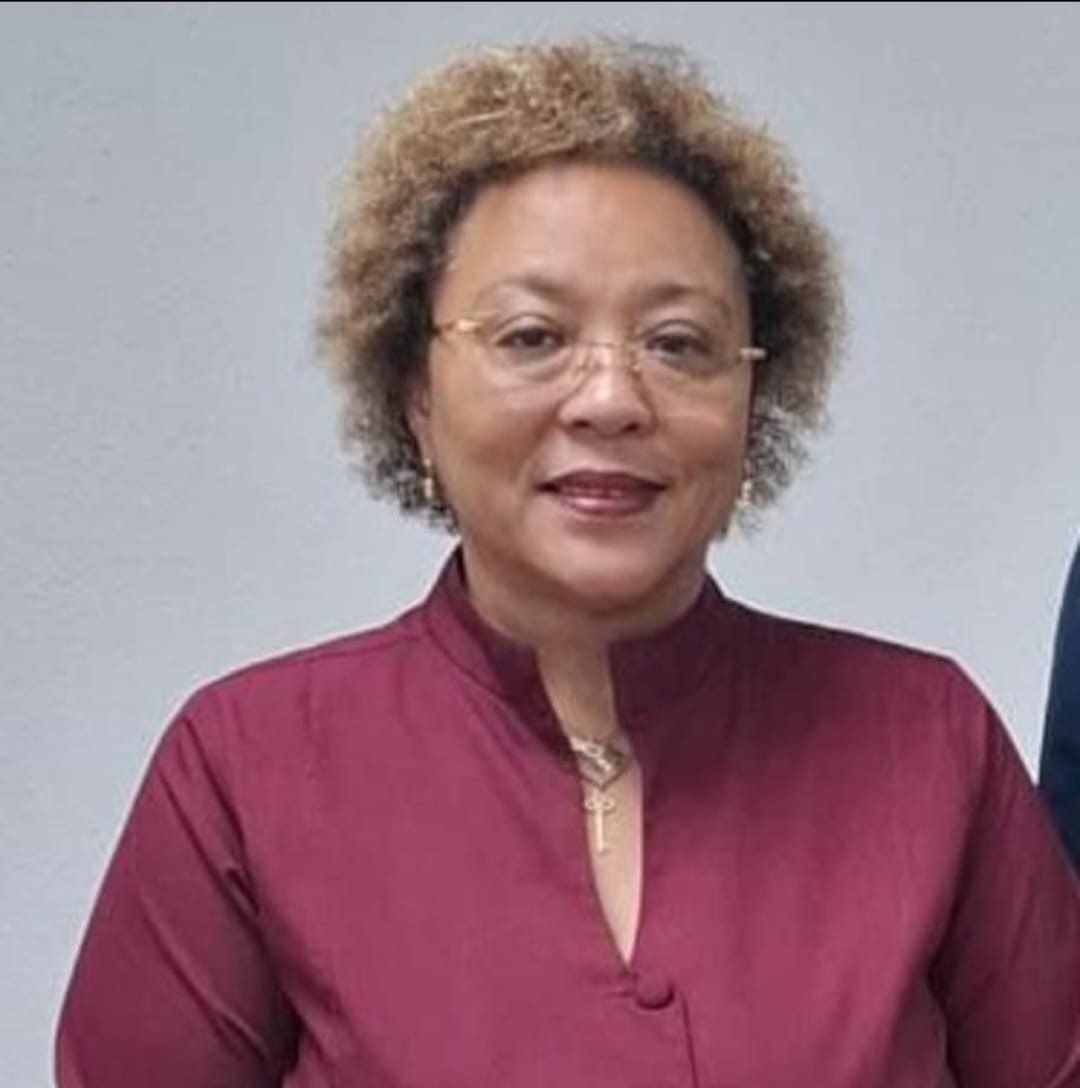
Miriam Morales is the Cuban Ambassador to Nigeria. She believes her country has been held back by several sanctions imposed by Washington and calls on Nigeria and other well-meaning countries to put an end to the sanctions that have brought sorrow, tears and blood to the people of Cuba. Michael Olugbode brings you an excerpt. You have been in this country for some time now. What is your impression of Nigeria, its numerous cultures and its people? It is a breathtaking and unforgettable positive impression. Multiculturalism enriches culture and, in general, the lives of people and countries. Nigerian culture is diverse and beautiful, and so are Nigerians. Getting along with Nigerians and learning every day about the country’s history, traditions and spiritual richness have been an enormous privilege. Can you tell us about the highs and lows of your tour of duty so far in the country? For every Cuban ambassador, the central objective is to develop friendly, mutually respectful and advantageous cooperation and relations, both with the peoples and the governments of the respective host countries. For a Cuban, being posted as an ambassador to an African country, in my case Nigeria, constitutes a great challenge, taking into consideration our great African heritage. Our histories and cultures are so deeply intertwined that only good things can come from relations between our peoples and governments. That alone makes any highs and lows totally irrelevant. Anyway, life itself is full of highs and lows, and it is only our inner strength and resilience that enable us to move forward, find solutions and grow. What is the bilateral relationship like between Nigeria and Cuba, and what are the trade figures? Bilateral relations between Cuba and Nigeria were established in July 1974, and their 52nd anniversary was celebrated in July 2026. These relations are founded on deep historical, cultural and ancestral ties, as well as mutual respect. We maintain a close partnership, traditionally focused on sectors such as health, education, human resource development, science and sports, including the exchange of scholarship recipients and the presence of Cuban medical personnel. There is a shared commitment to strengthening economic, political and cultural links for the benefit of both peoples. Which areas do you think need improvement? The current world situation, in which sanctions, blackmail, impositions and wars are being used instead of cooperation and diplomacy, is imposing heavy burdens on countries worldwide. That constitutes an undeniable fact, and I am not speaking specifically about Nigeria. But let me tell you that your question could strongly stimulate the mind of any ambassador and lead to a situation in which there would not be enough space in your very important newspaper to publish the answers. But, going straight back to your question, the global situation I was talking about is particularly demanding for a small country like Cuba. Cuba is the only country in the world subjected to the longest and most inhumane blockade in modern history, now coupled with new sanctions introduced weekly, a fuel blockade and the permanent threat of military aggression. All these measures are intended to turn my country back into a subjugated colonial state under US rule, as it was until January 1959. However, Cuba has made resistance and creativity the core of its current endeavours. A new economic and social policy and programme is deeply transforming economic, trade, financial and investment relations, backed by powerful and enduring legislative activity. All these efforts are bringing Cuba into line with international standards for investment, cooperation and business in general, without abandoning the powerful social justice components that have always characterised our definition of socialism and will continue to do so. I am confident that this entire process is already offering new possibilities for further developing a bilateral relationship such as that between Cuba and Nigeria, which has traditionally been guided by positive mutual interests. An ambassador would rarely favour mentioning specific, isolated issues or areas where more could be done. Both countries will continue working together in areas where positive results have been achieved and will surely find new and diverse avenues to strengthen their bilateral relationship. Nigerians used to go to Cuba for training in medicine, but that seems to have changed. What changed? Bilateral relations between Cuba and Nigeria have always rested on mutual respect. The doors of the Latin American School of Medicine and those of every other higher education institution in Cuba will always be open to Nigerian students. Cuba was a country that was on an upward trajectory, but this seems to have changed over time. What could have been responsible for this? Almost immediately after the triumph of the Cuban Revolution, the US broke off relations and adopted a very hostile policy towards my country. From the very beginning, the main goal was to destroy the beacon of independence and sovereignty that the Revolution represented to all the subjugated countries in the Latin American region, which had suffered for decades under the oppression of successive dictatorships with direct political, financial and military support from Washington. The current blockade policy is merely the codification and highest expression of all the aggressive actions set in motion by the US since the early years of the Revolution, including the military invasion internationally known as the Bay of Pigs invasion, which represented, for the US, its first military defeat in Latin America. Cuba was then compelled to restructure all its economic, trade and financial relations and find new partners around the world. The former socialist countries of Eastern Europe, led by the Soviet Union at the time, became new partners for Cuba, based, in general terms, on shared political and ideological positions. Some other countries outside that bloc, in Africa, the Middle East and even Europe, also entered into this new relationship to varying degrees. When the so-called socialist bloc in Eastern Europe collapsed and the former Soviet Union disintegrated, Cuba was once again left with almost no markets, trade, financial cooperation or investment. That dramatic situation led to the establishment of what became known as the Special Period in my country, severely affecting the upward trajectory you have referred to. My country was once again compelled to rebuild all its external economic relations. Important socioeconomic changes were also introduced to adjust to the new and challenging situation. These included opening the country to mass international tourism and beginning to transform the Cuban legal system in relation to foreign investment. Despite navigating a very difficult economic path, the country was eventually able to begin a new period of upward growth. The situation in Latin America had started to change with the successive defeat of dictatorships and the establishment of progressive governments with different political characteristics. Strong South-South cooperation, in line with contemporary concepts, emerged but was attacked by Washington through various means. All this raised hopes across the region by opening the way for a new, qualitative form of cooperation. In the case of Cuba and Venezuela, contrary to US propaganda, a highly mutually beneficial relationship developed, which also had a positive impact on the Latin American region. So, once again, to return to your question, this ushered in a new period of upward growth. It is necessary to take into consideration that US hostility and its blockade policy against Cuba have persisted for more than six decades. Only changes in our region temporarily opened the way for Cuba, to use your words, to move upwards again. Throughout this period, we never lost sight of the fact that the US’s aggressive policy against my country was being permanently reinforced. It escalated immensely during Donald Trump’s first presidency and acquired a genocidal character with his return to the White House. There have been weekly announcements of new sanctions, the introduction of a fuel blockade and constant threats of possible military aggression. I am sure you know the rest of that history, including the kidnapping of Venezuelan President Nicolás Maduro and everything that followed. These developments have created a new and complicated environment, not only for Cuba but for the entire Latin American region. Could the death of your great leader, Fidel Castro, have accounted for this, or perhaps the American blockade? Or is it that communism is no longer in vogue and your allies have dried up? Without any country having truly experienced life under communism—which, in our view, cannot simply emerge from a proclamation—we consider it the highest level of socioeconomic development, social justice and well-being for all, without simplistic egalitarianism. It is an alternative for humanity to what several left-wing politicians, economists and philosophers have described as savage capitalism. But that is only a rough definition. The overwhelming majority of Cubans still mourn, and will continue to mourn, the death of Commander-in-Chief Fidel Castro. His deeds and legacy remain, and will continue to remain, a political and human inspiration for the Cuban people as we continue building an alternative to brutal capitalism. We call it socialism. The achievements and example of the Cuban Revolution are historically linked to Fidel Castro and the heroism of the Cuban people. Their influence extends far beyond our country, as you have surely seen in the celebrations of Fidel Castro’s centenary this year in Cuba and around the world. The example and influence of the Cuban Revolution must, without any doubt, be immensely strong if we consider the genocidal and irrational hostility of the world’s foremost economic and military superpower in its attempts to destroy it. The US’s asphyxiating, illegal and genocidal blockade policy has always been the main factor preventing the development of Cuba and its people, and it continues to be so today. As the week drew to a close, Cuban President Miguel Díaz-Canel Bermúdez and Foreign Minister Bruno Rodríguez Parrilla strongly rejected aggressive statements and threats made against Cuba by President Trump. During a campaign rally in Fort Myers, Florida, Trump claimed that US warships would “pass by” Cuba upon returning from a war in Iran and stated that he would send Marco Rubio to “close the deal”—or, in other words, to negotiate the situation in the country. Subsequently, Marco Rubio, writing on his X account, publicly urged Cuban citizens to collaborate discreetly with the Central Intelligence Agency (CIA) to push for political change on the island. If not, what could explain US Secretary of State Marco Rubio leading a campaign of defamation, lies and hatred against the island and its people, while threatening, blackmailing and intimidating independent, sovereign states with the spectre of illegal sanctions in an effort to change their longstanding position of support for the UN resolution calling for the elimination of the economic, trade and financial embargo against Cuba on October 28? What is the relationship between your country and America like? What about other countries, especially China and Russia, which have deep roots in socialism? The Cuban government and people have no negative or hostile feelings towards the American people. In fact, there has been a growing sentiment among the American people in favour of a change in policy towards Cuba, with calls for the elimination of the blockade and descriptions of it as useless and obsolete. That sentiment is stronger today than ever before. As for those in the White House, the Cuban government, even under the current circumstances, has reiterated its readiness to discuss any issue relating to bilateral relations on an equal footing. It also believes there are concrete areas for mutually beneficial cooperation. In Cuba’s position, there is no room for impositions of any kind, dictating the type of political system Cuba should have or imposing changes in the Cuban leadership. Cuba will never surrender its independence and sovereignty. Some communication channels remain open, although it has not been possible to establish an agenda for dialogue. Nevertheless, high-ranking representatives of the US government, including President Donald Trump, continue to claim from time to time that talks are taking place, as part of what we consider a disinformation campaign and an irresponsible appetite for fake news. These claims have been accompanied by persistent hostile actions, such as last week’s decision by Florida Attorney General James Uthmeier to charge Army General Raúl Castro with conspiracy to commit first-degree murder. The charge was based largely on a federal indictment announced last May that included allegations concerning the downing of an aircraft belonging to the organisation “Brothers to the Rescue”, which Cuba considers a terrorist organisation. There was also the US mission to the United Nations orchestrating an anti-Cuba event at UN headquarters, in what we consider a direct violation of the UN Charter, as part of the campaign surrounding the October 28 UN resolution on the blockade. Our relations with Russia and China are based on deep-rooted historical ties, cooperation and exchanges in almost all areas of mutual bilateral interest, including international affairs. They also involve diverse organisations striving to place international collaboration in a different perspective, emphasising mutually beneficial projects and programmes within the framework of South-South cooperation. Have you thought of meeting America halfway for the blockade to be lifted? The Cuban government has reiterated several times that it is open to dialogue and negotiations on the basis I have already explained. The blockade is really affecting Cuba. Do you think the international community has done enough to assist Cuba in getting it lifted? On October 27 and 28, the UN General Assembly will consider, for the 34th time, the resolution entitled “Need to put an end to the economic, commercial and financial blockade imposed by the United States of America against Cuba”. The overwhelming majority of UN member states have historically rejected the US blockade against Cuba, regardless of the potential risks. Threats, impositions, manoeuvres and blackmail have always existed, although never before as part of such an open international campaign, now prioritised by what remains of US foreign policy, which openly and shamelessly exhibits its brutal imperial characteristics. For the first time, following the considerations made last July, the UN General Assembly will take a position through a resolution against the energy blockade, the fuel blockade and the collective punishment that such a policy represents for the entire Cuban people. For decades, the international community has maintained a clear, longstanding and almost unanimous position in support of the immediate and unconditional elimination of the blockade against Cuba. What is new, as I have already said, is the existence of such a brutal campaign, exemplified by an official US State Department document sent to its embassies, instructing them to exert pressure on host governments not to vote in favour of what it describes as “Cuban propaganda”. This is as though the blockade and its humanitarian consequences were not part of a reality that nobody can deny. Even under these unbelievable circumstances, Cuba remains confident that the resolution will receive majority international support. I would like to take this opportunity to express the profound gratitude of the Cuban government and people for Nigeria’s support in the international arena, most notably regarding its vote in the United Nations General Assembly against the economic, commercial and financial blockade imposed on Cuba. I reiterate that the vote will take place on October 28. I am grateful to the newspaper THISDAY for providing the opportunity to present the situation in my country within the current context experienced by the Cuban people.
US Asphyxiating, Illegal and Genocidal Blockade Policy Has Been the Main Factor Preventing Cuban Devt and That of Its People — Cuban Ambassador to Nigeria
Full Article
Original Source
Read the full article at Thisdaylive →KhanList aggregates and links to publicly available news content. We do not host full articles from third-party sources. Always verify important information with original sources.