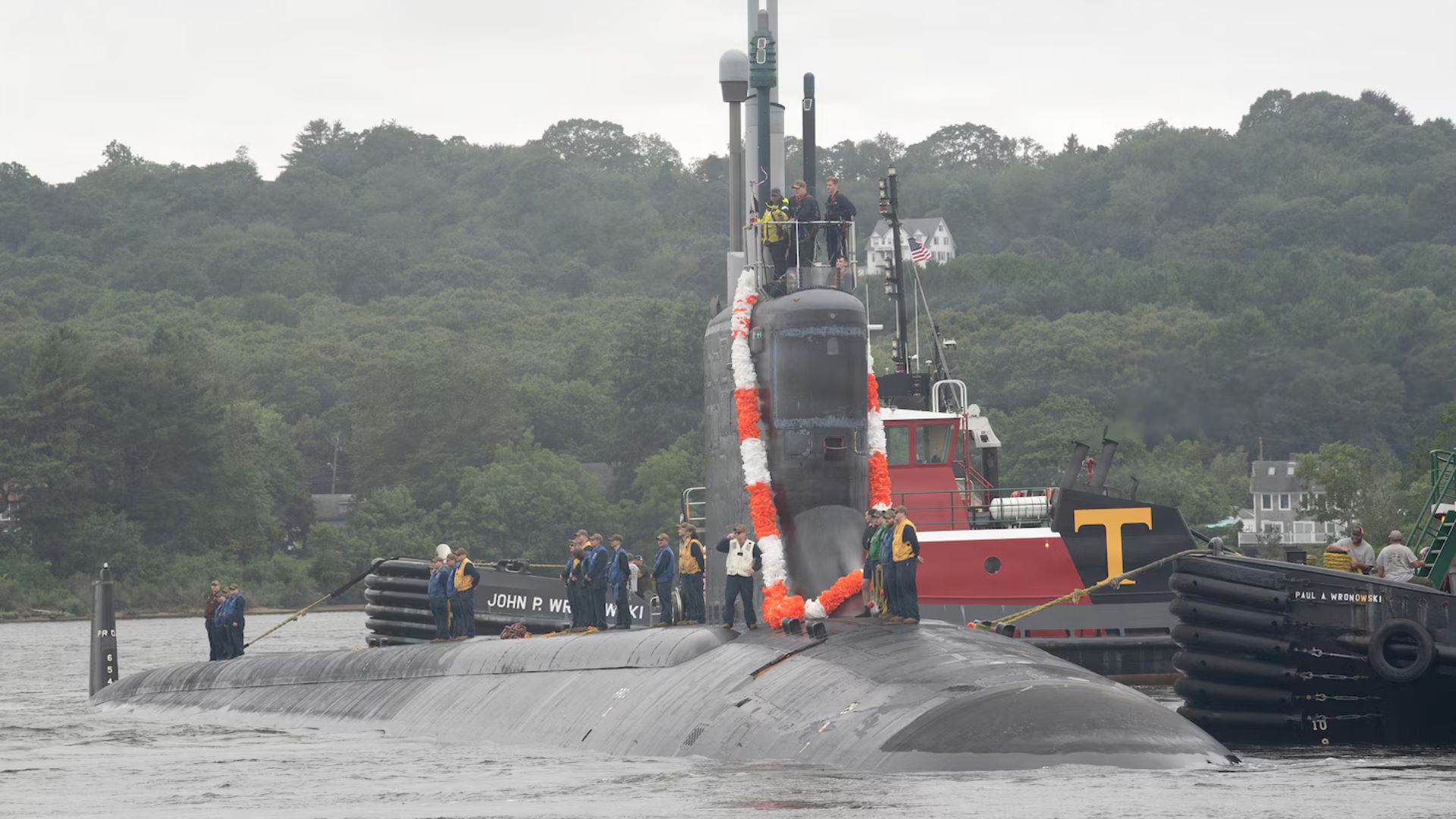
The USS Virginia (SSN 774) returned to Naval Submarine Base New London on August 3, 2026, after a six-month deployment in the U.S. European Command area. Over the mission, the nuclear-powered submarine traveled more than 36,000 nautical miles (41,400 miles/66,700 km) and completed three major national-level missions in support of U.S. military operations. The U.S. Navy did not reveal where the submarine operated during the deployment. However, its demanding mission schedule, operations in harsh conditions, and a stop in Tromsø, Norway, suggest it spent much of its time in the North Atlantic or European Arctic. This deployment provided U.S. commanders a stealthy way to gather intelligence, track submarines, and carry out precision strikes without relying on permanent bases in the region. Lead submarine built for long deployments USS Virginia began service on October 3, 2004, as the first Virginia-class submarine. It is 377 feet (114.8 meters) long, 34 feet (10.4 meters) wide, and weighs about 7,900 tons underwater. The usual crew is 145 sailors, but the Navy reported that more than 130 were on board for this deployment. Its nuclear reactor powers a single propeller and allows the submarine to remain underwater for extended periods without refueling. The reactor was designed for a planned 33-year service life, allowing the submarine to operate without replacing its fuel. As a result, endurance is mainly limited by food supplies, equipment maintenance, and crew readiness rather than fuel. The Navy said 46 sailors earned their submarine warfare qualifications during the deployment, increasing the number of certified crew members available for future operations. Tomahawk missiles and heavyweight torpedoes As a Block I Virginia-class submarine, SSN 774 carries 12 vertical launch tubes for Tomahawk cruise missiles and four 21-inch torpedo tubes. According to Congressional Research Service data, the submarine can carry about 37 torpedo-sized weapons, including Tomahawk missiles and Mk 48 torpedoes, although the exact weapons carried during the deployment remain classified. The Tomahawk Land Attack Missile provides long-range strike capability against command centers, air defenses, communications sites, airfields, and logistics facilities. The latest Block IV and Block V versions have a published range of about 900 nautical miles (1,036 miles/1,667 km) and carry a 1,000-pound class warhead. The missile also supports in-flight target updates through two-way communications. The submarine’s primary anti-ship and anti-submarine weapon is the Mk 48 Advanced Capability heavyweight torpedo. Weighing 3,744 pounds with a 650-pound high-explosive warhead, it uses acoustic homing, digital guidance, and wire guidance that allows the crew to update the weapon after launch. The same torpedo can engage both submarines and surface ships. Arctic operations highlight strategic role Although the Navy released few operational details, the submarine’s national-level missions were likely focused on intelligence gathering, surveillance, anti-submarine warfare, and monitoring naval activity. Attack submarines are also used for special operations support, mine warfare, and long-range precision strike missions when required. The stop in Tromsø was strategically significant because the Norwegian port lies above the Arctic Circle and provides quick access to the Norwegian Sea and the approaches to the Barents Sea. Operating from northern Norway reduces transit time for logistics and allows U.S. and Norwegian personnel to rehearse security and support procedures for nuclear-powered submarines operating in the region. With the deployment complete, USS Virginia will now begin post-deployment inspections, maintenance, crew leaves, and training before returning to operational service. While the submarine has returned on schedule, its next deployment timeline will depend on the results of those inspections as the U.S. Navy continues to manage maintenance demands across its attack submarine fleet.Recommended ArticlesGet the latest in engineering, tech, space & science - delivered daily to your inbox.A versatile writer, Sujita has worked with Mashable Middle East and News Daily 24. When she isn't writing, you can find her glued to the latest web series and movies.
US’ 7,900-ton nuclear-powered submarine returns after 41,400-mile Europe mission
Full Article
Original Source
Read the full article at Interestingengineering →KhanList aggregates and links to publicly available news content. We do not host full articles from third-party sources. Always verify important information with original sources.