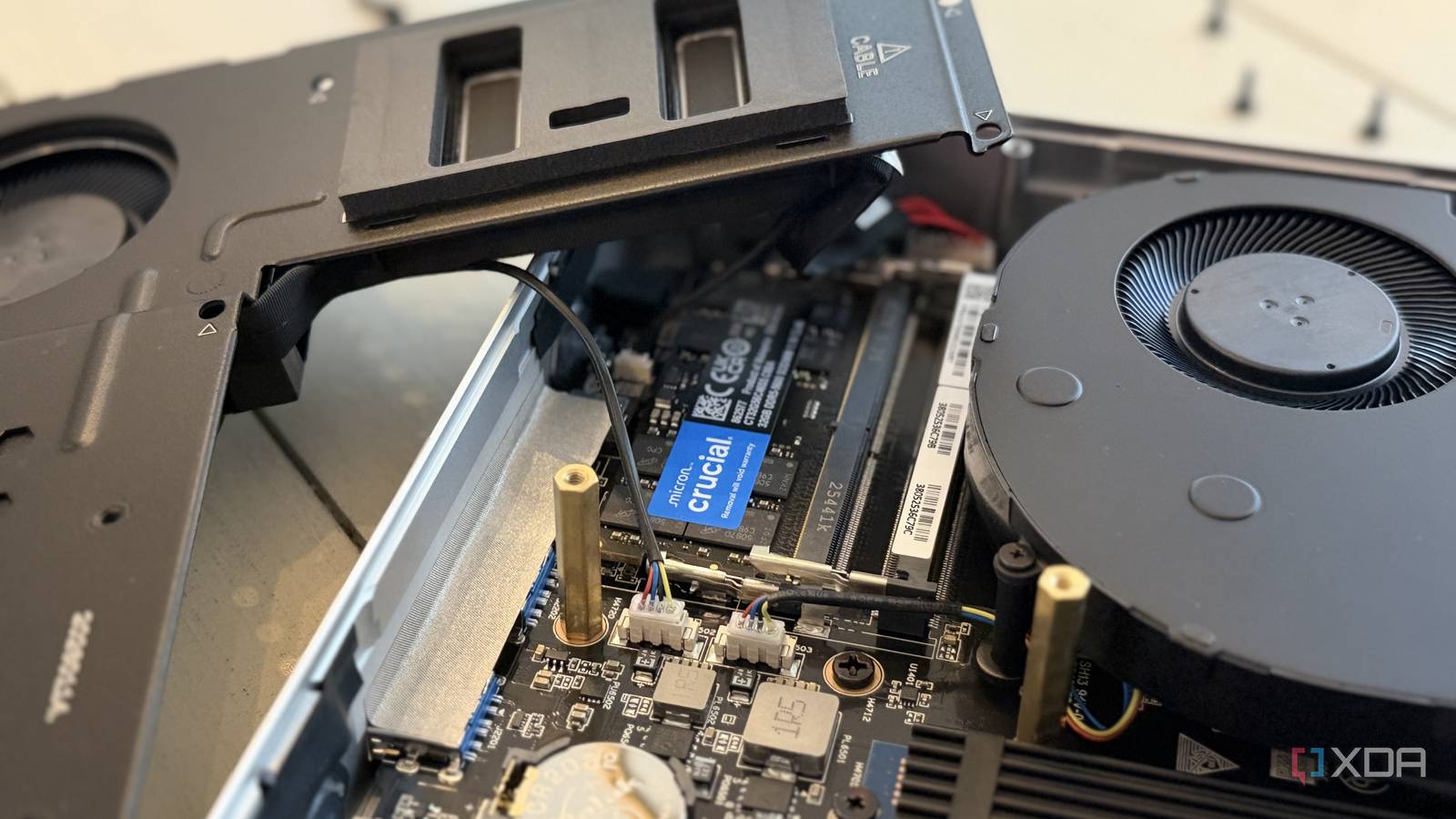
Published May 15, 2026, 7:00 PM EDT João has been covering the tech world for over 7 years, with a heavy focus on laptops and the Windows ecosystem. I also love all things tech and videogames, especially Nintendo, which he's always happy to talk about. Prior to joining XDA in 2021, he worked at Neowin: https://www.neowin.net/news/poster/jo%C3%A3o-carrasqueira/ Nothing lasts forever in the tech world. Whether it's hardware or software, the industry is bound to move on at some point, and after a very long time looking roughly the same, RAM is undergoing a big shift, specifically in the low-profile space. The classic SO-DIMM modules are becoming less prominent and in its place is a world of soldered memory that many tinkerers hate. And the latest proof of that are mini PCs, which have taken a bit of a turn in the last year or so. These low-power machines have typically been known for trying to offer modularity and upgradability despite their tiny chasses, are becoming less upgradeable, and SO-DIMM could start to lose traction. What's happening with mini PCs? Soldered RAM is becoming more common Mini PCs were always limited in their ability to be upgraded. The use of mobile processors combined with a tiny chassis means it's not really meant to be fully modular since you can't swap out things like the motherboard or the CPU itself. But despite the small size, most mini PCs usually pride themselves in offering things like upgradeable RAM and storage, and even Wi-Fi modules, if you want to upgrade that. However, a look at the many mini PC brands out there, such as Geekom, Beelink, or even Zotac, quickly reveal a new kind of beast in many of these companies' lineups. Machines powered the AMD Ryzen AI Max series processors are becoming more common in an effort to chase top-of-the-line performance in as compact of a chassis as possible. Even larger PCs like the Framework Desktop embraced the Ryzen AI Max chips to deliver powerful performance in a more compact and power-efficient package. This series of AMD processors introduced the Unified Memory Architecture, which means that the processor itself has RAM built into it. There's actually a bit more to it than that, because this is a large chip that includes both the CPU, a large and powerful GPU, and the memory, which is shared between the two components with very little restrictions. Related The idea is that this unified architecture provides much faster communication speeds within the computer, and by allowing either the CPU or GPU to use the memory as needed, you can get much faster performance in all kinds of workloads. Typically, a GPU either includes its own RAM or, in the case of integrated GPUs, has a relatively low limit to how much of the system's RAM it can use. By and large, this approach removes those limits, and it often means your GPU can technically access more RAM than even the highest-end desktop GPUs. Because of the big performance benefits of this architecture, many mini PCs — and even gaming handhelds or tablets like the Asus ROG Flow Z13 — have used this hardware with no upgradeable memory, but it's not like this is the only instance of unified memory. Intel's Lunar Lake processors in the V-series notoriously had integrated memory, too, though that seems to have been a one-off, plus most mini PC makers avoided those chips. Apple started this Apple Silicon changed everything AMD's Ryzen AI Max series wasn't breaking new ground when it comes to unified memory, and like many things people don't like with the tech industry, it was all started by Apple. In 2020, the company introduced Apple Silicon, and with the M1 chip, we saw the first instance of unified memory, though it was still aimed at thin laptops that likely would have had soldered memory anyway. It was only the following year, with chips like the M1 Pro, M1 Max, and M1 Ultra that unified memory really changed the game. These were the first Apple processors that were aimed at users that required a lot of power, such as content creators and digital artists. The M1 Ultra maxed out with 128GB of unified memory, and the point I mentioned above about giving the GPU never-before-seen amounts of memory was a big part of the sales pitch for the chip. Apple then continued to push for incredible amounts of memory on a chip, with the M2 Ultra maxing out at 192GB of unified memory, and the M3 Ultra hitting a ludicrous 512GB of RAM. Related AMD was actually somewhat late to the game here, but it spread Apple's influence to the Windows world, and the impact is evident. The company has yet to introduce successors to its existing Ryzen AI Max processors, likely due to how expensive memory has become in the past year, but it's hard to imagine there aren't plans to keep pushing forward with more designs like this when so many devices have embraced these chips. There are other threats, too Soldered memory and CAMM2 may only make SO-DIMM more obsolete Even without the unified memory architecture, soldered memory isn't entirely new to mini PCs, nor is it exclusive to the AMD processors I've mentioned. Extra small mini PCs, like the Zotac Pico PI430AJ I reviewed a couple of years ago, still need soldered memory to even be feasible, and the same goes for machines like the Khadas Mind series, which already skipped out on upgradeable RAM before it was refreshed with Lunar Lake processors. Another looming threat could be CAMM2 memory, which is a pretty exciting concept in the field of low-profile RAM. Dell pioneered the concept with some of it Precision laptops, but the standard has been ratified by JEDEC and some companies have been talking it up. I wouldn't be entirely surprised to see mini PCs be among the first to adopt the new standard. Related Unified memory is the real threat On the whole, though, these two factors aren't much of a threat compared to unified memory architectures. Soldered memory has always been an option, but mini PCs typically haven't gone for it because the benefits aren't as noticeable compared to the upgradability you get with upgradeable slots, and while CAMM2 has been creeping into the industry, actual adoption is still close to non-existent. The real problem will be the chance of more chips with unified memory, especially as local AI workloads become more relevant, requiring both capable GPUs and a lot of memory to work with. They're kind of a perfect fit for this hardware, so demand for it is only increasing. I've been trying to get a review unit for a mini PC with Ryzen AI Max for a while, and manufacturers don't even have units to spare. We still have a lot of mini PCs with upgradeable RAM, but they may not be the majority for much longer. Minisforum AI X1 Pro-470 $1359 $2599 Save $1240 6.5/10 CPU AMD Ryzen AI 9 HX 470 Graphics AMD Radeon 890M Memory Up to 2 SODIMM DDR5 (32GB installed) The Minisforum AI X1 Pro is a relatively larghe mini PC, but it features powerful AMD Ryzen processors and upgradeable RAM and storage.
Unified memory is quietly killing SO-DIMM, and mini PCs prove it's already happening
Full Article
Original Source
Read the full article at Xda-developers →KhanList aggregates and links to publicly available news content. We do not host full articles from third-party sources. Always verify important information with original sources.