
Key TakeawaysTin and carbon layers guide lithium deposition and help reduce lithium loss.An added lithium reserve compensates for losses during initial battery cycling.The battery achieved 235.13 Wh/L at its 100th cycle, tested at 0.01 C. A battery measuring just 2.77 micrometers thick could offer a route to powering wearable electronics, tiny sensors, and medical devices. Developed by a team at Dongguk University in South Korea, the thin-film platform uses tin and carbon layers to control lithium deposition and reduce lithium loss during charging and discharging. Led by Professor Hyun-Suk Kim of the Department of Energy and Materials Engineering, the researchers combined the coating with an added lithium reserve to improve battery stability. The university announced the findings on November 3. Tackling uneven lithium deposition All-solid-state batteries replace liquid electrolytes with solid materials, offering potential safety and energy-density advantages. However, uneven lithium plating and stripping can destabilize their operation. Anode-less designs address part of the manufacturing challenge by allowing lithium from the cathode to deposit onto a current collector during the first charge, forming the anode in place. This architecture can simplify fabrication and increase volumetric energy density, particularly in thin-film batteries. But lithium can become electrically isolated, forming “dead” lithium, or lose contact with the solid electrolyte during stripping. These processes reduce the lithium available for subsequent cycles and compromise capacity. The Dongguk team investigated whether a coating on the current collector could help control that process. “Our interlayer acts as a seed for Li nucleation, promoting uniform Li plating and reducing Li loss and improving the reversibility of repeated charging and discharging,” Kim said. Tin and carbon guide lithium growth The researchers screened carbon-only, metal-only, and combined metal/carbon coatings. A tin/carbon bilayer on a copper current collector delivered the best overall performance among the configurations tested, showing favorable lithium deposition and interfacial stability. The two layers perform different roles. Tin lowers the energy barrier for lithium nucleation, helping lithium begin forming at the interface. The carbon overlayer regulates subsequent growth, potentially limiting uneven deposition and stabilizing the region where tin and lithium interact. The team also deposited a thin metallic lithium layer onto the coated collector. This prelithiation step created a reserve to compensate for lithium lost during initial cycling. During the first lithium plating, a three-dimensional textured region containing tin and lithium-tin formed within the interlayer. According to the researchers, this structure could accommodate volume and shape changes during later cycles, helping maintain contact and stability. Ultrathin platform shows storage potential The completed battery combined a lithium vanadium oxide cathode, a lithium phosphorus oxynitride solid electrolyte, and the coated copper current collector. It achieved a volumetric energy density of 235.13 Wh/L at its 100th cycle, measured at a reported rate of 0.01 C. Its overall thickness was 2.77 micrometers. “Our approach shows how interface engineering and lithium-inventory management can improve anode-less thin-film batteries,” Kim said. “This approach could support the development of ultrathin batteries for wearable electronics, IoT sensors, and medical devices, as well as scalable anode-less ASSBs for industrial-scale power,” he added. The findings identify a way to manage both lithium deposition and the lithium supply within an ultrathin battery architecture. The study was published in the journal Advanced Energy Materials.Get the latest in engineering, tech, space & science - delivered daily to your inbox.Atharva is a full-time content writer with a post-graduate degree in media & amp; entertainment and a graduate degree in electronics & telecommunications. He has written in the sports and technology domains respectively. In his leisure time, Atharva loves learning about digital marketing and watching soccer matches. His main goal behind joining Interesting Engineering is to learn more about how the recent technological advancements are helping human beings on both societal and individual levels in their daily lives.
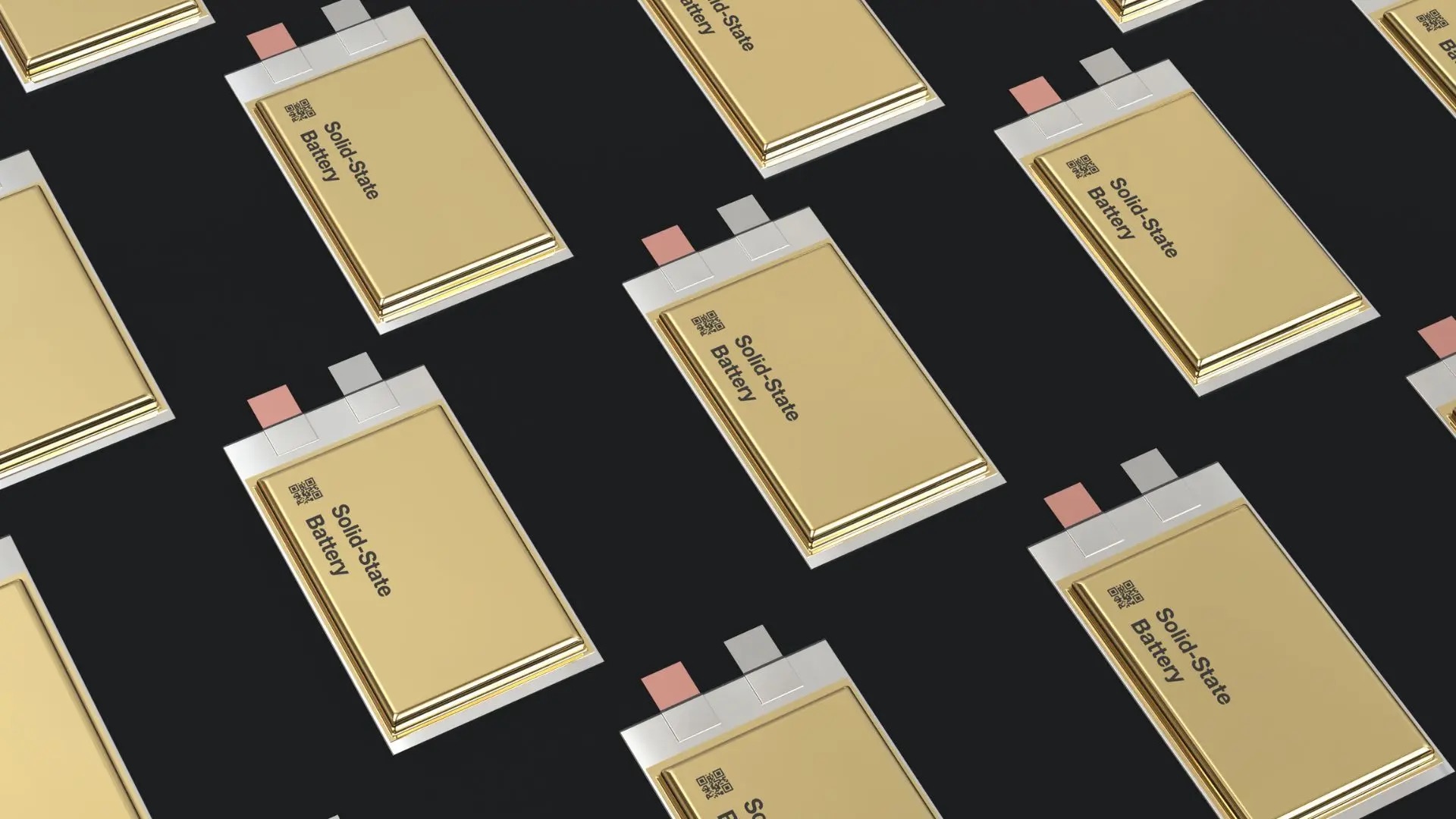
Ultra-thin solid-state battery controls lithium loss, delivers 235 Wh/L energy density
Full Article
Original Source
Read the full article at Interestingengineering →KhanList aggregates and links to publicly available news content. We do not host full articles from third-party sources. Always verify important information with original sources.