
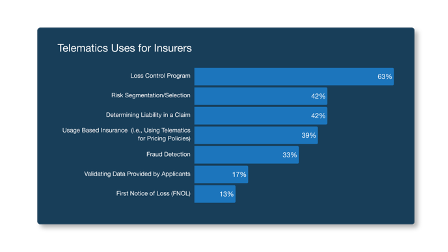
This article is part of a sponsored series by Risk & Insurance Education Alliance. As telematics adoption grows and data becomes more available, commercial auto insurers are exploring ways to help fleets reduce risk before losses occur. Loss control is emerging as a key opportunity for industry differentiation. For years, the discussion around telematics in commercial auto insurance has centered on its use as an underwriting tool. The benefit was clear — better visibility into driver behavior can help insurers price risk more accurately. That remains true as more fleets adopt telematics and insurers become more comfortable using the data, shifting the conversation toward access and insured participation. The focus is changing, however. According to SambaSafety’s 2026 Telematics Report, its fourth edition based on survey responses from 740 fleets, insurers, and brokers, loss control is now the most common insurance use case for telematics, cited by 63% of commercial auto insurers. Developed in partnership with the Risk & Insurance Education Alliance for the fourth consecutive year, the research tracks how telematics use is evolving across the commercial auto ecosystem. Claims applications and risk segmentation remain important, but the prominence of loss control suggests insurers are increasingly interested in what happens before a claim occurs, not just after the fact. The shift comes at a time when commercial auto continues to confront familiar and growing challenges. Claims remain costly, loss severity is elevated, and distracted driving ranks among the industry’s most significant concerns, with 82% of insurers identifying it as a threat to profitability. The pressure on the industry explains why telematics is evolving beyond the single-use investment it was originally intended to be. In addition to underwriting applications, telematics provides a window into driver behavior that may contribute to future losses, creating an opportunity for insurers to engage with their insureds before a claim occurs. It’s an opportunity that comes at a time when fleets aren’t struggling to collect the data; they’re struggling to make the most use of it. With 90% of fleets now using telematics across most of their operations, more than half of the surveyed fleets say interpreting or acting on the data remains a challenge — a barrier that extends beyond fleets. Insurers are increasingly able to access telematics data, with many applying it across multiple business functions. The access alone, though, does little to improve loss performance. The value emerges when insurers translate risk signals into proactive loss control recommendations, helping fleets address risk through interventions such as driver training. The report indicates that the industry is already moving in that direction, with brokers recognized as strategic risk partners for commercial fleets. “The value of telematics isn’t the data itself. It’s what you do with it,” said William J. Hold, CRM, CISR, President and CEO of the Risk & Insurance Education Alliance. “When insurers and brokers can turn risk insights into meaningful action, they move beyond simply pricing risk and become partners in helping clients reduce it.” As telematics matures across commercial auto, insurers will grow in their ability not only to access more data but also to help insureds use it more effectively. That reframing could shape how insurers think about the value they provide rather than seeing telematics as a tool for underwriting or pricing. The focus, as a result, will move from understanding driver risk to influencing it in meaningful ways. As pressures evolve and impact the industry, insurers and brokers that leverage the data and help their fleet partners apply it to create safer decisions may find themselves with a competitive advantage that extends beyond the data alone. About SambaSafety SambaSafety is a recognized innovator and leading provider of cloud-based risk management solutions for over 15,000 organizations with automotive mobility exposure, including many on Fortune’s Global 500 list. Employers and insurers benefit from SambaSafety’s continuous monitoring, intuitive insights, risk reduction tools, and configurable pricing solutions. Through the collection, correlation, and analysis of federal, state, local, and telematics data sources, our flexible, end-to-end capabilities enable businesses and insurers to better evaluate and mitigate driving risk, accelerate product development, reduce crashes, and foster safer communities. Topics Auto Profit Loss Commercial Lines Business Insurance
How Telematics Is Expanding the Role of Loss Control in Commercial Auto
Full Article
Original Source
Read the full article at Insurancejournal →KhanList aggregates and links to publicly available news content. We do not host full articles from third-party sources. Always verify important information with original sources.