
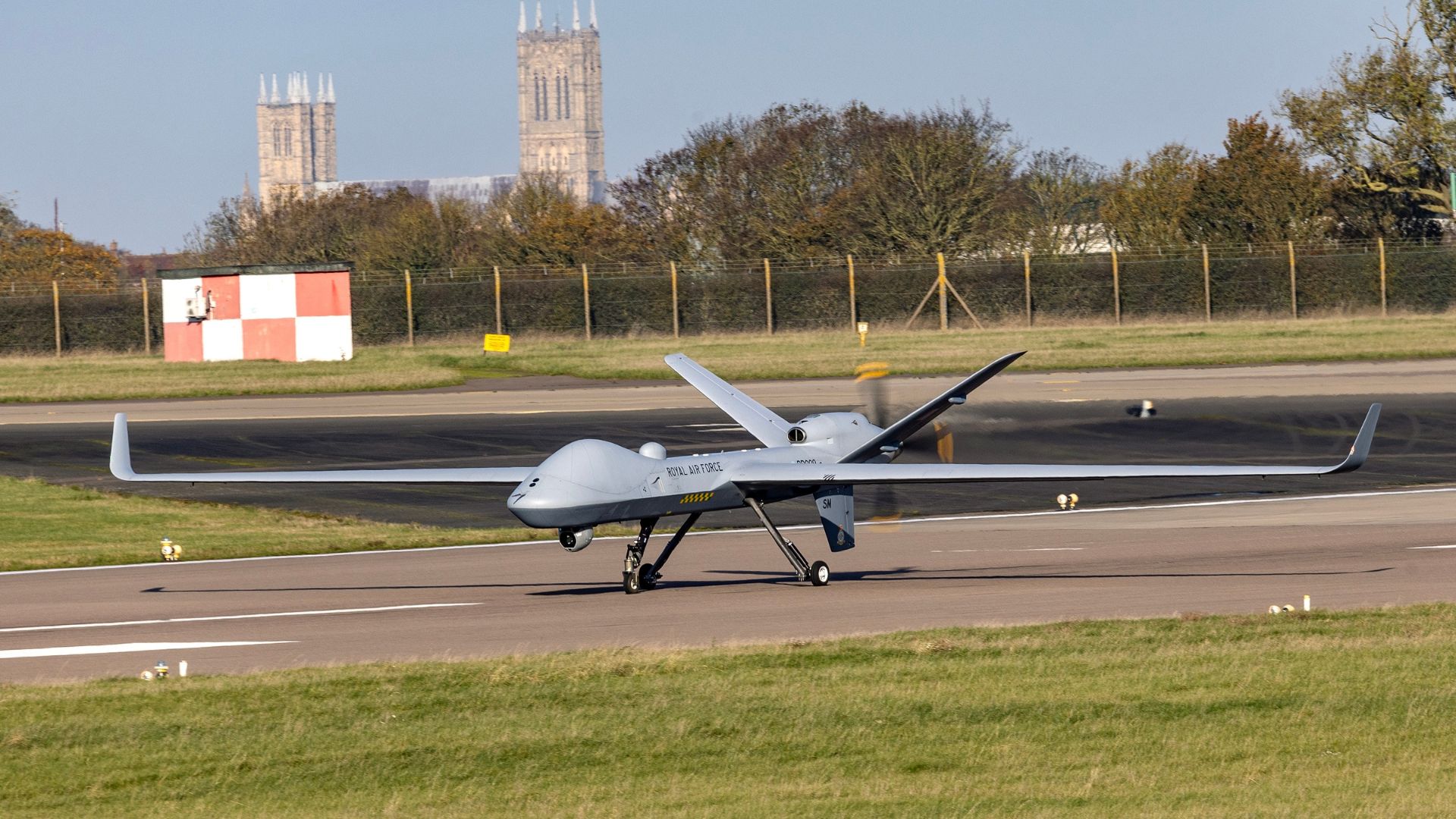
Britain’s Royal Air Force (RAF) is reportedly moving aircraft into hangars and hardened shelters at night amid concerns over potential drone attacks. The measures are intended to protect military aircraft from unmanned aerial threats targeting air bases. Troops are also installing Kevlar anti-drone nets around jets that must remain parked in the open. The reported precautions follow growing concerns about the vulnerability of military aircraft on exposed airfields, with similar protective measures being used in Ukraine. Bolsters airbase security The reported measures include installing Kevlar anti-drone nets around aircraft that must remain parked in exposed areas, reflecting growing efforts to protect military assets against unmanned aerial threats. According to reports, RAF personnel stationed across the country have been instructed to move aircraft under cover at night. Jets that cannot be accommodated inside hangars are reportedly being protected with anti-drone netting similar to equipment widely used by Ukrainian forces to shield military installations and infrastructure from Russian drones. Hardened aircraft shelters are reinforced structures, typically built using concrete and steel, designed to protect aircraft from explosive attacks and other external threats. Unlike conventional aircraft hangars, these facilities provide additional physical protection against blast effects and fragmentation from incoming weapons. However, only a limited number of British military air bases have hardened aircraft shelters. Their availability has become a concern as the UK faces increasing pressure to strengthen the protection of its military infrastructure. Lawmakers have called for additional shelters following the withdrawal of US bomber aircraft from RAF Fairford in Gloucestershire. Adopts drone countermeasures The reported precautions come amid a series of security incidents involving suspected drone activity around military installations used by the US Air Force in eastern England. On November 13, security personnel at RAF Lakenheath in Suffolk responded to reports of suspected unauthorized drone activity. The incident prompted a security response, although no damage to aircraft, infrastructure or personnel was reported. RAF Fairford has also faced security concerns following reports of suspicious activity around the installation in September. Five men were arrested, and British counterterrorism authorities indicated that Iranian involvement was highly likely. US B-1 bomber aircraft subsequently left the base. According to experts, the latest developments highlight two complementary approaches to protecting military aircraft from drone threats: physical protection at individual parking locations and dispersal across multiple airfields. Concentrating combat aircraft at a small number of major bases can make them vulnerable to coordinated attacks involving relatively inexpensive unmanned systems. Moving aircraft into protected structures or distributing them across different locations can make it more difficult for an adversary to damage several aircraft in a single attack. The RAF has also been working to restore its ability to disperse aircraft rapidly during a potential conflict. A recent runway construction project at RAF Brize Norton required aircraft to be relocated between military airfields, including Prestwick in Scotland and Boscombe Down in Wiltshire, while maintaining operational activity. The exercise demonstrated how aircraft and supporting units could be redistributed across the country rather than remaining concentrated at a few installations. The RAF also conducted a two-week homeland defense exercise in March, testing its response to simulated cyberattacks and incoming missile threats. Similar security challenges have emerged at US-operated military installations in Britain before. In November 2024, groups of as many as 20 drones were observed over RAF Mildenhall, RAF Lakenheath and RAF Feltwell over several nights. Britain subsequently deployed approximately 60 troops to help protect the installations. The combination of drone-resistant barriers, hardened shelters and aircraft dispersal reflects a broader shift in air base protection. Military installations increasingly need to account for smaller unmanned systems alongside conventional missile and aircraft threats, making the protection of aircraft on the ground an important part of operational readiness.Get the latest in engineering, tech, space & science - delivered daily to your inbox.Jijo is an automotive and business journalist based in India. Armed with a BA in History (Honors) from St. Stephen's College, Delhi University, and a PG diploma in Journalism from the Indian Institute of Mass Communication, Delhi, he has worked for news agencies, national newspapers, and automotive magazines. In his spare time, he likes to go off-roading, engage in political discourse, travel, and teach languages.
UK installs Kevlar anti-drone netting and shelters jets overnight to counter threats
Full Article
Original Source
Read the full article at Interestingengineering →KhanList aggregates and links to publicly available news content. We do not host full articles from third-party sources. Always verify important information with original sources.