
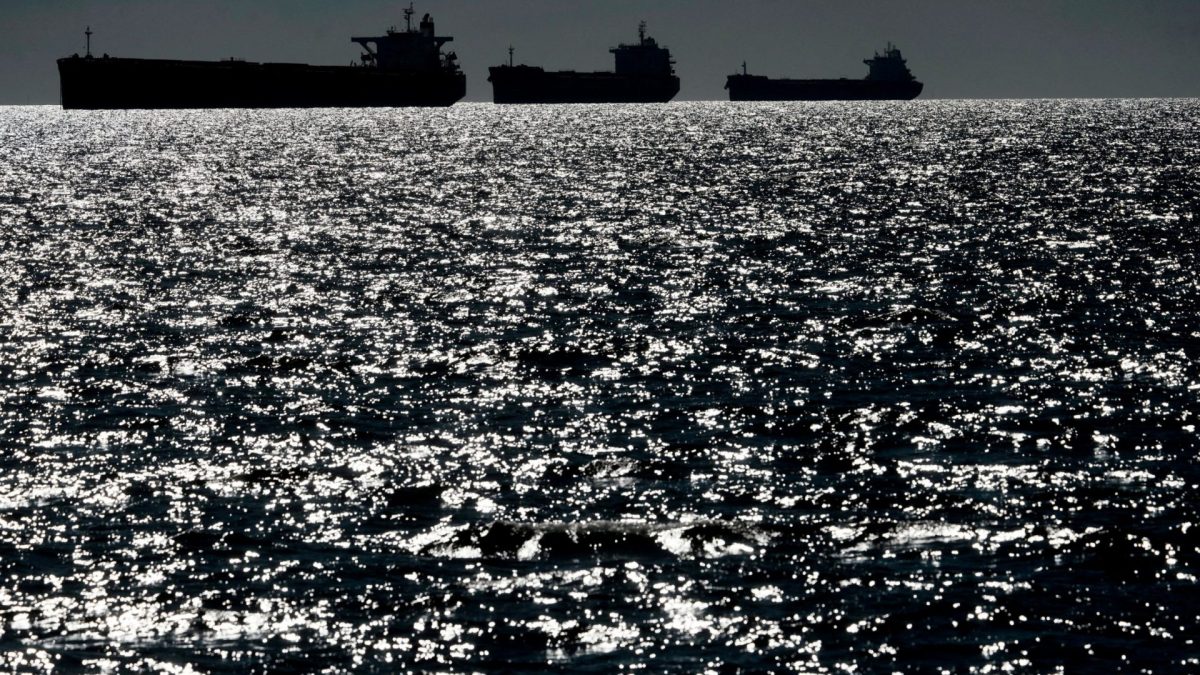
More than 170 “shadow fleet” vessels passed near or through UK waters this summer, with a Russian presence in the English Channel almost every day this summer, analysis by The i Paper reveals. While sanctioned ships linked to Russia continue to pass by Britain en route to further afield ports, experts say the summer has also seen a marked change in how the Kremlin’s maritime trade operates. The UK’s dramatic capture of the Russia-linked Smyrtos in the English Channel in June has become a “forced hand” and is pushing the shadow fleet “into the open”, according to maritime and sanction analysts. Open-source analysis of vessels reveal ships spent the summer travelling further to avoid the site of the Channel, adding time and costs to journeys, while the Kremlin has been pushed into providing its vessels with warship escorts and explicitly flying Russian flags on their tankers, rather hiding behind the flags of other countries. Net closing on Putin’s covert trade The shadow fleet has become a lifeline for Vladimir Putin’s war effort, with ships suspected of sailing under false flags in order to evade blockades and continue to make money from sanctioned oil. Around 75 per cent of Russia’s crude oil is transported by Putin’s decrepit and ageing fleet of ships. “[There is] this forced hand that Russia is seeing in its shadow fleet operations… There’s now an acknowledgement that there are certain choke points that the shadow fleet will actively try to avoid,” said Gonzalo Saiz, a research fellow at the defence and security think-tank Royal United Services Institute (Rusi). “One of them being the English Channel, primarily following the detention of the Smyrtos, which [led to] enhanced presence of Russian military assets surrounding UK waters to escort a number of these vessels.” Putin has been diverting some of his most advanced warships to escort sanctioned and shadow fleet oil tankers near UK waters, including one frigate armed with hypersonic missiles earlier in August. Russia’s growing need to put their own flag on vessels means they will be at greater risk of fines and action for any breaches of international maritime law, Saiz said. It means that while the net is closing on Putin’s covert trade, Moscow is taking any steps it can to help shield its movements, such as disguising tanker locations through advanced techniques to spoof their routes. Hundreds of Russian tankers still sailing past UK Open source analysis of tanker routes reveals that Moscow was forced into making a dramatic shift to the routes its lucrative shipments of oil travel on from their Baltic port to their delivery destinations, such as China. Some 171 sanctioned vessels passed waters near the UK, traversing the North Sea, English Channel, north eastern Atlantic Ocean, Norwegian Sea and waters near the coast of the Netherlands and Belgium between 1 June to 26 August 2026. Of those vessels, 145 passed through English waters on their journey, and 46 passed through the English Channel, according to exclusive data shared with The i Paper from Kpler, a maritime tracking platform. The net closing in on the shadow fleet is causing issues for Putin and the Kremlin (Photo: Alexei Druzhinin/Getty Images) Some of these vessels were escorted by Russian warships, although the exact number is not known. The Kremlin’s decision to divert its battleships to escort commercial ships has raised eyebrows among analysts. Dr Richard Moss, an expert in Russian naval capabilities, said that given the size and state of its fleet Moscow cannot afford to escort more than a token number of tankers. Using a Gorshkov-class frigate to escort oil tankers was likely intended as a message of “deterrance” but was “a waste of a ship and a sign that the Russians have no alternatives at this point. This is not a sign of strength”. “The Kremlin’s shadow fleet serves the purpose of supporting its broader aims of funding a war economy, amid an increasing open confrontation with the West,” said naval warfare expert Dr Noel Foster. “Putin does his best to appear unflappable, but what is clear is that the seizure of MV Smyrtos marked a change in HMG’s policy, likely an enduring one… [to provide] visible escorts to shadow fleet tankers as well as changing the routes of these tankers.” The Shadow Fleet had a presence in the Channel for 82 days, or excluding the time the Smyrtos has been held in Weymouth Bay, 75 days. It means there has only been ten days this summer with no shadow fleet presence, or 17 days excluding the Smyrtos. A major change since the capture of the Smyrtos has been the decision to reroute many of the tankers, at a cost of money and time. The number of ships that bypassed the English Channel after the capture of Smyrtos more than doubled. However, the number of vessels exiting the Baltic Sea increased. This suggests Russia was not intimidated into reducing the number of vessels it sailed past the UK, only that Moscow tended to instruct them to avoid the Channel. Losing decoy flags While the shadow fleet are sanctioned vessels, complex maritime and sanction rules means this does not automatically give grounds for their capture. The UK was able to storm the Smyrtos after the ship was left deregistered and illegally flying the Cameroon flag after the country removed it from its registry on May 26. This gave the British Navy grounds to board the tanker. If shadow fleet vessels are correctly registered under a legitimate flag, this in effect protects the Moscow-linked ships, which is why a number of them are continuing to pass through the Channel and other nearby waters. The British seized the CMR Smyrtos sailing under a false Cameroonian flag in the English Channel off the coast of the United Kingdom (Photo: Ministry of Defence) But there is a headache for Putin; an increasing number of countries are refusing to give the shadow fleet their flag registration. It means more ships have been sailing under Russian flags – removing the “shadow” from the shadow fleet. “Speculating on intentionality is hazardous, of course, but what we can see is a clear trendline towards moving from false flags and flagless vessels – which are legal grounds for boarding, searching and potentially seizure – to proper flag registration [of Russian ships under Russian flags],” Foster said. Some 60 sanctioned tankers were recorded in UK waters more recently in the 30 days to 26 August. Kplr recorded that none of these ships appeared to be flying under a false flag, suggesting there is a concerted effort for these vessels not to be stopped over a problem with their flag registration. Just over a third were Russian-flagged. Ana Subasic, Trade Risk Analyst at Kpler, said this leaves Moscow at risk of issues if their vessels are involved in issues such as an oil spill or breach of international maritime law. Currently, the ownership structure of many shadow fleet vessels is incredibly complex and makes pursuing damages or criminal action difficult. “The Russian flag is costly because deniability matters. This is not because the link to Russia is secret, but a foreign flag buys legal separation.”
UK forces Putin’s shadow fleet into open… with more than 170 boats near coast
Full Article
Original Source
Read the full article at Inews →KhanList aggregates and links to publicly available news content. We do not host full articles from third-party sources. Always verify important information with original sources.