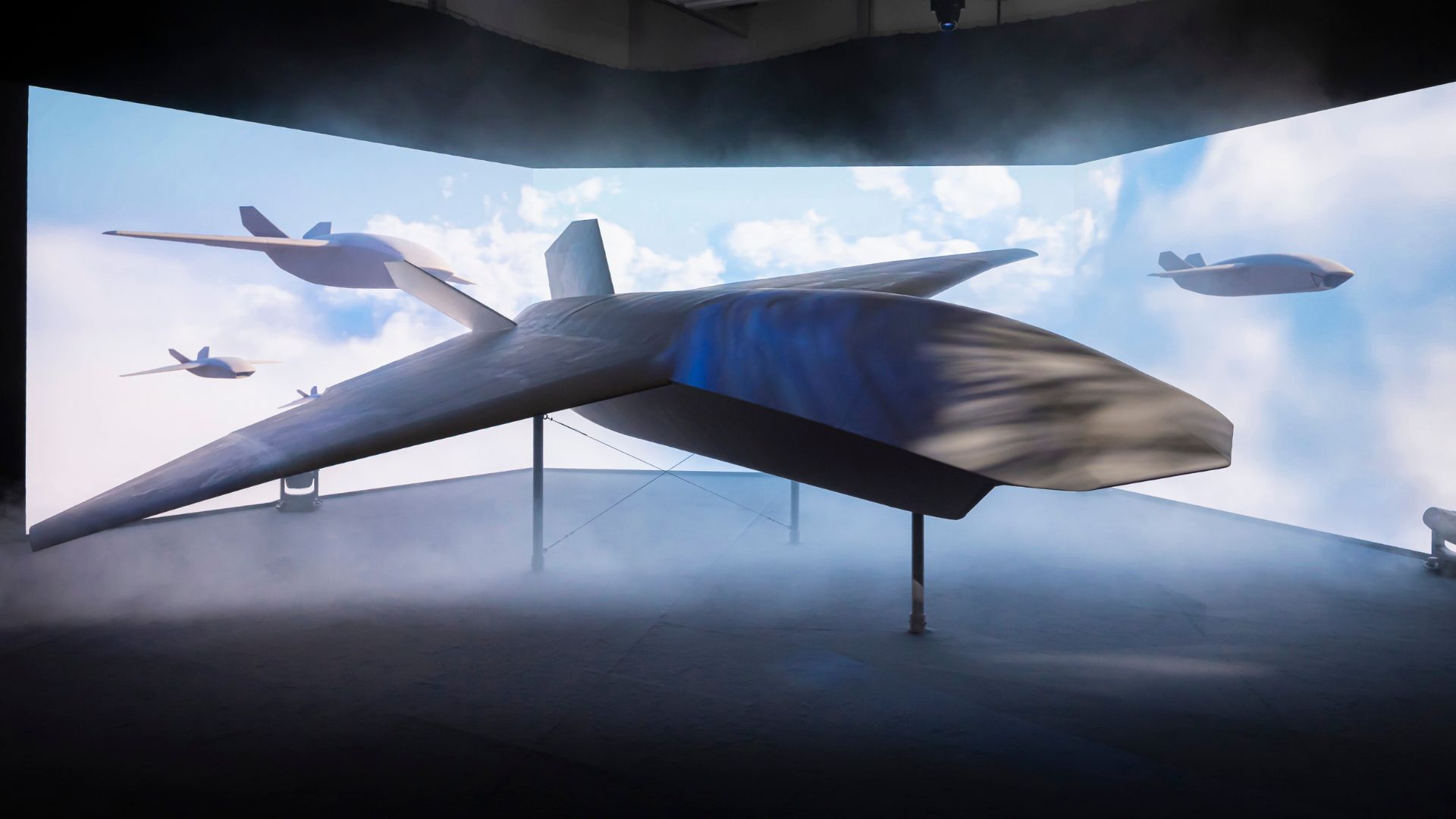
BAE Systems has introduced the United Kingdom’s first autonomous Collaborative Combat Aircraft (CCA), marking a major step in the country’s effort to field uncrewed aircraft that can operate alongside frontline fighter jets. The aircraft, named Brontanax, debuted at the Farnborough International Airshow. Engineers designed it to expand combat capacity by teaming with crewed aircraft such as the Eurofighter Typhoon. The platform will handle missions including electronic warfare and precision strikes, reducing the workload and risk for human pilots while offering a lower-cost way to add combat capability. Built for combat teaming Brontanax emerged from BAE Systems’ engineering center in Warton, Lancashire, where more than 500 employees worked on the program. The effort also involved over 75 British aerospace companies and small businesses, reflecting a broad industrial collaboration behind the aircraft. Roughly the size of a BAE Hawk trainer, the aircraft features an open-architecture design that allows engineers to integrate new sensors, payloads and mission systems as threats evolve. A Typhoon pilot or a mission commander can control the aircraft remotely, enabling crewed and uncrewed platforms to fight as a coordinated team. Ground testing will begin at Warton before flight trials start in UK airspace. BAE Systems expects the prototype to make its first flight next year. If development stays on schedule, the aircraft could enter Royal Air Force service before the decade ends. Part of UK modernization The unveiling follows the UK government’s commitment of £300 million to its Storm Fighter autonomous combat aircraft program, which aims to deliver a sovereign Collaborative Combat Aircraft capability for the Royal Air Force. British officials view the program as a key element of their plan to build what they describe as Europe’s first sixth-generation air force. Defence Secretary Wes Streeting said Brontanax demonstrates the UK’s ability to design and manufacture advanced combat aircraft domestically. He added that the government is investing £300 million through the Storm Fighter program to develop an autonomous combat aircraft in Britain. Streeting said the effort supports the country’s ambition to lead future combat aviation. Royal Air Force Chief of the Air Staff Air Marshal Sir Harv Smyth said the service is accelerating the adoption of advanced technologies to prepare for future conflicts. He said the prototype is expected to fly next year and described Brontanax as evidence that Britain’s defense industry can rapidly develop next-generation air capabilities. Focused on future upgrades BAE Systems developed Brontanax through its FalconWorks advanced research division using company-funded research and development. The aircraft represents more than 25 years of work in autonomous and uncrewed aviation across the business. Simon Barnes, managing director of BAE Systems’ Air sector, said modern militaries need aircraft that can scale quickly and adapt to changing threats. He said the Collaborative Combat Aircraft will extend the reach of crewed fighters, increase combat mass and keep pilots farther from danger. For U.S. defense observers, Brontanax reflects a growing international push toward “loyal wingman” concepts, where autonomous aircraft fly alongside crewed fighters to carry sensors, electronic warfare systems or weapons. Similar programs are underway in the United States and Australia, making collaborative combat aircraft one of the fastest-growing segments of next-generation military aviation.Recommended ArticlesGet the latest in engineering, tech, space & science - delivered daily to your inbox.Aamir is a seasoned tech journalist with experience at Exhibit Magazine, Republic World, and PR Newswire. With a deep love for all things tech and science, he has spent years decoding the latest innovations and exploring how they shape industries, lifestyles, and the future of humanity.
UK debuts first autonomous combat drone built to fly alongside Typhoon fighters
Full Article
Original Source
Read the full article at Interestingengineering →KhanList aggregates and links to publicly available news content. We do not host full articles from third-party sources. Always verify important information with original sources.