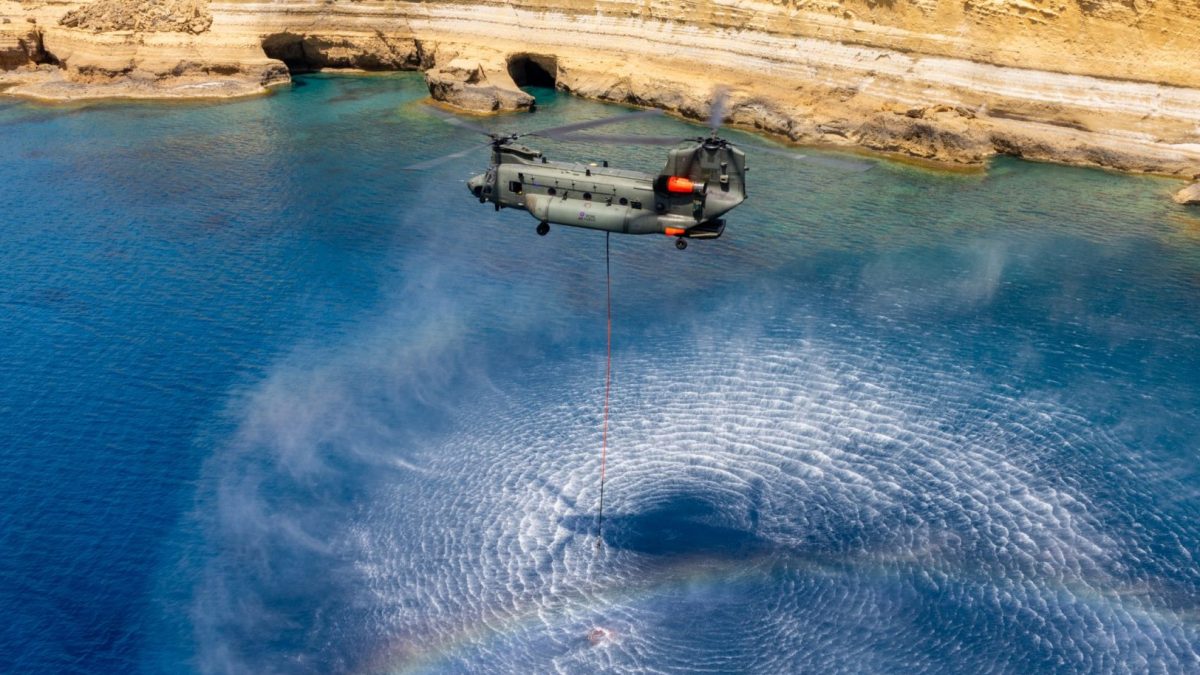
The UK Government is unable to deploy its military firefighting helicopters to tackle multiple wildfires sweeping Britain because they are currently based more than 2,000 miles away in Cyprus, it can be revealed. Fire chiefs have called for access to aerial firefighting capabilities to combat a looming risk of larger and more complex wildfires as summer heatwaves become more intense. More than 200 blazes have been tackled in England and Wales in the last fortnight alone as the UK endures one of its worst years on record for wildfires and is braced for a “firewave” due to the prolonged dry weather. Shorts But in stark contrast to other European countries, the battle against these blazes is having to be conducted without any specialist aircraft owned or operated by the authorities. None of Britain’s 49 fire and rescue services currently has direct access to a firefighting aircraft or helicopter similar to those seen in recent days dropping water to quell vast wildfires in France, Spain and elsewhere in Europe. Chinooks on standby to fight Cyprus fires It can be revealed by The i Paper that the UK does have RAF Chinook helicopters which are capable of dropping up to five tonnes of water at a time from a huge bucket suspended below the aircraft. But these and their specialist crews are currently based at RAF Akrotiri in Cyprus on standby to help with wildfires on the island, and thereby unable to participate in any firefighting operations on the UK mainland. Last year, Cyprus suffered its worst year for wildfires on record, including a blaze near Limassol which killed two people and damaged or destroyed more than 500 homes or buildings. It is understood the Chinook aircraft are in Cyprus as part of a long-standing arrangement to help the Cypriot authorities if needed and to protect UK assets. Like other military assets, their deployment can be reviewed if needed elsewhere. A helicopter hired from a private contractor is used to water bomb this Cairngorms wildfire as it continues to burn after 14 days (Photo by Jeff J Mitchell/Getty) Last week the Scottish Government rejected an offer from new Defence Secretary Wes Streeting to send RAF Chinook helicopters to help combat a wildfire in the Cairngorms. The blaze, which has burned for a fortnight and consumed 10 square miles of moorland and forest near Aviemore, is now hoped to be under control ahead of cooler weather and forecasts of rain. First Minister John Swinney said the offer from the Ministry of Defence (MoD) had been rejected after it became clear that the helicopters being offered had no ability to fight the fire directly and were instead being offered to ferry equipment and personnel. In a statement on Wednesday, the Scottish Government said: “A request was made to the UK Government specifically for ‘aerial water-bombing capability’. A response was received that the UK Government was not in a position to agree to this request.” The MoD declined to comment but pointed to a previous statement that it stood ready to support firefighting effort in the Cairngorms and, if necessary, elsewhere in the UK under mutual aid arrangements. France and Spain have 80 firefighting aircraft Many European countries, including Ireland, operate their own firefighting aircraft. France has been able to deploy at least 35 – including an A400 military transport plane capable of dropping 20 tonnes of water at a time – to tackle fires across the country. Spain has access to 45 aircraft. The UK has hitherto relied on external help or a small number of private contractors with the capability to provide waterbombing services on an ad hoc basis. Skyhook, a Fife-based helicopter operator, has been involved with fighting the Cairngorms fire, but points out that it is not funded to maintain a dedicated firefighting capability or have crews on permanent standby. This summer, the UK Government announced it would be placing specialist firefighters close to areas at risk of wildfires, in particular peat moorlands, as part of a £97m upgrade of fire and rescue assets, including off-road vehicles. A French Canadair firefighting aircraft flies past flames burning a forest surrounding Cotignac, south-eastern France, during a wildfire this week (Photo: Thibaud Moritz/AFP) But the National Fire Chiefs Council (NFCC) warned this week that climate change was driving a long-term increase in wildfire risk, and further investment would be needed to meet future demand, including access to an aerial firefighting capability. Phil Garrigan, chairman of the NFCC, said: “The science tells us we should expect larger, more frequent and more complex wildfires in the future. That’s why we need continued investment in specialist wildfire capabilities, including aerial firefighting support, so we’re prepared for the risks ahead.” UK barred from EU emergency resources The UK previously had access to rescEU, a European Union civil contingency scheme which pools emergency resources, including firefighting aircraft, for member states. Under the rescEU scheme, France has this month been provided with 13 additional aircraft, and Spain six. But Brexit means that this fallback is no longer available to London, prompting calls for a re-examination of UK needs, and to potentially strike a deal with European partners to share resources The Scottish Greens told The i Paper they wanted to see a joint assessment by the Edinburgh and Westminster governments of “aerial firefighting capability gaps” exposed by the Cairngorms fire. The party said there was a pressing need to “assess the investment needed for dedicated aerial firefighting assets stationed within the UK, whether held nationally, shared across the UK, or accessed through arrangements with European partners”. Charred grassland on Ingrebourne Hill after a fire in Rainham, Essex, on Saturday (Photo: Joe Duggan) Fire services in Britain and on the European mainland are already combating hundred of wildfires in what is set to be the worst year on record for EU countries. According to the European Commission, about 250,000 hectares of land have been burned so far this year – an area equivalent to the size of Luxembourg. To date there have been 706 wildfires in England and Wales, slightly fewer than the figure of 788 for this time last year. Eight live wildfires remained under surveillance this week and experts have warned of a “firewave” in the coming days as temperatures peak once more, and the risk of new blazes fuelled by tinder-dry vegetation increases. Major blazes have hit Scotland, including Arthur’s Seat in the heart of Edinburgh and the Cairngorms fire, which last weekend saw residents of the village of Nethy Bridge evacuated from their homes. Battling wildfires before they start Fires of a similar scale and intensity to those currently ravaging the Gironde in western France and central Spain are unlikely to occur in the UK due to differences in terrain and environment. But experts warn there is a pressing need for a different approach to lessen the impact of blazes before they happen. This includes removing or controlling vegetation which grows abundantly as a result of wet winters and springs, only to act as the kindling for wildfires when it subsequently dries out during hot summer conditions. Guillermo Rein, profession of fire science at Imperial College London, said practices such as “compartmentation” – the targeting of particularly high-risk areas of forest or open land to minimise wider conflagrations – need to be adopted. He said: “Water is important, but it is only one layer of protection. Wildfire safety requires multiple layers of protection, from prevention and early detection to compartmentation, suppression, evacuation and damage mitigation. “As Europe adapts to even warmer summers, we need to move beyond reacting to disasters and start building wildfire protection before the next firewave arrives.”
UK at risk of ‘firewave’ – but RAF’s firefighting helicopters are 2,000 miles away
Full Article
Original Source
Read the full article at Inews →KhanList aggregates and links to publicly available news content. We do not host full articles from third-party sources. Always verify important information with original sources.