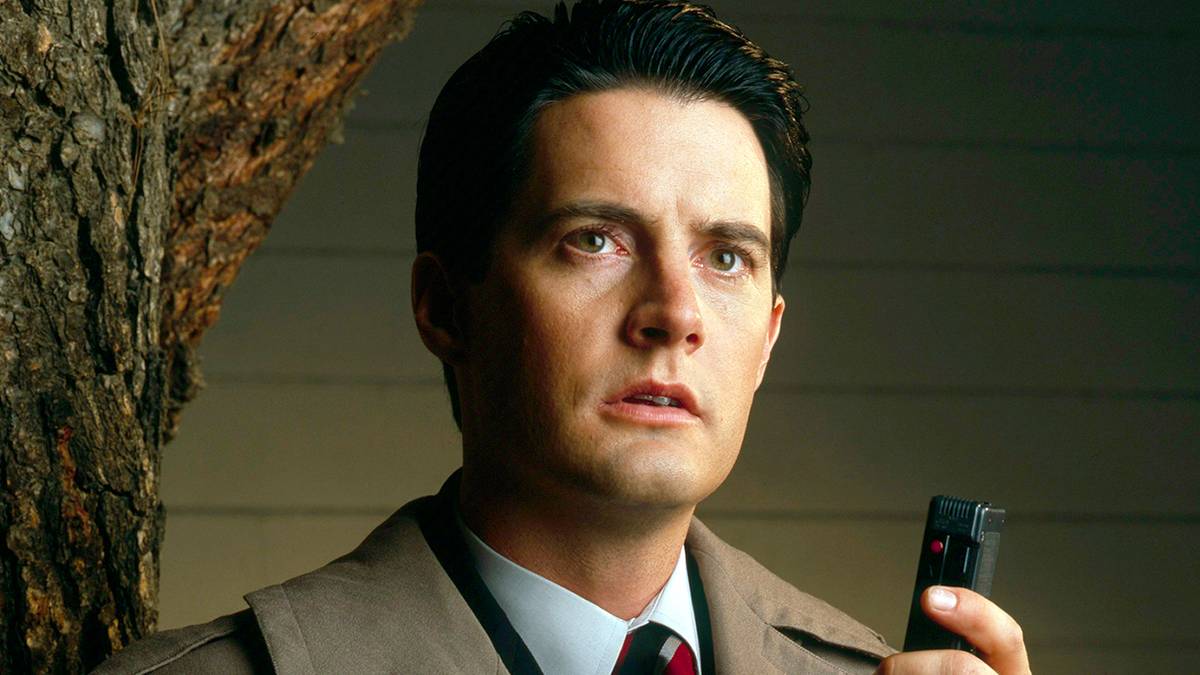
Image via ABC Published Jul 24, 2026, 10:44 PM EDT Samantha is a Senior Writer for Collider, with a deep admiration for the arts, a vast amount of unpopular opinions, and an ever-expanding knowledge of all things TV and Film. Unafraid to speak her mind, she can provide analysis that feels fresh and unabashed, with a hearty balance of humor. She can appreciate and respect all sides of an angle, and will happily discuss such opinions. A lover of the written word, she has a punchy taste in media that lends itself to fun and unique takes. Her bias lies in the horror genre, as she enjoys all things spooky and scary, and can talk your ear off about it. When she's not writing for Collider she can also be found as a co-host of the pop-culture podcast *Enter The Fangirls*, indulging in films featuring Jamie Lee Curtis or Winona Ryder, and working through her extensive watchlist with her cat Nala by her side. Sign in to your Collider account The Legend of Zelda has become a well-known Nintendo classic, having spawned about 19 games and numerous spin-offs, including a TV series and Manga adaptations. The game follows Link, a young man of the Hylian race (which is elf-like), and Princess Zelda, who is a mortal reincarnation of the Goddess Hylia. Together they often face off against the demon king Ganon, who acts as the series' primary antagonist, but other storylines, time periods, and antagonists have been known to drive the story from time to time. Legend of Zelda is largely considered to be one of the greatest video games of all time. But while it may be hard to pick a favorite out of the many games, there’s one in particular that always tends to stick out among fans: The Legend of Zelda: Link’s Awakening. Why does this one in particular stand out, you may ask? Because it’s heavily inspired by the whimsical, almost fever-dream-like world of Twin Peaks. How Did This Twin Peaks/Legend of Zelda “Crossover” Come To Be? Twin Peaks made its debut back in 1990 and was created by David Lynch and Mark Frost. The series centers around the quirky town of Twin Peaks, where the town’s resident teenage prom queen has just turned up dead. Heading the case is special agent Dale Cooper (Kyle MacLachlan), whose strange and energetic personality makes him so magnetic to both viewers and the townsfolk. Part of the charm of Twin Peaks was its unique, albeit bizarre, cast of characters that populate the small town. Collider Exclusive · Horror Survival Quiz Which Horror Villain Do You Have the Best Chance of Surviving? Jason Voorhees · Michael Myers · Freddy Krueger · Pennywise · Chucky Five killers. Five completely different ways to die — if you're not smart enough, fast enough, or self-aware enough to avoid it. Only one of them is the villain your particular set of instincts gives you a fighting chance against. Eight questions will figure out which one. 🏕️Jason 🔪Michael 💤Freddy 🎈Pennywise 🪆Chucky TEST YOUR SURVIVAL → 01 Something feels wrong. You can't explain it — you just know. What do you do? First instincts are the difference between the survivor and the first act casualty. ALeave immediately. I don't need to understand a threat to respect it. BStay quiet and observe. If I can see it, I can understand it. If I can understand it, I can avoid it. CStay awake. Whatever this is, I am not going to sleep until I feel safe again. DConfront it directly. Fear grows in the dark — I'd rather know what I'm dealing with. ECheck everything, trust nothing. The threat might be closer than I think — and smaller. NEXT QUESTION → 02 Where are you most likely to find yourself when things go wrong? Setting is everything in horror. Where you are determines which rules apply. ASomewhere remote — a cabin, a campsite, off the grid and away from people. BA quiet suburban neighbourhood where nothing ever happens. Except tonight. CIn my own head — the most dangerous place of all, depending on what's already in there. DWherever children are — because something about this place attracts the worst things. ESomewhere ordinary — a house, a toy store, a place where the last thing you'd expect is a threat. NEXT QUESTION → 03 What is your most reliable survival asset? Every survivor has a quality the villain didn't account for. What's yours? APhysical fitness — I can run, I can swim, I can outlast something that relies on brute persistence. BSpatial awareness — I always know the exits, the hiding spots, the fastest route out. CPsychological resilience — I've faced my worst fears before. They don't have the same power over me. DEmotional steadiness — I don't panic. Panic is what gets you caught. EScepticism — I don't underestimate threats because of how they look. Size is irrelevant. NEXT QUESTION → 04 What kind of fear is hardest for you to fight through? Knowing your weakness is the first step to not dying because of it. AThe unstoppable — something that will not stop, cannot be reasoned with, and is always getting closer. BThe invisible — a threat I can feel but can't locate, watching from somewhere I can't see. CThe psychological — something that uses my own mind and memories against me. DThe unknowable — something ancient, shapeless, that feeds on the fear itself. EThe mundane — a threat so ordinary-looking that no one will believe me until it's too late. NEXT QUESTION → 05 You're with a group when things start going wrong. What's your role? Horror movies are brutally clear about who survives group situations and who doesn't. AThe one who says "we need to leave" first — and means it, even when no one listens. BThe one who stays quiet, watches the others, and figures out the pattern before anyone else does. CThe one who holds the group together when panic sets in — because someone has to. DThe one who asks the questions nobody wants to ask — because ignoring them gets people killed. EThe one who takes the threat seriously when everyone else is laughing it off. NEXT QUESTION → 06 What's the horror movie mistake you're most likely to make? Honest self-assessment is a survival skill. Denial is not. AGoing back for someone — I know I shouldn't, but I can't leave them behind. BAssuming I'm safe once I've found a hiding spot. That's when it finds me. CFalling asleep when I absolutely cannot afford to. Exhaustion is its own enemy. DLetting my curiosity override my instincts — I always need to understand what I'm dealing with. EDismissing the threat because of how it looks. That's exactly what it wants. NEXT QUESTION → 07 What's your best weapon against something that can't be stopped by conventional means? Every horror villain has a weakness. The survivors are always the ones who find it. AThe environment itself — I use the terrain, the water, the geography against it. BPatience — I wait, I watch, and I strike at the one moment it doesn't expect. CLucidity — if I can stay in control of my own mind, it loses its primary weapon. DCourage — facing it directly, refusing to run, taking away the fear it feeds on. EImprovisation — I use whatever's at hand, however unconventional. Creativity over brute force. NEXT QUESTION → 08 It's the final scene. You're the last one standing. How did you make it? The final survivor always has a reason. What's yours? AI kept moving. I never stopped, never hid for too long, never let it corner me. BI figured out the pattern before anyone else did — and I used it against the thing following it. CI stayed awake, stayed lucid, and refused to give it the one thing it needed most. DI stopped being afraid of it. And the moment I did, everything changed. EI took it seriously from the start — and I never once made the mistake of underestimating it. REVEAL MY VILLAIN → Your Survival Odds Have Been Calculated Your Best Chance Is Against…Your instincts, your strengths, and your particular way of thinking under pressure point to one villain you actually have a fighting chance against. Everyone else — good luck. Jason VoorheesJason is relentless, but he is also predictable — and that is the gap you would exploit. He moves in straight lines toward his target. He doesn't strategise, doesn't adapt, doesn't outsmart. He simply pursues. Your ability to keep moving, use the environment, and resist the panic that freezes most victims gives you a genuine edge. The Crystal Lake survivors were always the ones who stopped running in circles and started thinking about terrain, water, and distance. You think like that. Which means Jason, for all his indestructibility, would face someone who simply refused to be where he expected. Michael MyersMichael watches before he moves. He is patient, methodical, and almost impossible to detect — until it's too late for anyone who isn't paying close enough attention. But you are paying attention. You notice the shape in the window, the car parked slightly wrong, the silence where there should be sound. Michael's power lies in the invisibility of ordinary suburbia — the fact that nothing ever looks wrong until it already is. Your spatial awareness and instinct to map every room, every exit, and every shadow before you need them is precisely the quality Laurie Strode had. You are not a victim waiting to happen. You are someone who already suspects something is wrong — and acts on it. Freddy KruegerFreddy wins by getting inside your head — using your own fears, your own memories, your own subconscious as weapons against you. That strategy requires a target who can be destabilised. You are harder to destabilise than most. You've faced uncomfortable truths about yourself and you haven't looked away. The survivors on Elm Street were always the ones who understood what was happening and chose to face it rather than flee from it. Freddy's greatest weakness is that his power evaporates in the presence of someone who refuses to give him the fear he feeds on. Your psychological resilience — the ability to stay grounded when reality itself becomes unreliable — is exactly the quality that keeps you alive here. PennywisePennywise is ancient, shapeshifting, and feeds on terror — but it has one critical vulnerability: it cannot function against someone who genuinely stops being afraid of it. The Losers Club didn't survive because they were braver than everyone else. They survived because they faced their fears together, and faced them honestly. You ask the questions others avoid. You look directly at what frightens you rather than turning away. That directness — the refusal to let fear fester in the dark — is Pennywise's worst nightmare. It chose the wrong target when it chose you. You are exactly the kind of person whose fear tastes like nothing at all. ChuckyChucky's greatest advantage is that nobody takes him seriously until it's already too late. He exploits the gap between how something looks and what it actually is. You don't have that gap. You take threats seriously regardless of how they present — and you never make the mistake of underestimating something because of its size or appearance. Chucky relies on surprise, on the delay between recognition and response. You close that delay faster than almost anyone. Your instinct to treat every unfamiliar thing with appropriate scepticism — rather than dismissing it because it seems absurd — is the exact quality that keeps you breathing. Against Chucky, not laughing is already winning. You are very good at not laughing. ↻ RETAKE THE QUIZ It’s surreal, off-beat, and surprisingly funny at times, and no one saw its success coming. And yet, it changed television forever with just one simple question: Who killed Laura Palmer (Sheryl Lee)? It went on to inspire so much media going forward, everything from TV to movies, and as we know, video games. But how exactly did it come to inspire a Legend of Zelda game? Link’s Awakening was the fourth entry in the game’s lineup and would go on to change future games going forward, much like Twin Peaks did. In an Iwata Asks interview, Takashi Tezuka shared how the show inspired his vision for the game, saying: “At the time, Twin Peaks was rather popular. The drama was all about a small number of characters in a small town... So when it came to The Legend of Zelda: Link's Awakening, I wanted to make something that, while it would be small enough in scope to easily understand, it would have deep and distinctive characteristics.” And that’s exactly what Link’s Awakening was. Sure, at its core it held up to its previous games, but there was an added level of whimsicality to this one that made it stand out. Not just in terms of gameplay, but in the populating characters and the world itself, it was through and through an inspired game. What Is ‘The Legend of Zelda: Link’s Awakening’ About? Link’s Awakening was unique in not taking place in the land of Hyrule, and also not featuring Princess Zelda. Instead, the game begins with Link waking up stranded on an island called Koholint, which is guarded by a deity called the Wind Fish. To escape the island, Link must battle monsters and solve puzzles to find eight musical instruments that will awaken the Wind Fish and allow Link to go home. The aspect of washing up on the shore of a beach is enough on its own to give you the Twin Peaks vibe right off the bat, but that’s not where the inspiration ends. After washing ashore on the island, Link is taken in by a character named Marin, who is utterly fascinated by Link and the outside world. And, after recovering his sword, he is approached by a mysterious owl (sound familiar?) who informs him that the only way to wake up the Wind Fish is to find the eight instruments of the sirens. During a trip to the ruins to uncover the sixth instrument, Link comes across a mural that explains the island is merely a dream world created by the Wind Fish. This is quickly dismissed as a rumor by the owl, who says only the Wind Fish can confirm or deny such a thing, before urging Link to carry on. Link is constantly fighting off creatures who are trying to get in his way of recovering the instruments, as they want to control the Wind Fish’s dream world. But of course, Link succeeds and collects all eight instruments and climbs to the top of the mountain, on which the Wind Fish sleeps peacefully in an egg. He plays the Ballad of the Wind Fish, which breaks open the egg and allows Link to face off against the final creature (one that takes the form of Ganon and others from Link’s past adventures). After defeating the being’s final form, the mysterious owl that’s been tagging along reveals itself to be the Wind Fish’s spirit. The Wind Fish then confirms that Koholint is, in fact, all a dream. When he plays the ballad again, both Link and the Wind Fish awaken, and the island and all of its quirky inhabitants disappear as if they were never there. The “it was all a dream” aspect is where the Twin Peaks inspiration comes in. Although the show didn’t exactly pull that trope on us, it often feels as though the entirety of the show and its goings-on are a dream. It is always so surreal and off-kilter, without any explanation as to why (though what else can you expect from David Lynch?). That’s exactly what Link’s Awakening leans into. It has just enough aspects of the preceding games to work, but leans into the weird and whimsical without shame. It’s easy not to notice the inspiration if you’ve never seen Twin Peaks, as it isn’t completely in your face. But if you know the show and play the game, you’ll likely be able to catch all the little nuances and quirks that make the two so akin, and gave The Legend of Zelda fans a game as they had never seen before. Twin Peaks is available to stream on Paramount+ in the U.S.
‘Twin Peaks’ Quietly Inspired One of Nintendo’s Weirdest Video Games of All Time
Full Article
Original Source
Read the full article at Collider →KhanList aggregates and links to publicly available news content. We do not host full articles from third-party sources. Always verify important information with original sources.